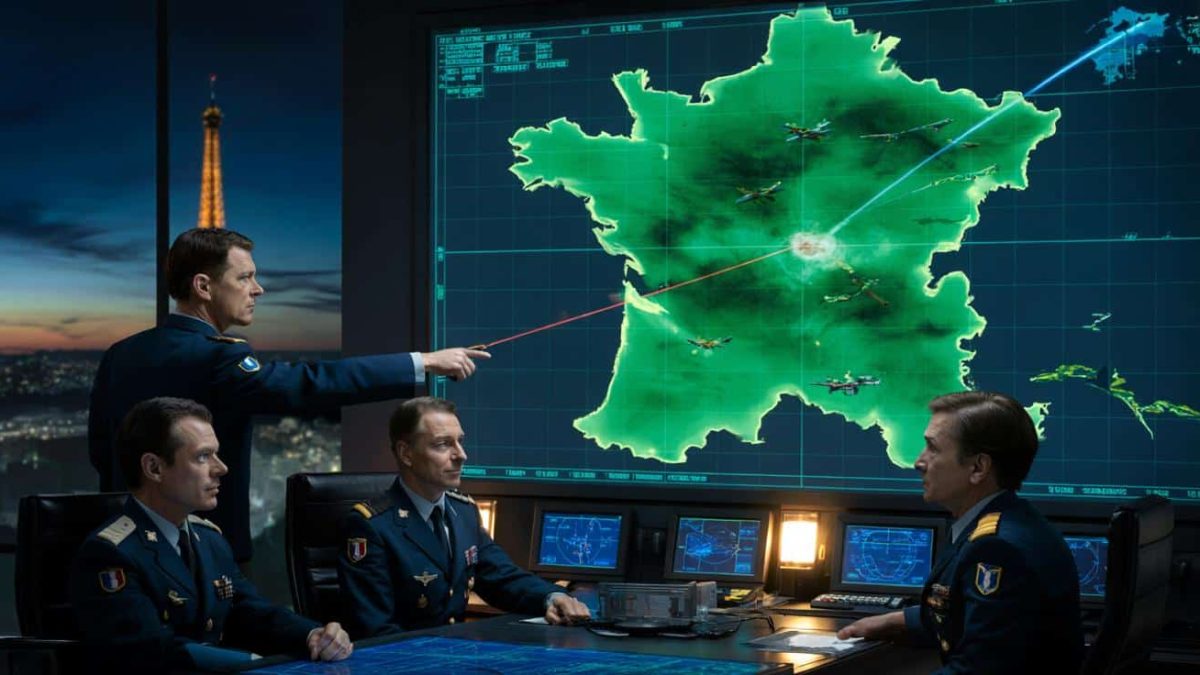
In a watershed moment for European defense autonomy, France has announced a substantial financial commitment to develop an advanced radar detection system that operates entirely outside American surveillance networks. This €1.1 billion investment signals a fundamental reassessment of European strategic dependencies and marks a deliberate pivot toward technological sovereignty in the critical domain of air and space surveillance.
The Strategic Significance of Independence
The decision to invest heavily in an independent European radar system reflects growing concerns among European nations about their reliance on American technological infrastructure for national defense. For decades, European military operations have depended significantly on NATO-integrated surveillance systems, many of which are either directly controlled or heavily influenced by American interests. This new initiative represents a conscious effort to reduce that vulnerability and establish genuine European autonomy in one of the most critical aspects of modern defense: early warning and threat detection.
France’s leadership in this endeavor positions the nation as a driving force in European strategic independence. By developing indigenous capabilities rather than perpetually relying on imports or partnerships skewed toward American interests, France is demonstrating that European nations possess the technological sophistication, industrial capacity, and financial resources to compete at the highest levels of defense innovation.
Technical Specifications and Capabilities
The proposed detection system, often referred to as a “monster” radar due to its impressive technical specifications, boasts a detection range of 550 kilometers. This extraordinary reach enables comprehensive surveillance over vast geographical territories, providing multiple nations with coordinated air defense capabilities. The system’s architecture is designed to integrate seamlessly with other European defense initiatives, creating a cohesive surveillance network that serves the collective security interests of participating nations.
The 550-kilometer detection range represents a significant advancement in radar technology. To appreciate this achievement, consider that such range allows a single installation to monitor airspace extending across multiple countries simultaneously. This capability transforms the nature of European air defense, enabling rapid detection and tracking of threats originating from considerable distances, thereby providing crucial response time for defensive measures.
Beyond raw detection distance, the system incorporates advanced signal processing, artificial intelligence integration, and sophisticated filtering capabilities designed to distinguish genuine threats from background clutter. Modern radar systems must contend with an increasingly complex electromagnetic environment filled with civilian aircraft, weather phenomena, and deliberate electronic countermeasures. The French system addresses these challenges through state-of-the-art computational architectures and machine learning algorithms that enhance discrimination accuracy while minimizing false alarms.
The Broader Context of European Defense
This investment arrives at a critical juncture for European defense policy. The continent faces evolving security challenges, including increased Russian military activities, emerging threats from unpredictable regional actors, and the persistent need to maintain credible deterrence against multiple potential adversaries. Simultaneously, the reliability of traditional American security guarantees has become a subject of legitimate European debate, particularly given recent political developments in transatlantic relations.
European nations have increasingly recognized that genuine security requires more than political alliances; it demands indigenous technological capabilities that cannot be withheld, modified, or eliminated through external political pressure. The French radar system embodies this philosophy, providing European nations with surveillance capabilities controlled exclusively by European entities and subject exclusively to European decision-making processes.
Industrial and Technological Implications
The €1.1 billion commitment generates substantial benefits across France’s defense industrial base. The project stimulates employment in advanced manufacturing, electronics, software development, and systems integration. It encourages innovation ecosystems where private companies, academic institutions, and government research facilities collaborate on cutting-edge technologies. Such investments typically produce technological spillovers that enhance competitiveness across multiple industrial sectors.
Furthermore, the project strengthens European technological independence in radar engineering, a domain historically dominated by American and Israeli companies. By developing indigenous expertise and manufacturing capacity, Europe reduces its strategic vulnerability to supply chain disruptions and sanctions regimes that external powers might attempt to impose.
Collaborative European Framework
Although France leads this initiative, the system’s design anticipates participation from other European nations. Germany, Poland, Spain, and other nations have expressed interest in integrating this radar system into their air defense networks. This collaborative approach distributes costs across multiple participants while creating genuine European unity around shared security interests. Such frameworks strengthen European cohesion more effectively than any purely diplomatic effort could accomplish.
The collaborative model also increases the system’s strategic value. Multiple nations operating integrated radar networks create redundancy, resilience, and comprehensive coverage across the European continent. Threats detected by one nation’s installation trigger alerts throughout the network, enabling coordinated responses and information sharing that enhances everyone’s security posture.
Economic and Geopolitical Ramifications
This investment carries implications extending well beyond military technology. By demonstrating that Europe can develop world-class defense systems independently, France challenges the assumption that American technological leadership in defense is inevitable or insurmountable. This psychological shift influences decisions across multiple domains, encouraging European investment in autonomous capabilities across emerging technologies including artificial intelligence, quantum computing, and advanced materials.
Geopolitically, the initiative sends unmistakable messages to multiple audiences. To American policymakers, it signals that European nations possess both the will and capability to develop independent security arrangements. To Russia, it demonstrates growing European capacity to maintain sophisticated surveillance and deterrence. To China and other potential competitors, it illustrates that technological innovation isn’t exclusively concentrated in American laboratories.
Looking Forward
The French commitment to this radar system represents more than a single military acquisition; it embodies a strategic vision for European autonomy in an increasingly multipolar world. As the system progresses from development through deployment, its success will likely inspire additional European investments in independent technological capabilities across multiple domains.
This initiative also sets precedent for how European nations can balance their NATO commitments with legitimate desires for strategic independence. Rather than creating conflict, European technological advancement strengthens the alliance by ensuring all participants maintain robust, independent capabilities while remaining able to coordinate effectively.
France’s €1.1 billion investment in advanced radar technology represents a watershed moment in European defense policy. By pursuing genuine technological sovereignty, Europe moves toward a security architecture that reflects its own interests, values, and capabilities rather than remaining perpetually dependent on external powers for its most critical strategic needs.










Leave a Comment