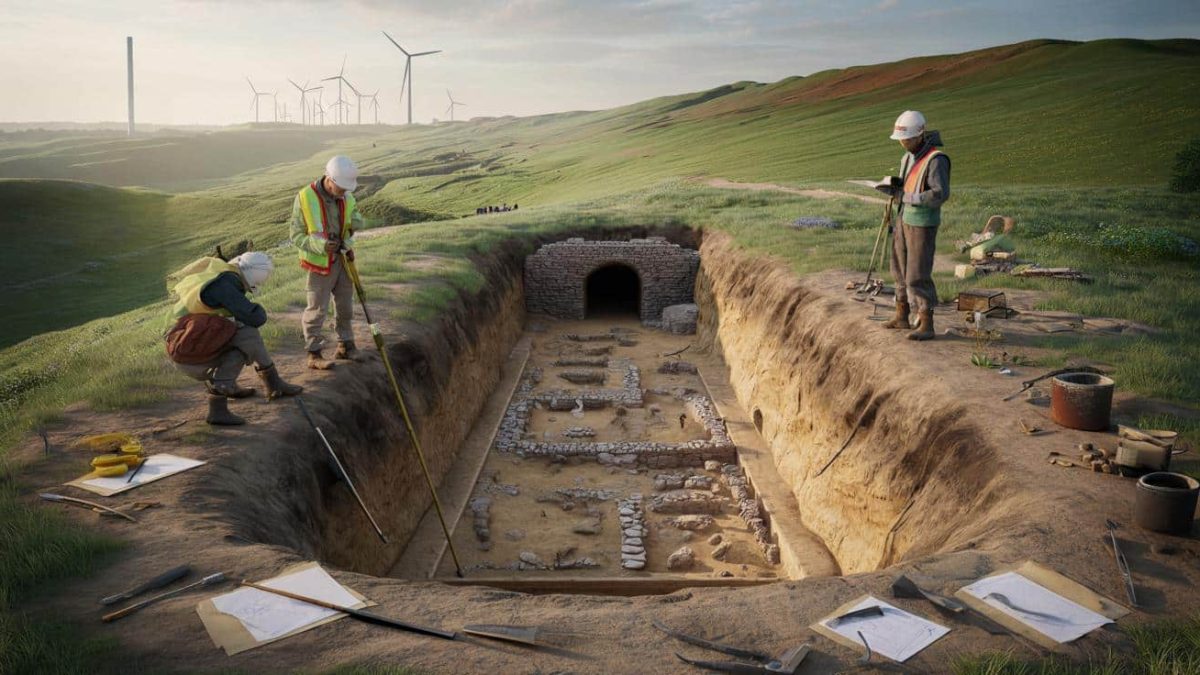
Beneath the soil of a European archaeological site lies a story of temporal collision. Medieval stonemasons, working centuries ago, carved a functional passage through earth and rock that had served as a sacred burial ground for thousands of years. This unexpected intersection of two distinct historical periods has provided archaeologists with fascinating insights into how medieval societies interacted with the ancient landscapes they inherited.
The Discovery That Rewrote Local History
The excavation began as a routine investigation of medieval structures in the region, but researchers quickly realized they had stumbled upon something far more complex. As they carefully removed layers of soil and debris, the outline of an impressively carved tunnel emerged, but its location proved extraordinary. The passage had been deliberately constructed through what archaeologists recognized as a Neolithic burial complex, a site that had accumulated cultural significance across multiple millennia.
This discovery challenges conventional assumptions about how medieval societies approached their built environment. Rather than simply ignoring or avoiding ancient sites, the evidence suggests that medieval engineers sometimes incorporated them directly into their construction projects. The tunnel’s trajectory indicates that builders were fully aware of what lay beneath them, yet chose to proceed with their excavation regardless.
Understanding the Timeline of Occupation
The 6,000-year-old burial site originally served communities during the early phases of settled civilization in this region. Archaeological evidence suggests that multiple cultures used the location as a final resting place, each leaving behind artifacts, burial practices, and cultural markers that reflected their beliefs and social structures. Over millennia, the site accumulated layers of soil, debris, and archaeological material that documented the evolution of human society in the region.
Then, roughly a thousand years ago, medieval construction activity commenced. The builders who created the tunnel appear to have been motivated by practical considerations rather than archaeological interest. The passage likely served essential functions within medieval community infrastructure, whether facilitating movement between settlements, enabling resource transport, or supporting trade networks. What made this construction project particularly distinctive was its routing through the ancient burial ground rather than around it.
The Engineering Challenge of Medieval Stonemasons
Creating a tunnel through a site with existing subsurface structures presented significant technical challenges for medieval workers. These craftspeople possessed impressive knowledge of stone cutting and structural integrity, developed through generations of building experience. The tunnel walls show evidence of careful technique, with tool marks indicating the deliberate approach taken by skilled laborers.
What strikes archaeologists most profoundly is the evidence of intentional interaction with the ancient remains. Rather than simply hacking indiscriminately through the burial site, medieval workers appear to have navigated around some structures while passing through others. This selective approach suggests a degree of caution or respect, though whether motivated by superstition, practical engineering considerations, or genuine historical awareness remains open to interpretation.
The stone selected for tunnel construction demonstrates medieval builders’ understanding of geological properties. They chose materials capable of withstanding the pressure of overlying earth and the wear of regular use. The passage’s dimensions suggest it was designed for human passage and possibly small cart movement, indicating its importance to medieval settlement logistics.
Archaeological Artifacts Tell the Story
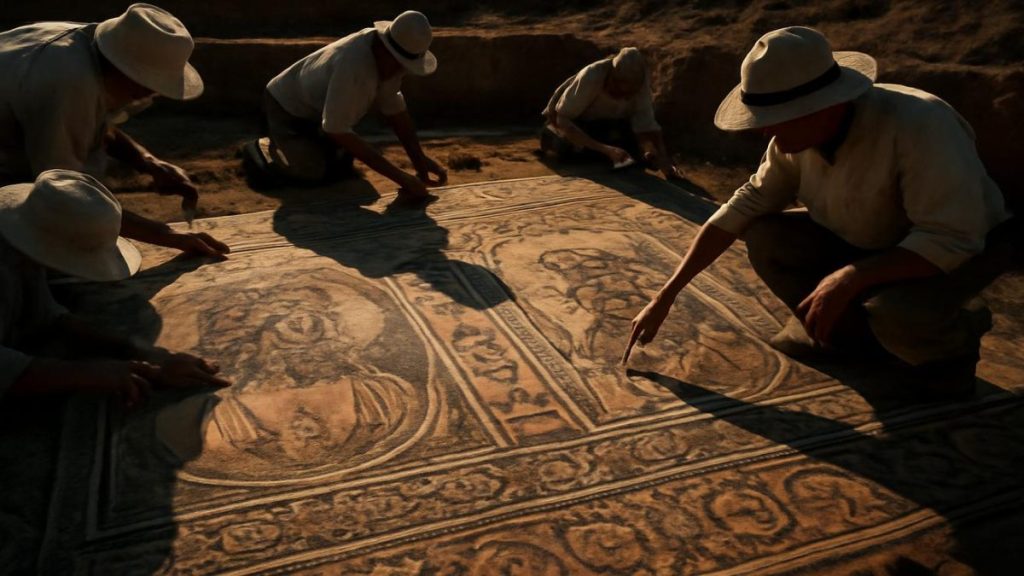
The excavation revealed artifacts from both periods, creating a archaeological palimpsest that enriches our understanding of cultural continuity and change. Ancient pottery fragments, burial goods, and skeletal remains provided information about Neolithic populations. Meanwhile, medieval artifacts discovered near and within the tunnel—fragments of tools, pottery, and metal objects—illuminated the tunnel’s period of construction and use.
What particularly excites researchers is the potential for understanding medieval attitudes toward antiquity. The arrangement of certain medieval artifacts near ancient burial chambers suggests possible intentional placement or offerings, a practice known from other medieval sites where communities demonstrated awareness of and respect for ancient predecessors. Whether medieval inhabitants understood the true age and origin of the site or attributed different meanings to these ancient features remains an intriguing archaeological question.
Implications for Understanding Medieval Society
This discovery provides valuable evidence about medieval economic and social organization. The presence of the tunnel indicates established trade routes and communication networks that required substantial investment of labor and resources. The route’s efficiency suggests careful planning and surveying, contradicting popular misconceptions about medieval engineering as crude or haphazard.
Furthermore, the site demonstrates how medieval communities reshaped their physical environment to meet contemporary needs, sometimes incorporating existing features into new systems rather than clearing sites entirely. This pragmatic approach to land use has parallels in other archaeological contexts, suggesting a widespread medieval strategy of adaptation and modification.
Conservation and Future Research
The excavation site now presents both challenges and opportunities for conservation specialists. Exposing ancient and medieval remains to air and weather accelerates deterioration, so researchers must balance detailed documentation with protective measures. Advanced technologies including laser scanning and three-dimensional modeling have captured the tunnel’s precise dimensions and the surrounding archaeological context.
Future research plans include detailed analysis of the skeletal remains and artifacts to establish clearer timelines and cultural affiliations. Archaeologists also hope to trace the tunnel’s complete path and determine its ultimate destination, which may provide clues about the specific medieval settlement that commissioned its construction. Isotopic analysis of bones may reveal migration patterns and diet, offering insights into both Neolithic and medieval populations.
Connecting Past and Present Through Stone
This remarkable discovery serves as a physical manifestation of how human history layers upon itself, with different civilizations leaving their marks on the same landscape. The medieval tunnel passing through ancient burial chambers represents a literal crossing of temporal boundaries, a moment when two historical periods intersected beneath the ground.
Such discoveries remind us that our understanding of history remains incomplete, with fresh evidence constantly emerging to revise and enrich our knowledge. The medieval builders who carved this passage could never have anticipated that modern archaeologists would one day examine their work and the ancient remains they had encountered. Yet their decisions—where to dig, how to navigate existing structures, what to preserve or destroy—left evidence that speaks across centuries, telling stories about human ingenuity, adaptation, and our complex relationship with the past.









Leave a Comment