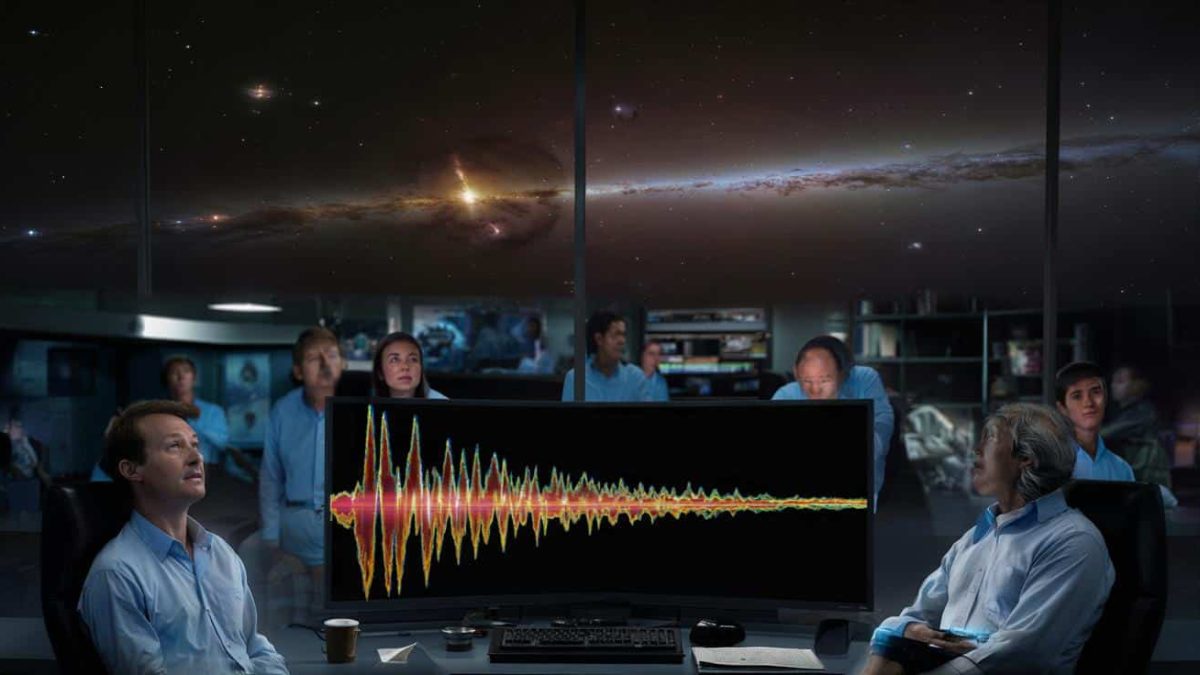
Imagine receiving a message that has traveled through the vast expanse of space and time for over 13 billion years. This week, NASA’s sophisticated network of space observatories achieved something that seemed almost impossible—they intercepted and analyzed a burst of radiation that originated when the universe was still in its infancy. This remarkable detection represents one of the most significant astronomical discoveries of our time, offering scientists an unprecedented window into the cosmos’s earliest moments.
The Ancient Signal That Rewrites Our Understanding
The universe operates on timescales that challenge human comprehension. When we look at distant cosmic objects, we’re essentially gazing backward through time itself. The radiation captured by NASA’s observatories represents light and energy that began its journey toward Earth during an era when the universe was merely a fraction of its current age. At approximately 400 million years after the Big Bang, the universe was transitioning from a cosmic dark age into an era of rapid star and galaxy formation.
What makes this particular detection extraordinary is the clarity and completeness of the signal. The 10-second burst of radiation provided enough data for scientists to analyze multiple wavelengths and characteristics simultaneously. Rather than receiving fragmented or degraded information, researchers obtained a relatively intact cosmic message—a rare occurrence that underscores the power of modern astronomical instruments and data collection methods.
How NASA’s Advanced Observatories Captured This Moment
NASA’s comprehensive network of space telescopes and ground-based observatories doesn’t rely on a single instrument to study the cosmos. Instead, multiple sophisticated systems work in concert, each designed to detect different wavelengths of radiation—from radio waves to gamma rays. When this ancient signal reached Earth’s vicinity, several of these observatories simultaneously detected and recorded the event, providing complementary data that enriches our understanding of what occurred.
The detection process itself involves considerable technological sophistication. Modern space-based observatories are equipped with sensors so sensitive they can detect individual photons—packets of light energy—arriving from unimaginably distant sources. These instruments continuously scan vast regions of space, monitoring for unusual patterns and sudden bursts of radiation that might indicate significant cosmic events.
Once an event is detected, automated alert systems notify astronomers worldwide within seconds or minutes. This rapid response capability allows other telescopes to quickly redirect their focus toward the source, gathering additional data before the burst fades away. The coordinated global response to such detections exemplifies how modern astronomy functions as a truly collaborative international enterprise.
Deciphering Messages from the Primordial Universe
The information encoded within this ancient radiation carries profound implications for our understanding of cosmic evolution. The wavelengths present in the signal reveal details about the composition of materials along the radiation’s journey path. Different elements absorb and emit specific wavelengths, creating a distinctive fingerprint that allows scientists to decode what the early universe contained.
During this early cosmic epoch, the universe was dramatically different from what we observe today. The first stars were beginning to ignite, fundamentally transforming their surroundings through intense radiation and stellar winds. Massive galaxies were coalescing from clouds of primordial gas. The detection of signals from this era provides crucial evidence about how these structures formed and evolved.
Scientists can also use such detections to study the universe’s expansion rate during different periods. By measuring how the wavelengths have shifted during their 13-billion-year journey—an effect called redshift—researchers can determine the universe’s expansion history. This information tests our current cosmological models and sometimes reveals unexpected discrepancies that require new theoretical frameworks.
The Broader Implications for Cosmic Research
Each detection of ancient cosmic radiation represents a data point in humanity’s grand effort to map the universe’s history. While a single signal, however remarkable, provides valuable information, scientists are building entire catalogs of such observations. When combined and analyzed together, these observations reveal patterns and relationships that single events cannot demonstrate.
This particular detection also highlights the continued value of space-based observatories. Despite tremendous advancement in ground-based telescopes, Earth’s atmosphere remains a significant obstacle for certain types of observations. Space-based instruments avoid this limitation, achieving unprecedented sensitivity and clarity. Investment in these technological platforms continues to yield discoveries that transform our cosmic perspective.
Looking Forward: What This Discovery Means for Future Research
The successful capture and analysis of this 13-billion-year-old signal validates the approaches and technologies that NASA and international research institutions have developed. It demonstrates that we possess the capability to study increasingly distant and ancient cosmic phenomena. Future observatories under construction promise even greater sensitivity, potentially enabling detection of even more ancient signals.
The discovery also highlights intriguing questions that remain unanswered. How common are such signals? Do patterns emerge when analyzing multiple detections from different epochs? What unexpected phenomena might we discover as we refine our ability to observe the ancient universe? These questions will drive astronomical research for decades to come.
Furthermore, this achievement represents the culmination of centuries of scientific progress. From the invention of the telescope through the development of quantum mechanics and our understanding of radiation, humanity has built an intellectual framework that allows us to interpret cosmic signals. The collaborative international effort required to operate these observatories and analyze their data demonstrates science’s fundamental nature as a shared human endeavor.
Conclusion: A Window Into Time Itself
NASA’s detection of a 10-second radiation burst from 13.6 billion years ago transcends a simple technological accomplishment. It represents humanity’s ongoing conversation with the cosmos itself—our ability to receive messages that have traversed unimaginable distances and timescales. Each such detection adds another thread to the vast tapestry of cosmic understanding we continue to weave. As our observational capabilities advance, these ancient signals will illuminate ever more details about our universe’s origin and evolution, reminding us that the cosmos holds countless secrets still waiting to be discovered.










Leave a Comment