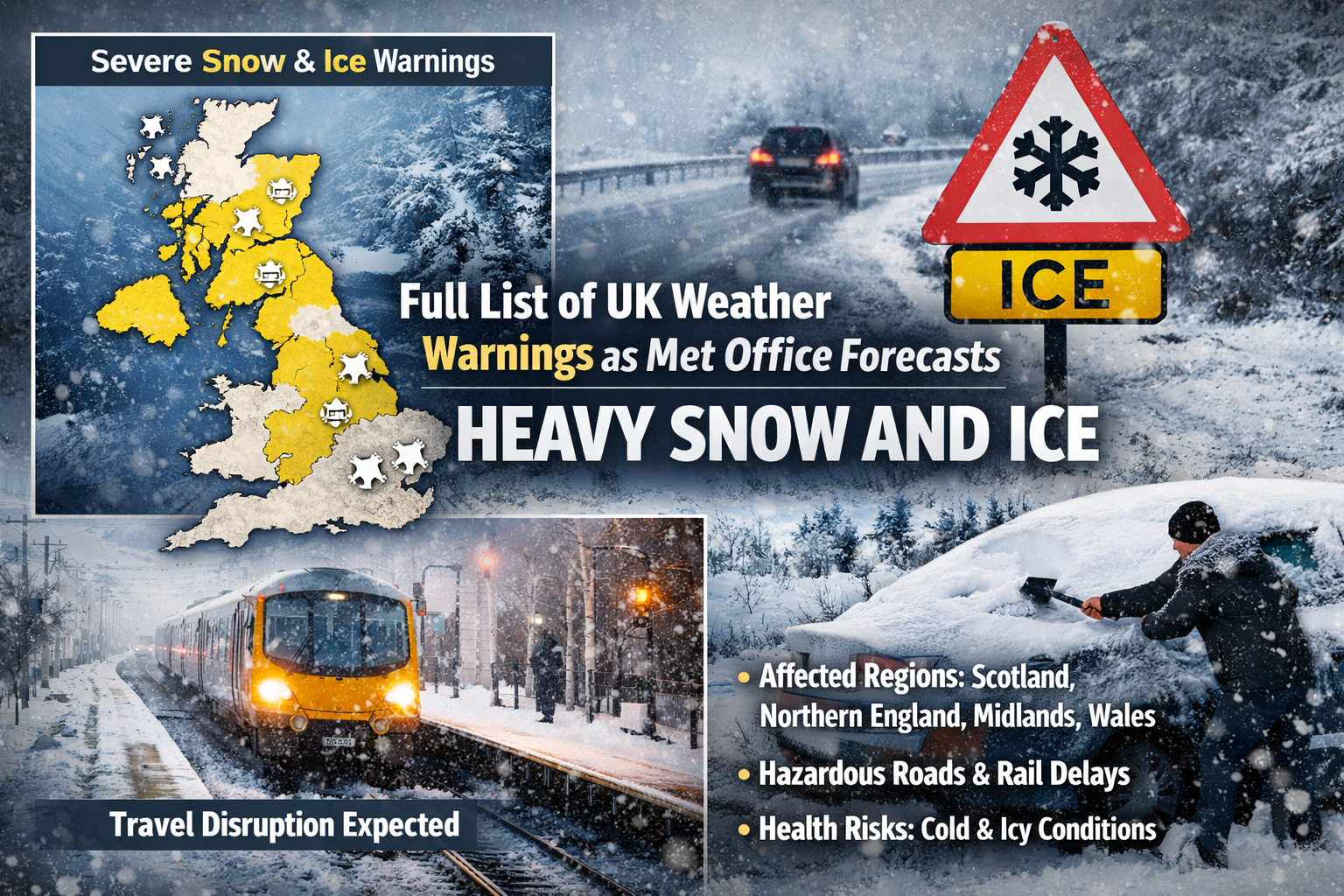
The United Kingdom is facing a renewed spell of severe winter weather as forecasters warn that heavy snow, widespread ice, and freezing temperatures are set to disrupt daily life across large parts of the country. The Met Office has issued multiple weather warnings, urging people to prepare for hazardous travel conditions, potential power disruption, and increased health risks during the cold snap.
As colder Arctic air pushes south, much of the UK is expected to experience below-average temperatures, snow showers, and icy surfaces — conditions that could persist for several days. Authorities are advising residents to remain alert, particularly in areas under active warnings, as even short periods of snowfall and freezing rain can cause significant disruption.
This article provides a full, Discover-style news overview of the latest UK weather warnings, including a clear regional table, what each warning means, expected impacts, and practical advice on staying safe.
Why the UK Is Facing Heavy Snow and Ice
Meteorologists say the current wintry pattern is being driven by a shift in atmospheric circulation, allowing cold air from the north to dominate UK weather. After a relatively mild period, temperatures have dropped sharply, increasing the risk of snow settling even at lower elevations.
Key factors behind the weather include:
-
A strong northerly airflow bringing cold Arctic air
-
Showery systems moving south across the country
-
Overnight temperatures falling well below freezing
-
Residual moisture freezing on untreated roads and pavements
This combination is particularly dangerous, as ice can form rapidly, even where snowfall is light.
Understanding UK Weather Warnings
The Met Office uses a colour-coded warning system to communicate both severity and potential impact:
-
Yellow Warning – Be Aware
Weather may cause disruption to travel and daily routines. -
Amber Warning – Be Prepared
More severe impacts likely, including travel delays, power outages, and risk to life in some cases. -
Red Warning – Take Action
Extreme weather posing a serious danger (no red warnings currently active).
Most current alerts are yellow snow and ice warnings, but forecasters stress that warnings can be upgraded quickly if conditions worsen.
Full List of UK Weather Warnings
Below is a simplified, reader-friendly table summarising the main snow and ice warnings affecting the UK.
UK Snow and Ice Warnings Overview
| Region | Warning Type | Main Risks | What to Expect |
|---|---|---|---|
| Scotland (Highlands & Central) | Snow & Ice | Difficult travel, power cuts | Heavy snow on hills, icy roads |
| Northern Ireland | Snow & Ice | Slippery roads, delays | Snow showers, overnight ice |
| Northern England | Snow & Ice | Transport disruption | Patchy snow, freezing fog |
| Midlands | Snow & Ice | Hazardous driving | Ice forming overnight |
| Wales | Snow & Ice | Rural access issues | Snow on higher ground |
| Southern England | Ice | Slips and accidents | Frost and icy pavements |
| Coastal & Exposed Areas | Wind + Ice | Travel disruption | Gusty winds, wind chill |
⚠️ Important: Warning areas and timings may change. Always check local updates before travelling.
Regional Breakdown: What Each Area Can Expect
Scotland
Scotland is expected to see the most persistent winter conditions, especially across the Highlands and higher ground. Snow showers may become frequent, with accumulations building over time. Strong winds could cause drifting snow, reducing visibility and making driving particularly dangerous on rural routes.
Northern Ireland
Northern Ireland faces a mix of snow showers and icy conditions, particularly overnight and during early mornings. Even light snowfall can quickly lead to hazardous roads due to freezing temperatures.
Northern England
Areas across the North West, North East, and Yorkshire may see intermittent snow, especially on hills. In urban areas, ice poses the greatest risk, with untreated pavements becoming slippery after sunset.
Midlands
The Midlands are forecast to experience widespread frost and ice, with some snow possible. Commuters are being advised to allow extra time for journeys, as bridges and flyovers are likely to freeze first.
Wales
Higher ground in Wales may see snow accumulations, while lower areas face icy conditions. Rural communities could experience temporary isolation if snowfall intensifies.
Southern England
Although heavy snow is less likely, freezing fog and overnight ice remain a concern. Even without snowfall, icy surfaces can cause accidents for drivers and pedestrians.
Impact on Travel and Transport
Winter weather is expected to cause significant travel disruption, particularly during peak commuting hours.
Roads
-
Increased risk of accidents due to black ice
-
Delays on untreated rural and residential roads
-
Potential road closures in hilly areas
Rail
-
Slower services due to icy tracks
-
Possible cancellations in heavily affected regions
-
Points failures caused by freezing temperatures
Air Travel
-
Delays at regional airports
-
De-icing operations causing slower turnarounds
Transport authorities are urging passengers to check journeys before travelling and consider postponing non-essential trips.
Health Risks During Snow and Ice Events
Cold weather can have serious health implications, particularly for older adults, young children, and people with existing medical conditions.
Potential risks include:
-
Hypothermia
-
Slips and falls
-
Worsening respiratory and heart conditions
-
Increased strain on health services
Health officials advise:
-
Keeping indoor temperatures warm
-
Wearing layered clothing outdoors
-
Checking on elderly neighbours
-
Avoiding unnecessary exposure to freezing conditions
Energy, Power, and Home Safety Concerns
Heavy snow and ice can also affect power supplies and home safety.
Possible issues include:
-
Power outages caused by ice-laden power lines
-
Frozen pipes and burst plumbing
-
Increased demand on heating systems
Residents are advised to:
-
Insulate pipes
-
Keep torches and batteries ready
-
Know how to shut off water supplies
-
Avoid using unsafe heating sources indoors
How Long Will the Cold Weather Last?
Forecasters suggest the wintry conditions could persist for several days, with temperatures remaining below average. While there may be brief milder interludes, further warnings could be issued if new weather systems move in.
Long-range outlooks indicate that January may continue to see unsettled winter weather, meaning snow and ice could return even after current warnings expire.
Safety Advice: What to Do During Snow and Ice Warnings
Before the Weather Hits
-
Stock up on essentials
-
Prepare a winter car kit
-
Check local weather updates
During Snow and Ice
-
Avoid unnecessary travel
-
Walk carefully to prevent falls
-
Drive slowly and leave extra stopping distance
-
Keep mobile phones charged
After Conditions Improve
-
Clear paths safely using grit or sand
-
Watch for refreezing overnight
-
Stay alert for updated warnings
Why Staying Informed Matters
Weather warnings are not just forecasts — they are impact-based alerts designed to help people make safer decisions. Even a yellow warning can have serious consequences if ignored.
By staying informed through official updates and planning ahead, individuals and communities can significantly reduce risk during severe winter weather.
Final Outlook
The UK’s latest snow and ice warnings highlight how quickly winter conditions can escalate. While not every area will see heavy snowfall, icy conditions alone are enough to cause widespread disruption.
As the cold spell continues, residents are urged to:
-
Monitor local weather alerts
-
Take warnings seriously
-
Put safety before convenience
Winter may be a familiar part of life in the UK, but preparation remains the key to staying safe when snow and ice strike.






Leave a Comment