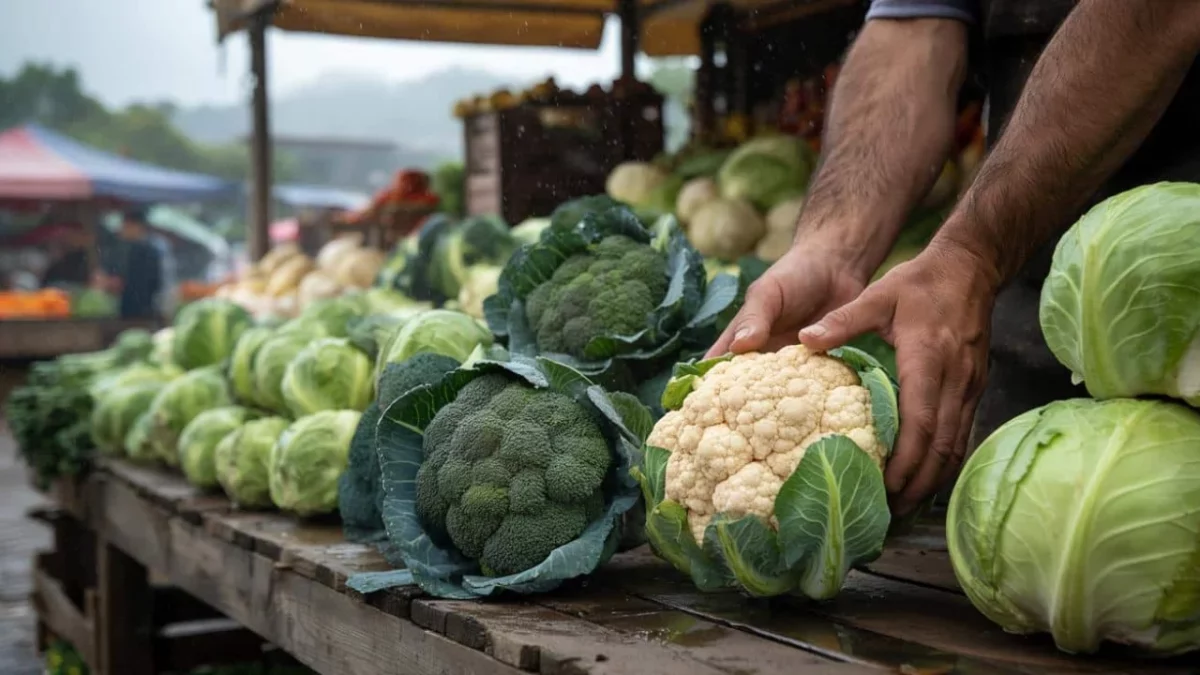
When you’re shopping in the produce section, cauliflower, broccoli, and cabbage appear to be completely different vegetables with distinct appearances, textures, and culinary uses. Yet beneath their superficial differences lies a remarkable botanical truth: these three vegetables are actually cultivars of the same species. This fascinating revelation challenges our assumptions about plant diversity and showcases the incredible power of selective breeding throughout human history.
The Common Ancestor: Brassica Oleracea
The scientific name for this versatile plant species is Brassica oleracea, a wild plant that originated in the Mediterranean regions of southern Europe. For thousands of years, this humble brassica grew along coastal cliffs and rocky areas, displaying modest characteristics that bore little resemblance to the vegetables we recognize today. What makes this plant truly remarkable is its potential for transformation through human cultivation.
Ancient peoples, particularly the Greeks and Romans, recognized the nutritional value and adaptability of this wild plant. Rather than leaving Brassica oleracea to grow in its natural form, early farmers began selecting plants with desirable traits for propagation. Some individuals favored plants with larger leaves, others preferred those with denser flowering heads, and still others sought plants that developed compact, tightly-packed structures. Over generations, these deliberate choices created the distinct varieties we see today.
How Selective Breeding Created Different Vegetables
The transformation of wild Brassica oleracea into cauliflower, broccoli, and cabbage represents one of agriculture’s most impressive achievements. This process didn’t happen overnight but rather unfolded across centuries, with different cultures emphasizing different plant characteristics in their breeding programs.
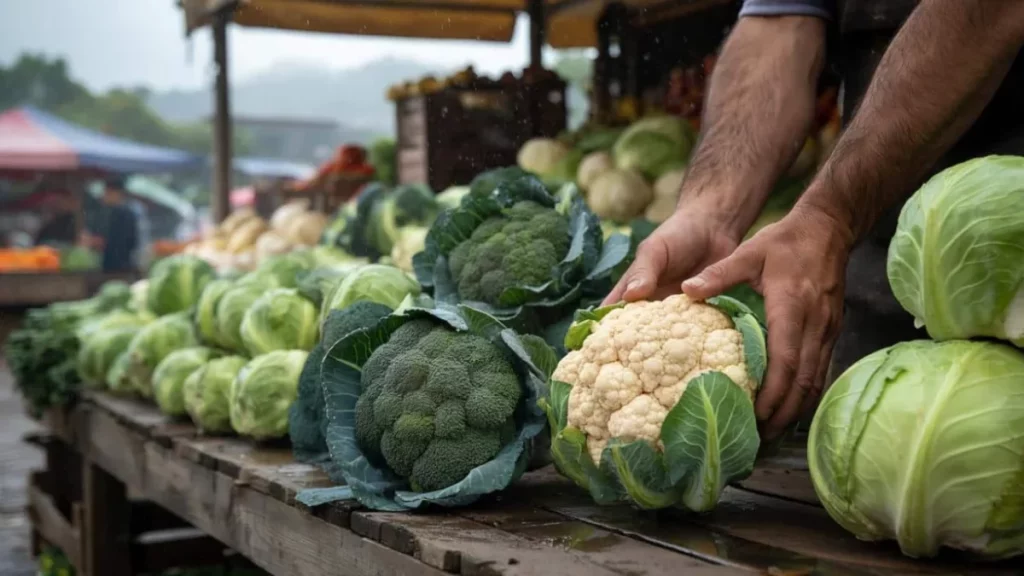
When farmers consistently selected and replanted seeds from plants that developed large, dense flower buds, they eventually created what we now call broccoli. These selections preserved the immature flowering heads, preventing them from opening into mature flowers. The result is the green, tree-like structure that defines broccoli today, with its central stalk crowned by tightly clustered florets.
Cauliflower emerged through a different breeding emphasis. Farmers selected plants that developed extraordinarily dense, white or cream-colored flower heads. Rather than the green florets of broccoli, cauliflower growers preserved mutations that produced the characteristic pale curds. The color difference results from reduced chlorophyll production, a trait that early cultivators valued and perpetuated through careful seed selection.
Cabbage represents yet another variation on the Brassica oleracea theme. Instead of prioritizing the flowering structures, cabbage breeders selected plants that produced tightly layered, overlapping leaves that formed dense, round heads. Through generations of selection, these leaf-based cultivars became what we recognize as the familiar heads of green, red, or Savoy cabbage found in every grocery store.
Additional Relatives in the Brassica Family
The story becomes even more interesting when you realize that cauliflower, broccoli, and cabbage represent just three members of the Brassica oleracea family. Brussels sprouts, with their miniature cabbage-like appearance, are actually small buds that develop along the plant’s central stem. Kale represents another cultivar, developed specifically for its loose, leafy growth rather than head formation.
Kohlrabi, the unusual bulbous vegetable that resembles a science fiction creation, is also a Brassica oleracea variety. In this case, selective breeding emphasized the thickening of the stem tissue, creating the distinctive swollen structure beneath the leaves. Each of these vegetables demonstrates how the same species can express wildly different characteristics depending on which traits humans decide to select and reinforce.
Even collard greens, a staple in Southern and African cuisines, belong to this family. The variety available within Brassica oleracea is truly staggering—all originating from one wild plant species.
The Science Behind the Transformation
Understanding how such dramatic transformations occur requires knowledge of basic genetics and plant development. Brassica oleracea possesses significant genetic diversity within its species. Wild plants exhibit variations in leaf structure, stem thickness, flowering patterns, and growth habits. While individual differences might be subtle, they provide the raw material for selective breeding programs.
When farmers saved seeds from plants displaying their preferred traits, they increased the frequency of genes associated with those characteristics in subsequent generations. Over many generations, this process concentrates favorable genes, leading to increasingly pronounced expressions of desired traits. Modern plant genetics has revealed that cauliflower, broccoli, and cabbage share the same basic chromosome number and can even be crossbred in some cases, further confirming their close relationship.
Nutritional Implications of This Plant Relationship
The shared genetic heritage of these vegetables translates into similar nutritional profiles. All varieties of Brassica oleracea contain powerful glucosinolates, sulfur-containing compounds that research suggests may have cancer-fighting properties. They’re all excellent sources of vitamin C, vitamin K, dietary fiber, and various beneficial antioxidants.
Whether you’re choosing cauliflower, broccoli, or cabbage, you’re selecting from vegetables that share fundamental nutritional strengths. The differences in appearance and flavor result from different concentrations of various compounds, but the basic nutritional foundation remains consistent across all cultivars.
Implications for Modern Agriculture and Food Culture
This botanical reality carries important implications for how we think about food diversity and agricultural innovation. It demonstrates that agriculture isn’t simply harvesting wild plants but actively reshaping them to meet human needs and preferences. Every vegetable variety represents human creativity applied to plant genetics over generations.
As modern agriculture faces challenges from climate change, evolving pest pressures, and changing food preferences, this history offers hope. The genetic diversity within Brassica oleracea—visible in the wide range of cultivars—suggests that this species possesses considerable adaptability. Researchers continue developing new varieties that improve disease resistance, enhance nutritional content, or expand growing capabilities.
Conclusion: Appreciating Our Vegetable Heritage
The next time you’re preparing dinner, take a moment to appreciate the remarkable fact that your cauliflower, broccoli, and cabbage likely came from the same plant species. This connection represents thousands of years of human agricultural innovation, cultural adaptation, and selective breeding mastery. What appears as vegetable diversity actually showcases humanity’s ability to shape plant characteristics toward our goals and preferences. Understanding these connections deepens our appreciation for both the vegetables we consume and the agricultural heritage they represent.









Leave a Comment