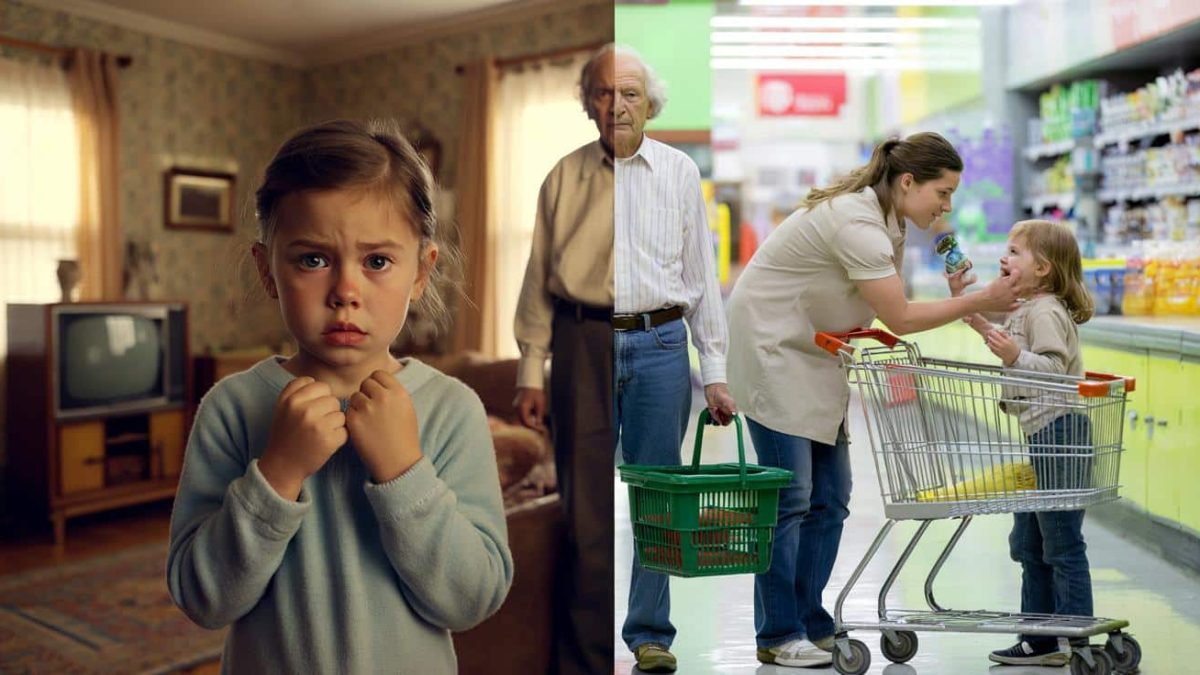
When your grandmother survived a house fire with remarkable composure, her neighbors called it courage. When your grandfather limped to the hospital after a serious fall without asking for help, it became family legend. Yet today, mental health professionals might identify these responses differently—not as indicators of strength, but as markers of emotional suppression or avoidant coping. This generational disconnect reveals something profound about how we understand psychological development across decades.
The Cultural Context of Mid-Century Parenting
The 1960s and 1970s represented a unique intersection of economic optimism and social constraint. Post-war prosperity created opportunities, while deeply ingrained cultural values emphasized self-reliance, emotional restraint, and physical endurance as markers of character. Parents who grew up during the Great Depression and World War II passed forward a philosophy: survival meant not burdening others with your struggles. Children learned early that complaints were luxuries reserved for the severely injured or gravely ill.
This wasn’t cruelty—it was adaptation. In an era before modern safety nets, when medical care was expensive and psychological services were stigmatized, families developed practical strategies. A child who cried over a scraped knee might be told to rinse it with the garden hose and get back to playing. Emotional pain was addressed through distraction, movement, and normalization rather than validation and processing. These weren’t thoughtless responses; they reflected genuine beliefs about how humans develop resilience.
Seven Strengths That Psychology Now Questions
Modern psychological research has identified seven distinctive mental capacities that emerged from this parenting paradigm—capacities that are increasingly reframed through a trauma-informed lens:
1. Emotional Compartmentalization – The ability to separate feelings from actions, continuing with responsibilities despite internal distress. This created individuals who could function effectively under pressure, but modern psychology questions whether this prevented healthy emotional processing.
2. Physical Pain Tolerance – A remarkable capacity to endure discomfort without seeking immediate intervention. While valuable in genuinely dangerous situations, this response may have discouraged necessary medical attention and normalized suffering.
3. Minimal External Validation Seeking – These individuals rarely needed constant affirmation or reassurance. They could work independently without requiring feedback loops. However, this trait sometimes masked deeper needs for connection and support.
4. Crisis-Oriented Clarity – When serious situations arose, these individuals could think with remarkable clarity and take decisive action. Yet outside acute crises, this sometimes manifested as difficulty accessing emotions or recognizing non-emergency emotional needs.
5. Self-Reliance to the Point of Isolation – An admirable independence that meant rarely burdening others and solving problems alone. This strength sometimes prevented people from building interdependent relationships or accepting help when genuinely needed.
6. Implicit Threat Detection – Growing up in less supervised environments created heightened awareness of danger and social dynamics. While adaptive, this sometimes evolved into hypervigilance rather than healthy caution.
7. Deferred Gratification and Discomfort Tolerance – The ability to endure present difficulties for future benefit was ingrained deeply. This created disciplined individuals but sometimes at the cost of present-moment wellbeing.
The Modern Reinterpretation
Contemporary trauma-informed psychology approaches these traits with new vocabulary. What was once called “toughness” may now be identified as “emotional suppression.” What was labeled “independence” might be reframed as “anxious avoidance of vulnerability.” This reinterpretation isn’t necessarily wrong—it represents genuinely important insights about how unprocessed experiences can affect psychological health.
However, the reinterpretation can miss something essential: these weren’t uniformly harmful responses. They were adaptive strategies that helped individuals navigate specific circumstances. A person who learned to remain calm during emergencies developed a genuine skill. The question isn’t whether they suppressed emotions—it’s whether that suppression became their only available response, even in safe contexts where vulnerability would be appropriate and healing.
The Nuance Modern Psychology Often Misses
The danger in contemporary discourse lies in retrospective pathologizing. When we examine childhood experiences through the lens of trauma theory, we risk interpreting all difficult experiences as inherently damaging. Yet humans are remarkably adaptable. A child who learned to soothe themselves through difficulty developed both problem-solving skills and self-regulation capacities that are genuinely valuable.
The real issue emerges when these adaptive strategies become rigid—when someone who learned to minimize pain as a child finds themselves unable to acknowledge pain as an adult, even when it signals genuine problems requiring attention. The strength becomes limiting when it prevents appropriate help-seeking or emotional connection.
Where Psychology Gets It Right
Modern psychology’s contribution isn’t denying that these individuals developed real strengths. Rather, it highlights that strength without flexibility becomes fragility. Someone who never learned to ask for help may struggle profoundly when circumstances require interdependence. Someone who never processed difficult emotions may experience unexpected breakdowns when stress accumulates. The issue isn’t that resilience is bad—it’s that exclusive reliance on stoicism, without access to emotional expression and connection, creates hidden vulnerabilities.
Integrating Both Perspectives
The most sophisticated understanding acknowledges that people raised in the 1960s and 1970s genuinely developed psychological strengths alongside potential vulnerabilities. They learned to function under pressure, to persist through difficulty, and to take action rather than collapse into helplessness. These remain valuable capacities.
Simultaneously, if those skills developed at the expense of emotional awareness, vulnerability, and help-seeking, that represents an incomplete toolkit for adult life’s full range of challenges. The goal isn’t to rewrite history or declare previous generations traumatized by definition. Instead, it’s helping individuals of all backgrounds recognize where their adaptive strategies serve them and where they might need expansion.
Understanding this generational difference with compassion—rather than either romanticizing the past or condemning it—allows us to preserve what was genuinely wise in earlier parenting approaches while incorporating modern psychological insights about emotional health and connection.











Leave a Comment