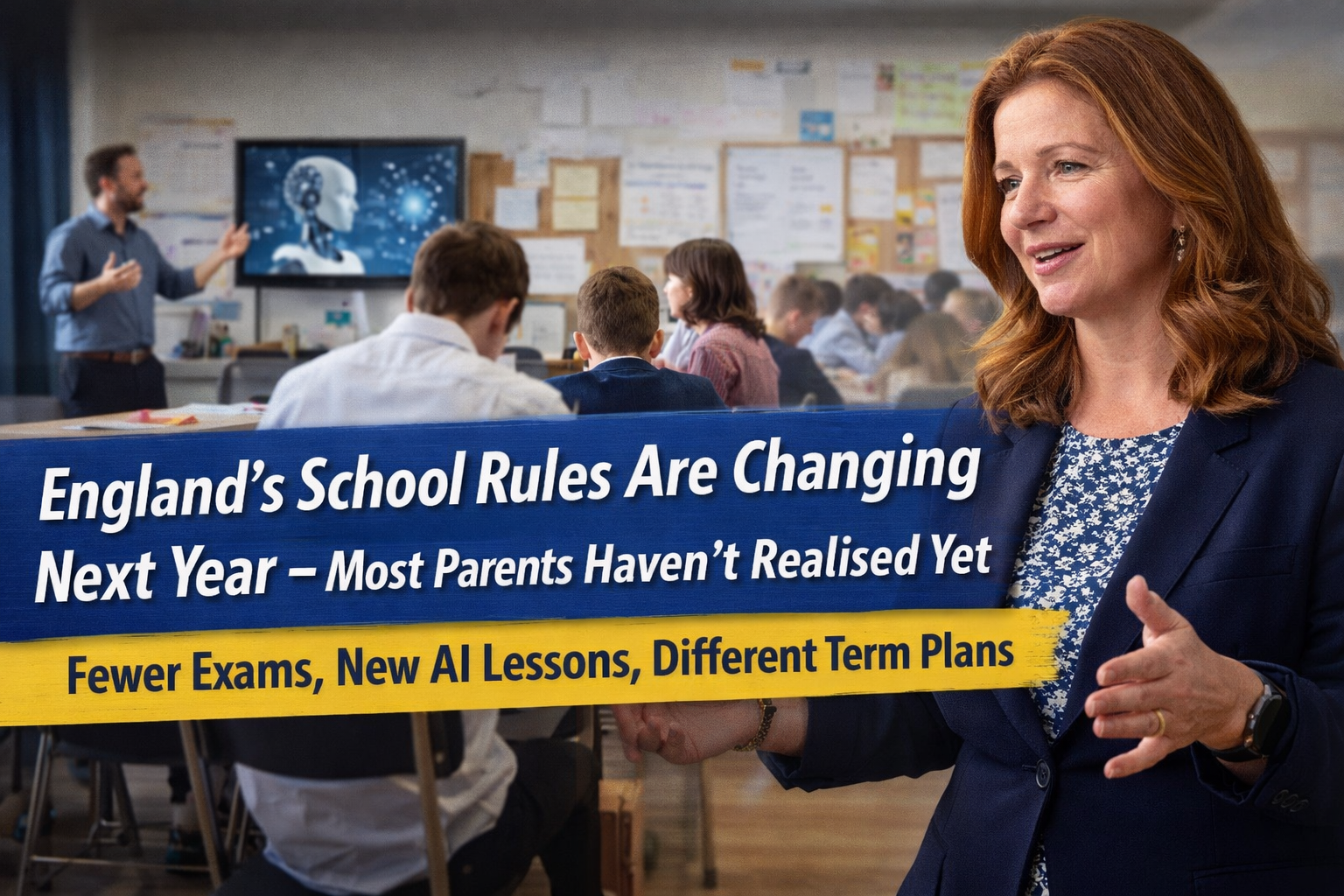
For millions of students across the UK, school and college life is about to feel very different. From how exams are taken, to how learning is organised across the year, and even how students are expected to study, a series of changes coming into effect from next year could quietly reshape daily life in classrooms.
Education leaders say the reforms are long overdue. Students, parents and teachers have been raising the same concerns for years: too much exam pressure, outdated learning models, and a system that no longer reflects the world young people are growing up in.
Now, change is finally arriving — and while it may not happen overnight, the direction is clear.
Why UK Education Rules Are Being Updated
The pressure on students has been steadily building. GCSE and A-level exams have become more intense, revision periods longer, and expectations higher. At the same time, young people are navigating a digital world filled with artificial intelligence, social media, misinformation and fast-changing job markets.
Many educators argue that the current system was designed for a different era — one where memorising facts mattered more than understanding information, and where exams were the main measure of success.
After years of reviews, consultations and pilot studies, policymakers are now responding with a package of reforms aimed at restoring balance.
The goal, officials say, is simple: less stress, smarter assessment, and learning that actually prepares students for real life.
Exams: Less Time, Smarter Testing
One of the biggest changes students will notice is in exams themselves.
From next year, overall exam time at GCSE level will be reduced. This doesn’t mean exams are being scrapped, nor does it mean standards are being lowered. Instead, exam boards are being asked to streamline assessments, removing repetition and focusing on the most important knowledge and skills.
For students, this could mean:
-
Fewer hours sitting in exam halls
-
Less repetitive questioning across papers
-
More focus on understanding rather than endurance
Education leaders believe long exam periods often test stamina more than ability. By shortening exams slightly, they hope students will perform more accurately and with less anxiety.
Earlier Support, Fewer Last-Minute Panics
Another important change involves earlier assessments during secondary school.
Rather than waiting until GCSE years to identify learning gaps, schools will place more emphasis on spotting difficulties earlier. This allows teachers to offer targeted help long before exam pressure peaks.
For students, this could reduce the feeling of “falling behind” late in school — a common cause of stress and burnout.
How Study Plans Are Changing
The reforms don’t stop at exams. They also reshape how students are expected to study throughout the year.
A Shift Away From Rote Learning
Traditional revision — memorising pages of notes — is gradually giving way to a more skills-based approach. Schools are being encouraged to prioritise:
-
Understanding concepts deeply
-
Explaining ideas in students’ own words
-
Applying knowledge to unfamiliar situations
This means future success may depend less on how much you can memorise, and more on how well you can think.
Independent Learning Becomes More Important
Students will be expected to manage their time more effectively, especially as revision and assessment become more spread out. Learning how to plan, organise and reflect on work is becoming just as important as the subject content itself.
New Topics Enter the Classroom
One of the most talked-about changes is the introduction of modern, real-world topics into the curriculum.
Artificial Intelligence and Digital Awareness
Students will increasingly learn about artificial intelligence — not just how it works, but how it affects everyday life. Lessons will focus on understanding AI tools, their benefits, and their limits, helping students become informed users rather than passive consumers.
Fake News and Media Literacy
With misinformation spreading rapidly online, schools are placing greater emphasis on teaching students how to question what they see and read. Learning to spot fake news, misleading headlines and unreliable sources is now considered a core life skill.
Practical Life Skills
Financial basics, such as budgeting, saving and understanding everyday costs, are also gaining a stronger place in lessons. These topics aim to prepare students for independence — something many adults say school never taught them.
What This Means for School Holidays
School holidays themselves are not being abolished or drastically changed. However, how learning fits around holidays may look different.
Rather than intense revision crammed into short breaks, schools are being encouraged to spread preparation more evenly across the year. This could mean:
-
Less pressure during holiday periods
-
Better-planned revision schedules
-
More support during term time
For students, this could restore holidays as actual breaks — rather than stressful countdowns to exams.
Impact on Colleges and Sixth Forms
Colleges and sixth forms are also adapting to the changes.
Study programmes are being updated to:
-
Reflect new GCSE structures
-
Focus more on transferable skills
-
Prepare students for further education and employment
For students moving from GCSEs to A-levels, T-levels or vocational courses, the transition should feel smoother and more relevant to future goals.
Summary Table: What’s Changing From Next Year
| Area | What’s Changing | Student Impact |
|---|---|---|
| Exams | Reduced total exam time | Less pressure, clearer focus |
| Assessments | Earlier checks in school | Support before exam years |
| Study Style | Skills-based learning | Better understanding |
| Digital Learning | AI & fake news lessons | Real-world readiness |
| Holidays | Smarter revision planning | Fewer stressful breaks |
| Colleges | Updated study models | Easier transitions |
What Students Can Do to Prepare
Even before the changes officially begin, students can benefit from adjusting their approach now.
-
Focus on understanding, not memorising
-
Practise explaining answers clearly
-
Build good study routines early
-
Learn to manage time independently
These habits will matter more than ever.
What Parents Should Expect
For parents, the new system may feel unfamiliar — especially if you grew up with long exams and heavy revision schedules.
The key thing to remember is that exams still matter, but they are no longer the only measure of success. Encouraging curiosity, balance and healthy routines will be just as important as exam results.
Teachers and Schools Face a Careful Transition
Teachers broadly welcome the changes but stress that they must be introduced carefully. Training, resources and clear guidance will be essential to avoid confusion.
The government has promised a phased rollout to give schools time to adapt.
Why This Moment Matters
These changes represent more than technical updates. They reflect a growing recognition that education must evolve alongside society.
Young people today face challenges their parents never did — from digital overload to rapidly changing career paths. An education system built purely around exams cannot fully prepare them for that reality.
Final Thoughts
From next year, UK students will experience a quieter but meaningful shift in how they learn, revise and are assessed. Exams will still exist, but they will no longer dominate everything. Study plans will be more flexible, skills more valued, and pressure more evenly managed.
For students willing to adapt early, this new system could offer something many have been asking for: a fairer, more human way to learn.





Leave a Comment