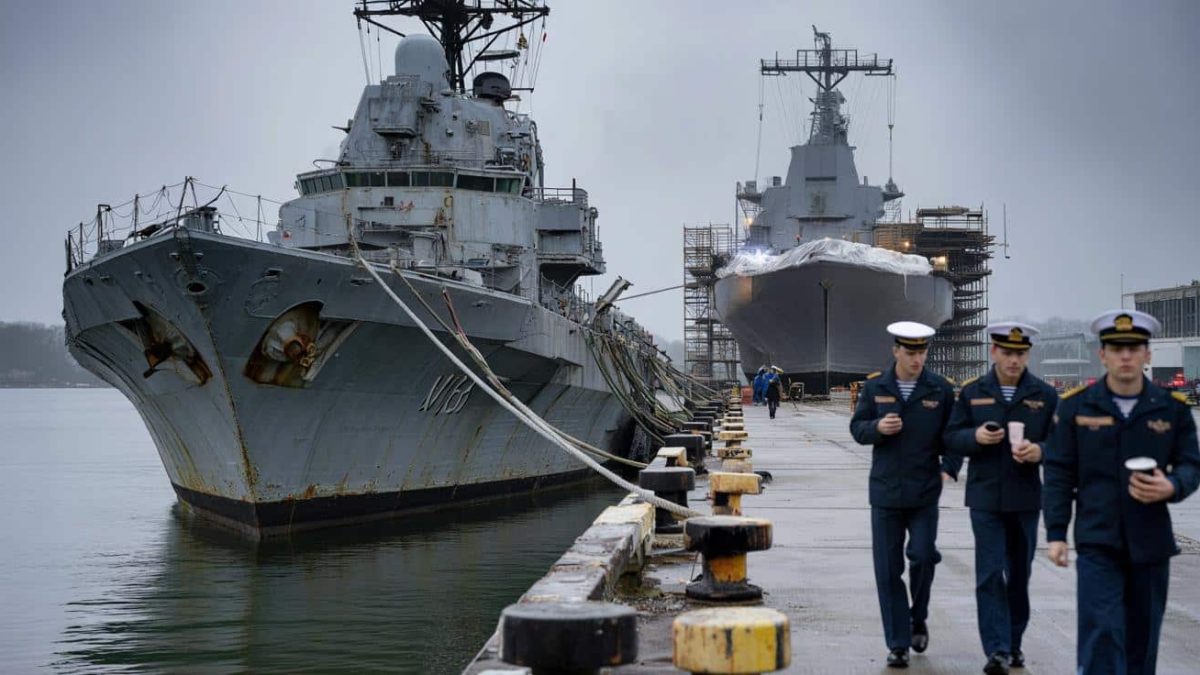
For generations, the United States Navy has epitomized unquestionable maritime supremacy, a force capable of simultaneously maintaining presence and operational readiness across every major ocean basin. Yet beneath the surface of this enduring institutional confidence, a significant reassessment is underway. Recent acknowledgments from senior naval leadership reveal a candid reckoning with the limitations of current amphibious warfare doctrine and fleet composition—a reality that challenges decades of strategic assumptions.
The Shift in Naval Ambitions
When military institutions of the caliber of the United States Navy formally adjust their strategic objectives, the implications reverberate far beyond Pentagon corridors. The recent scaled-back ambitions for the Navy’s amphibious armada represent far more than routine budget adjustments or administrative recalibration. Instead, they signal a fundamental reassessment of how American maritime forces should be structured, deployed, and operationalized in an increasingly contested global environment.
The amphibious assault fleet, historically conceptualized as a specialized extension of American power projection capabilities, faced mounting scrutiny as military analysts and naval strategists grappled with uncomfortable questions. Could traditional amphibious operations remain viable against adversaries equipped with advanced anti-ship weaponry? Were the massive financial investments in conventional amphibious platforms justified given emerging technological threats? These weren’t hypothetical academic debates—they represented genuine operational concerns that senior commanders could no longer dismiss.
Confronting Twenty-First Century Realities
The modern threat environment differs dramatically from the strategic landscape that shaped Cold War naval doctrine. Contemporary adversaries possess sophisticated, affordable anti-ship capabilities that can threaten even the most heavily defended naval vessels from considerable distances. Hypersonic missiles, advanced coastal defenses, and drone technologies have fundamentally altered the calculus of amphibious operations.
Traditional amphibious assault doctrine assumes the ability to achieve temporary naval and air superiority in contested waters—a capability increasingly difficult to guarantee. The concentration of personnel and equipment aboard amphibious warfare ships creates vulnerability profiles that previous generations of naval planners never seriously contemplated. When a single adversarial weapon system can inflict catastrophic damage on a capital ship carrying thousands of marines and sailors, institutional confidence in conventional approaches necessarily erodes.
The Navy’s recalibration acknowledges this uncomfortable reality without conceding fundamental commitment to amphibious capabilities. Rather than maintaining previously ambitious acquisition targets, the service is pursuing a more measured, technologically sophisticated approach that emphasizes distributed operations, autonomous systems, and smaller, more survivable platforms distributed across broader operational areas.
The Economics of Naval Dominance
Financial constraints provide context for these strategic adjustments, though they represent only partial explanation for the shift. Amphibious warfare ships represent extraordinarily expensive platforms—each modern landing helicopter dock vessel costs approximately $1.9 billion, representing substantial portions of annual naval budgets. When operational viability questions compound financial pressures, the institutional case for maintaining ambitious procurement schedules becomes considerably weaker.
The defense industrial base, long accustomed to steady demand for amphibious platforms, must adapt to revised expectations. Shipyards specializing in these vessels face production schedules that reflect reduced fleet requirements. This cascade of adjustments reverberates through supply chains, workforce planning, and industrial capacity investments that assumed sustained demand at previously established levels.
Strategic Alternatives and Innovation
Interestingly, the Navy’s scaled ambitions don’t represent retreat from amphibious capabilities—rather, they reflect evolution toward more sophisticated, resilient approaches. Military planners are exploring distributed amphibious operations utilizing smaller vessels, advanced logistics networks, and autonomous platforms that scatter assault capabilities across broader geographic areas rather than concentrating them aboard vulnerable capital ships.
This conceptual shift mirrors broader transformations occurring throughout American military institutions. Instead of creating massive, highly visible targets, strategies emphasize dispersal, redundancy, and distributed operations that prove more resistant to sophisticated adversarial capabilities. Ironically, this approach may ultimately prove more effective for actual amphibious operations while simultaneously reducing individual platform vulnerability.
Innovation in autonomous systems, drone technologies, and rapid-response platforms offers potential solutions that didn’t exist when traditional amphibious doctrine crystallized. The Navy is exploring how unmanned systems might precede manned operations, conduct reconnaissance, suppress defenses, and establish conditions favorable for subsequent personnel insertion. These technological approaches complement rather than replace traditional capabilities, creating more flexible operational options.
Institutional Credibility and Strategic Communication
Perhaps most significantly, the Navy’s frank acknowledgment of strategic limitations enhances rather than diminishes institutional credibility. Military organizations that candidly address operational challenges while proposing feasible alternatives command greater respect from civilian leadership, allied partners, and adversaries than those that cling to outdated doctrine despite obvious limitations.
The transparency surrounding these adjustments also serves important strategic communication functions. Potential adversaries gain clarity regarding American capabilities and intentions, reducing miscalculation risks. Allied partners understand the Navy’s realistic assessment of operational constraints and the logic underlying strategic planning. Congressional oversight becomes more constructive when military leaders present honest appraisals rather than inflated capability claims.
Looking Forward: Amphibious Warfare Evolution
The recalibration of American amphibious capabilities doesn’t signify declining naval power—rather, it represents maturation of strategic thinking in response to objective operational realities. The Navy will maintain robust amphibious capabilities while accepting that previous ambitions for fleet size and scope require adjustment based on threat environments and budgetary realities.
Future amphibious operations will likely look substantially different from Cold War precedents. Smaller ships, distributed operations, autonomous systems, and innovative logistics approaches will characterize operations rather than massive concentrated assault forces. These evolutions may ultimately prove superior for actual operational requirements while reducing vulnerability to adversarial capabilities.
The United States Navy’s candid assessment of strategic limitations represents institutional wisdom rather than weakness. By acknowledging operational challenges, proposing innovative solutions, and scaling ambitions to match operational realities and available resources, the Navy maintains its position as the world’s preeminent maritime force while adapting to genuine 21st-century strategic requirements. This balanced approach, grounded in realistic analysis rather than institutional nostalgia, serves American national interests far more effectively than clinging to outdated operational concepts regardless of changed circumstances.










Leave a Comment