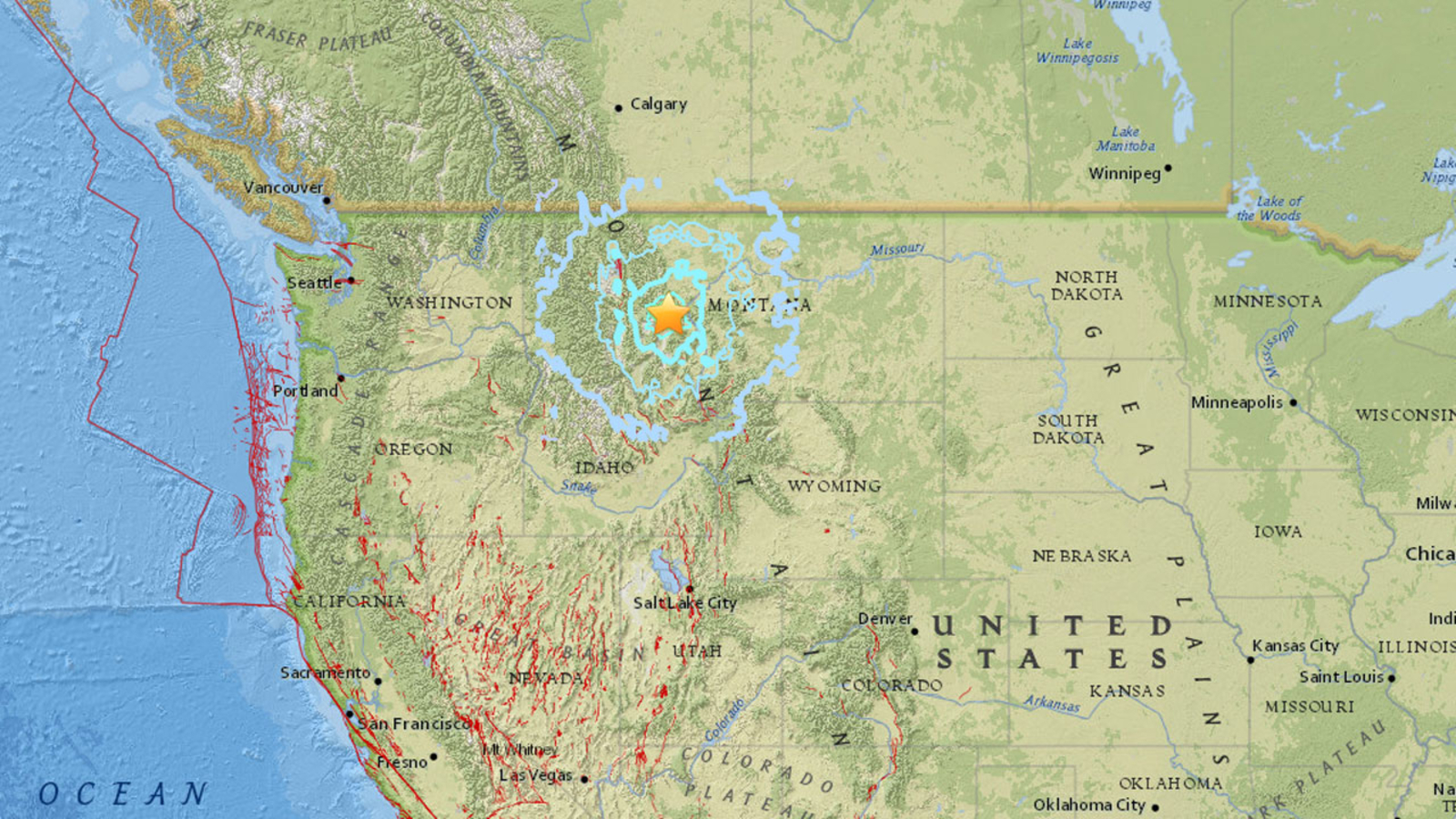
Parts of Montana felt a jolt Thursday after an earthquake rippled through several communities, briefly sparking confusion online over how strong it was.
Early posts on social media put the quake at a magnitude 5.1. That estimate didn’t hold for long.
After reviewing seismic data, the U.S. Geological Survey confirmed the earthquake measured 4.2. The shaking was noticeable in parts of the state, but officials said there were no immediate reports of injuries or significant damage.
Monitoring continued through the day as more information came in.
Shaking felt across multiple Montana communities
The earthquake struck Thursday, January 29, 2026, and was reported by residents across several areas of Montana. People described a quick jolt—strong enough to rattle windows or knock items slightly out of place, but over almost as soon as it began.
Within minutes, social media filled with firsthand accounts. Some posts cited a stronger quake, adding to the initial uncertainty.
The USGS later clarified the magnitude at 4.2, noting that early estimates are often revised as analysts review more complete seismic readings.
“Initial magnitudes are automatically generated and can change as additional data is processed,” the agency said in a public explanation of how earthquake reports are finalized.
A quake of that size is considered moderate. It’s strong enough to be felt over a wide area, especially when it’s shallow, but it rarely causes serious damage.
Why earthquakes still matter in Montana
Montana sits along the Intermountain Seismic Belt, a geologically active zone that runs through parts of the northern Rockies. Earthquakes here aren’t daily occurrences, but they aren’t unusual either.
The state’s seismic history includes the 1959 Hebgen Lake earthquake, a powerful 7.3-magnitude event that reshaped the landscape and remains one of the strongest quakes in U.S. history.
Most modern-day earthquakes in Montana are far smaller. Still, they draw attention, partly because many residents don’t experience them often.
“Even moderate earthquakes can feel alarming if you’re not used to them,” said Mike Stickney, a seismologist with the Montana Bureau of Mines and Geology, in past public briefings on regional seismic activity. “People notice them, and they remember them.”
That reaction played out again Thursday as residents compared notes online and waited for official confirmation.
How Thursday’s event unfolded
Thursday morning:
Residents in parts of Montana report feeling shaking. Social media posts appear almost immediately, with some users estimating the quake as stronger than it turned out to be.
Shortly after:
The USGS reviews seismic data and updates its earthquake listings, revising the magnitude to 4.2.
Later in the day:
Emergency managers report no immediate calls tied to injuries or structural damage. Monitoring continues for possible aftershocks.
USGS officials encouraged people who felt the quake to submit reports through the agency’s “Did You Feel It?” program, which helps scientists map where shaking was strongest.
“Public reports are a critical part of understanding how an earthquake was experienced on the ground,” the USGS has said about the system.
Official response and monitoring
Local and state agencies said there was no indication of serious impact from the quake. Standard monitoring procedures remained in place as seismic data continued to be analyzed.
A spokesperson for the USGS noted that revisions like Thursday’s are routine. Early readings prioritize speed, while later updates focus on precision.
That process can sometimes clash with the speed of social media, where early numbers spread quickly before official confirmation arrives.
Residents react, then wait
Online reaction shifted as the day went on. Initial surprise gave way to relief once the confirmed magnitude was released and no damage reports surfaced.
Some residents shared photos of small items knocked over. Others said they barely felt anything at all.
By Thursday afternoon, attention turned to whether aftershocks might follow. For earthquakes of this size, aftershocks are possible, though not guaranteed.
What comes next
Seismologists will continue reviewing data from Thursday’s quake and watching for any additional seismic activity. State and local officials say they will issue updates if conditions change.
Residents are advised to rely on official sources during breaking events and to be cautious about unverified information circulating online.
Emergency managers also encourage Montanans to review basic earthquake safety steps, even if strong quakes are rare.
Key facts at a glance
| Category | Details |
|---|---|
| Event | Earthquake |
| Location | Parts of Montana |
| Date | Thursday, Jan. 29, 2026 |
| Who is affected | Residents in affected areas |
| Current status | Magnitude confirmed by USGS |
| What to know | Early reports overstated strength; no immediate damage reported |
Frequently asked questions
What was the magnitude of the earthquake?
The USGS confirmed the quake measured 4.2.
Why were early reports higher?
Initial social media posts were unverified, and early automated estimates can change as data is reviewed.
Was the quake dangerous?
A 4.2 earthquake is moderate and typically causes little damage.
Were there injuries or damage?
No injuries or major damage were reported as of Thursday.
Could there be aftershocks?
Aftershocks are possible, though not certain, after earthquakes of this size.
How often does Montana have earthquakes?
The state experiences periodic seismic activity due to regional fault systems, though large events are uncommon.
Closing
Thursday’s earthquake was a brief but noticeable reminder that Montana remains seismically active.
While early reports overstated the strength, the confirmed magnitude and lack of damage eased concerns. Officials continue to monitor conditions and encourage residents to follow updates from the U.S. Geological Survey and local authorities as more information becomes available.






Leave a Comment