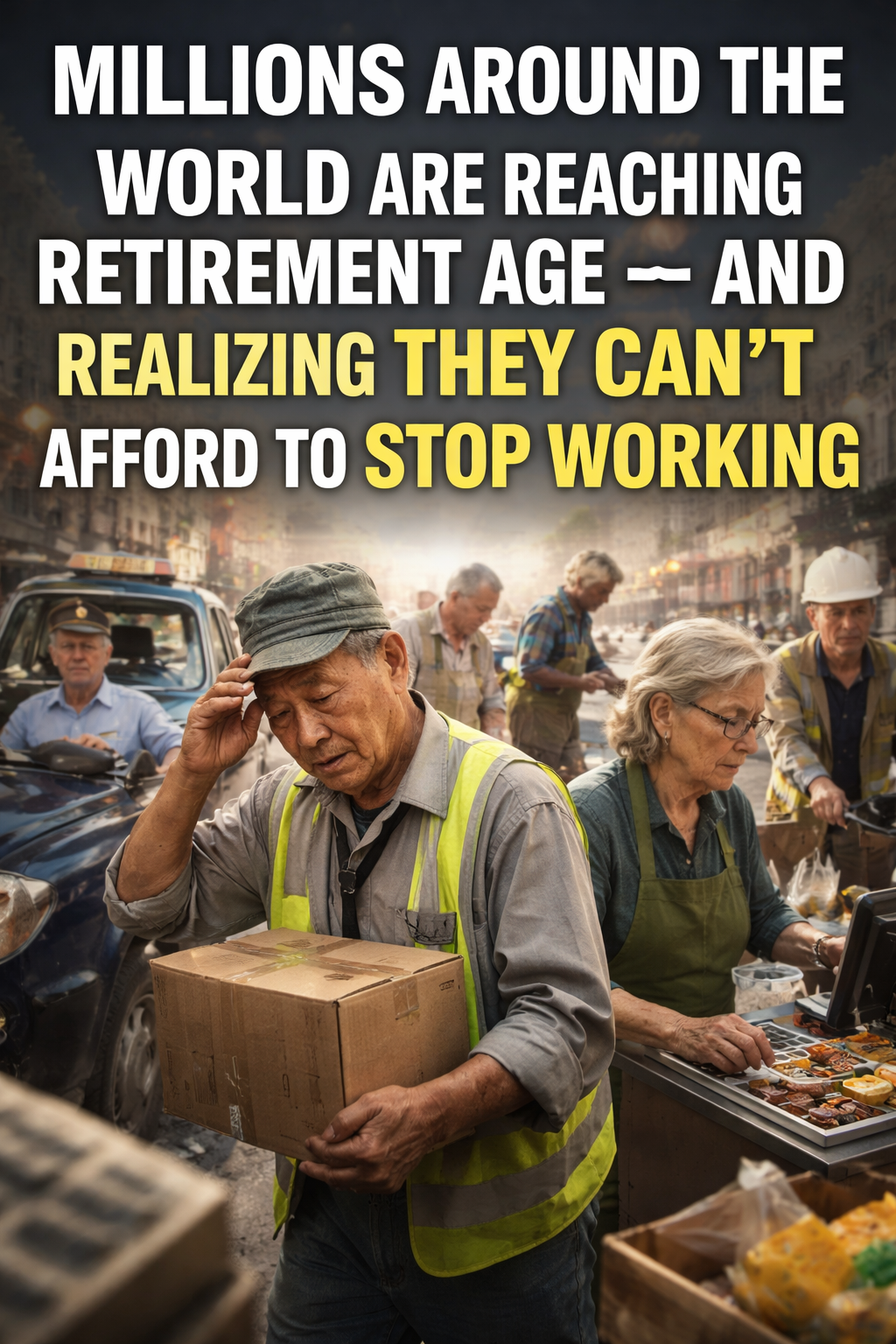
Across continents, cultures, and economies, a quiet crisis is unfolding. Millions of people are reaching what was once considered “retirement age” only to discover that stopping work is no longer financially possible. What used to be a predictable life milestone is now becoming an uncertain privilege — and for many, an unreachable one.
This is not a single-country problem. It is global, structural, and accelerating.
A Global Shift No One Planned For
For much of the 20th century, retirement followed a familiar formula: work for decades, rely on pensions or savings, and step away from the workforce in later life. That model is breaking down almost everywhere.
In high-income nations, rising housing costs, inflation, and healthcare expenses are outpacing retirement savings. In middle- and lower-income countries, limited pension coverage and informal employment leave older workers with few safety nets at all.
The result is the same across borders: people in their 60s and 70s are continuing to work — not out of choice, but necessity.
The Cost-of-Living Squeeze Hits Hardest at Retirement
Retirement planning assumes a certain level of stability. But stability is exactly what has disappeared for many households.
-
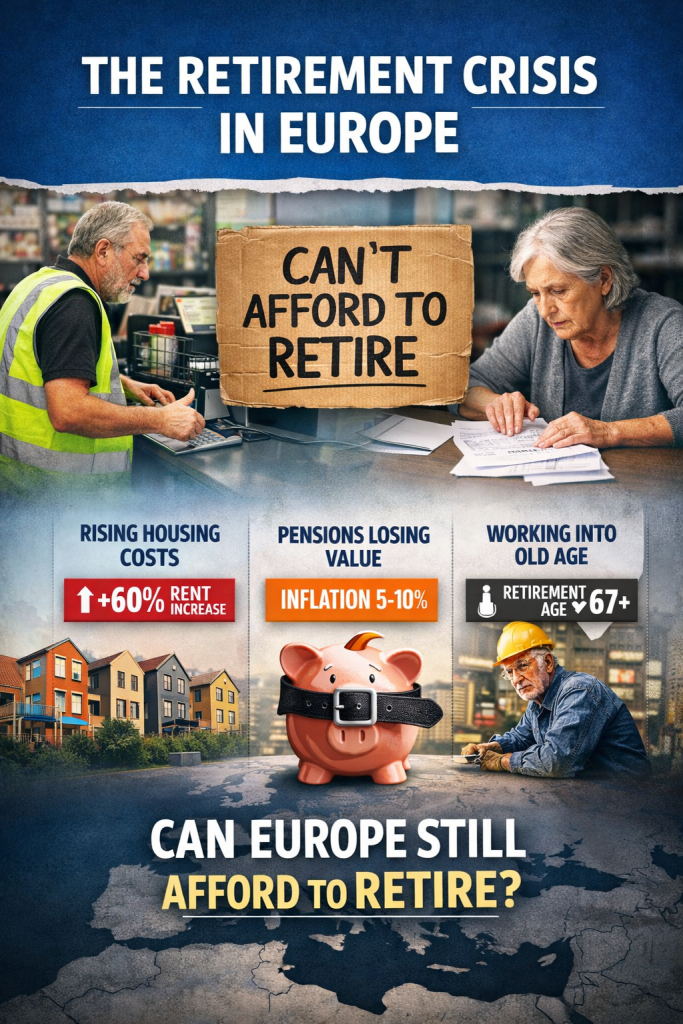
Housing costs have surged globally, whether through rent increases, property taxes, or maintenance expenses
-
Food and energy prices remain elevated in many regions
-
Healthcare costs increase sharply with age, even in countries with public systems
-
Interest rate hikes and market volatility have eroded savings
For retirees living on fixed incomes, even modest price increases can quickly turn budgets upside down.
Pensions Are No Longer Enough — If They Exist at All
In many countries, traditional defined-benefit pensions have been replaced with individual retirement accounts, shifting risk from institutions to individuals. That shift assumed steady wages, uninterrupted careers, and strong investment returns — assumptions that haven’t matched reality for large portions of the population.
Meanwhile, millions of workers worldwide spent years in:
-
Gig work
-
Contract jobs
-
Informal employment
These roles often provide little or no retirement protection, leaving people exposed just as earning power declines.
Working Longer: Choice or Compulsion?
There’s an important distinction often missing from public debate. Some older adults genuinely want to keep working — for social connection, purpose, or personal fulfillment.
But for a growing number, continuing to work is not about staying active. It’s about paying rent, affording medication, or avoiding dependence on family.
When retirement becomes optional only for the financially secure, it stops being a social norm and starts becoming a marker of inequality.
Healthcare: The Retirement Paradox
One of the most troubling aspects of the current situation is that the years when people need the most medical care are often the years when they feel least able to afford it.
Chronic conditions, prescription drugs, and long-term care costs can drain retirement savings quickly. In response, many older adults delay retirement specifically to keep employer-based health coverage or maintain income for medical expenses.
The paradox is stark: people continue working longer precisely because their health is becoming more fragile.
The Ripple Effects on Younger Generations
The retirement affordability crisis doesn’t exist in isolation. When older workers remain in the labor force longer than expected, it reshapes the entire job market.
-
Fewer openings for younger workers
-
Increased competition for lower-wage roles
-
Delayed wealth transfers within families
This creates frustration across generations, even though the underlying cause is systemic rather than individual.
Is Retirement Becoming a Luxury?
Increasingly, retirement is beginning to resemble homeownership or higher education: something attainable for some, but not guaranteed for all.
Instead of a clear transition out of work, many people now expect:
-
Part-time employment well into old age
-
Informal or gig-based income
-
Greater reliance on family support
Yet most societies have not updated labor laws, healthcare systems, or social protections to reflect this new reality.
Why This Conversation Matters Now
This issue rarely dominates headlines, but it affects hundreds of millions of people worldwide — and eventually, nearly everyone.
As populations age and birth rates fall, the question becomes unavoidable:
What happens when large portions of society are physically older, financially insecure, and still expected to work?
Ignoring the problem doesn’t make it go away. It only ensures that more people reach retirement age unprepared, unsupported, and unheard.







Leave a Comment