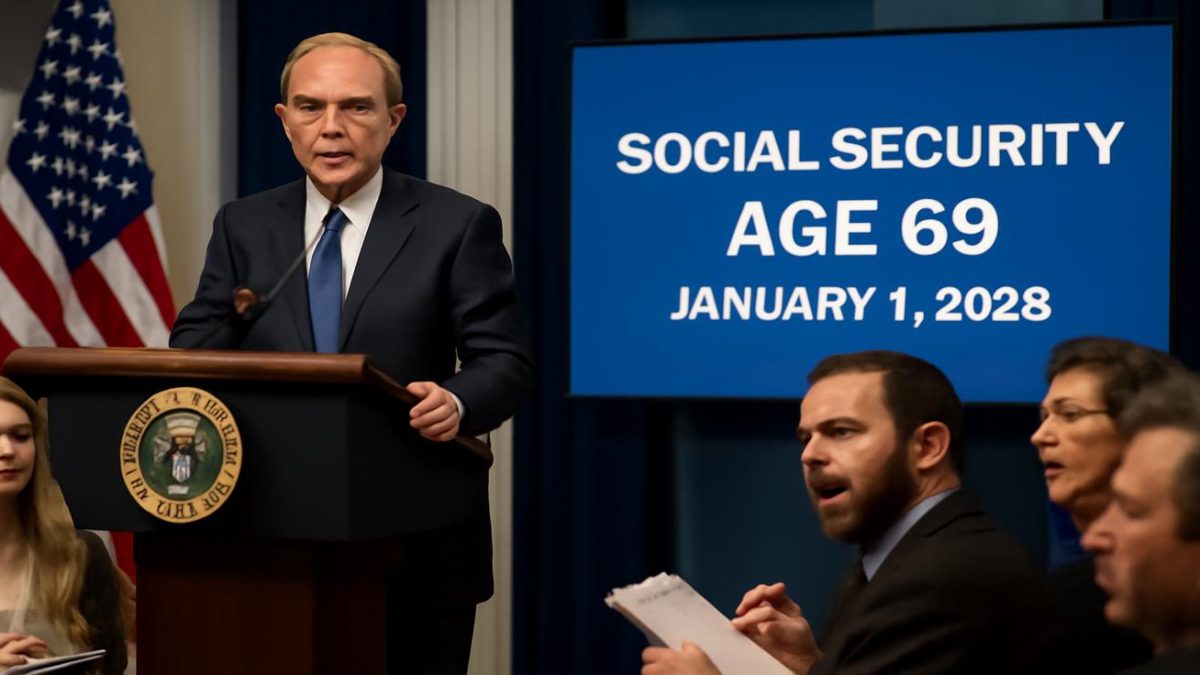
For generations, reaching 67 represented a clear checkpoint in life’s timeline. It was when Americans could confidently walk away from their careers and transition into retirement, knowing that Social Security would provide their financial foundation. However, the landscape of retirement in America is undergoing a profound transformation that challenges this long-standing tradition. The shifting policies surrounding Social Security eligibility are reshaping how millions of Americans think about work, retirement, and aging.
The Traditional Framework That’s Beginning to Crumble
The concept of retiring at 67 isn’t arbitrary. It emerged from legislation dating back decades, when life expectancies were considerably lower and the workforce dynamics were vastly different. For much of the late 20th century, 67 represented what economists and policymakers considered the “normal retirement age.” This milestone became deeply ingrained in American culture, from financial planning conversations to casual discussions about life goals.
Today, that neat boundary is blurring. Demographic shifts, economic pressures, and changing work patterns are all converging to redefine what retirement means and when Americans can realistically access their benefits. The Social Security Administration itself faces sustainability questions that have prompted officials to examine eligibility ages and benefit structures with fresh eyes.
Understanding the Demographic Pressures
The core issue driving these changes is straightforward: Americans are living longer than ever before. In 1935, when Social Security was established, life expectancy hovered around 60 years. Today, it exceeds 78 years, and many individuals live well into their 90s. This demographic reality creates a mathematical challenge for the Social Security system. More retirees drawing benefits for longer periods strains the trust fund that younger workers are funding through payroll taxes.
Additionally, birth rate patterns have shifted dramatically. The post-World War II baby boom created an unusually large cohort of workers, but subsequent generations have been smaller. This means fewer workers are supporting each retiree compared to previous decades. In the 1950s, roughly 16 workers contributed to Social Security for every retiree receiving benefits. Today, that ratio has fallen to approximately 3 to 1, and projections suggest it will drop further in coming years.
Gradual Increases and Full Retirement Age Expansion
The transformation isn’t happening overnight. Beginning in the 1980s, legislation gradually increased the “full retirement age” for Social Security benefits. For those born in 1938 or later, this age began creeping upward in two-month increments. For individuals born in 1960 or later, the full retirement age is now 67, but the trajectory continues. Future adjustments may push this age higher still.
What this means practically is that claiming benefits at 67 no longer guarantees you’re receiving your full benefit amount. Workers who wait until 70 receive substantially larger monthly payments—approximately 24 percent more for each year of delay. Conversely, those who claim at 62 face permanent reductions to their monthly benefits, creating a complex calculus that didn’t exist when 67 was simply “retirement age.”
The Reality of Modern Work Patterns
Beyond policy changes, actual work patterns in America are evolving in ways that complicate the traditional retirement timeline. Remote work, freelancing, and entrepreneurship have blurred the line between employment and retirement. Many individuals continue working past traditional retirement ages, either by necessity or choice, fundamentally changing when Social Security claiming becomes relevant.
Economic pressures play a significant role here. Healthcare costs, housing expenses, and inflation have made it increasingly difficult for many Americans to retire comfortably at 67 without supplementary income sources. Some continue working because their retirement savings are insufficient. Others choose to remain active in the workforce for health, social, or psychological reasons.
Strategic Claiming Decisions Replace Simple Timelines
The shift from a fixed retirement age to a more flexible system requires individuals to make increasingly complex decisions. Claiming strategy has become a critical component of retirement planning. Workers must now consider their health status, family longevity history, other income sources, marital status, and life expectancy estimates when deciding when to claim Social Security.

A married couple faces different optimization scenarios than a single person. Someone in excellent health with family history of longevity might benefit significantly from waiting until 70. Conversely, individuals with serious health concerns may find claiming earlier protects them from missing out entirely. These are personal decisions that require careful analysis rather than simply following a predetermined societal timeline.
What This Means for Your Planning
The decline of 67 as the universal retirement age doesn’t necessarily mean you should work longer—though many people will. Instead, it means retirement planning requires more intentionality and personalization than previous generations experienced. You should examine your unique circumstances rather than defaulting to a traditional benchmark.
Consider meeting with a financial advisor who specializes in Social Security strategy. Many people leave thousands of dollars on the table by claiming at suboptimal times. Understanding how your specific situation—earnings history, health status, family circumstances, and financial needs—intersects with Social Security rules can significantly improve your long-term financial security.
The Broader Shift in How We Think About Aging
Perhaps the most significant change isn’t about specific ages at all. It’s a philosophical shift in how American society conceptualizes aging and work. Rather than viewing retirement as a defined moment when you stop working entirely, we’re increasingly recognizing that many people want to—and will—work longer in some capacity.
This evolution actually offers opportunities. Phased retirement approaches, where individuals gradually reduce work hours over several years, allow for smoother transitions. Encore careers that leverage decades of experience in new contexts are becoming increasingly common. The rigidity of the 67-year-old retirement cliff is giving way to more fluid life patterns.
Planning for Uncertainty
One final consideration: the Social Security system itself faces long-term solvency challenges. While immediate cuts aren’t imminent, future adjustments are possible. This uncertainty makes it even more important to build diversified retirement income sources rather than relying solely on Social Security benefits. Consider developing multiple revenue streams from investments, savings, part-time work, and other sources.
The era when 67 simply meant “retirement time” has indeed ended. In its place emerges a more complex but ultimately more personalized approach to retirement and Social Security. By understanding these changes and planning strategically, you can navigate this new landscape and build a retirement that truly serves your individual needs and aspirations.











Leave a Comment