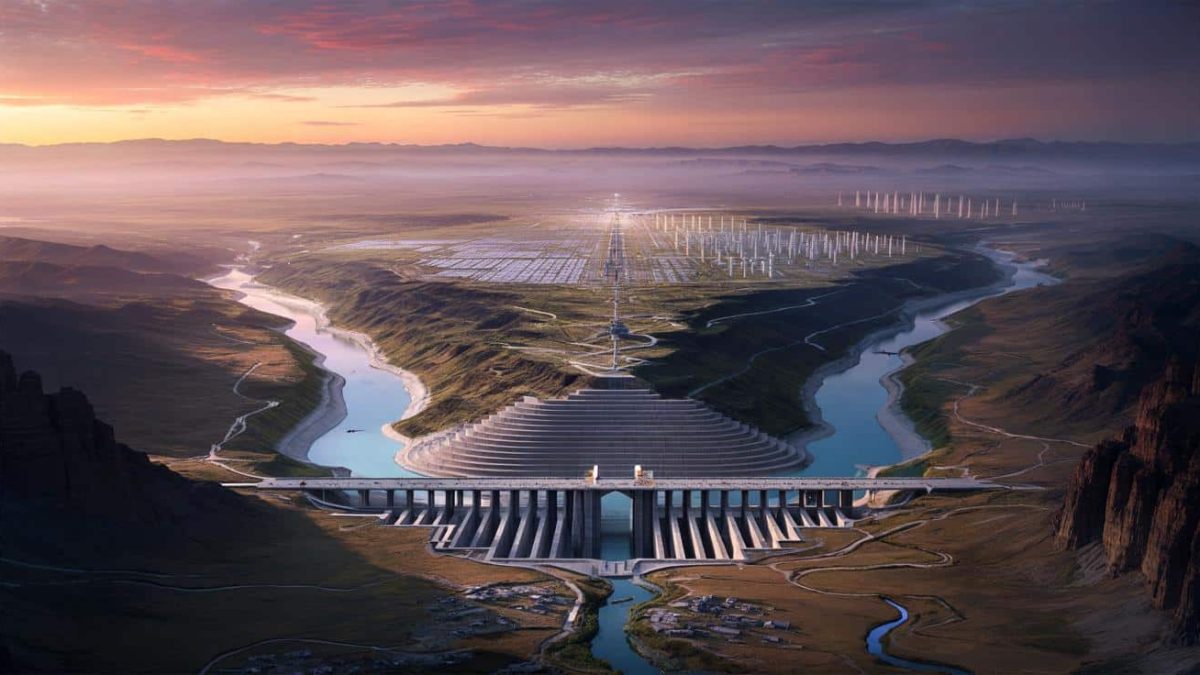
When the Three Gorges Dam was completed in 2006, it represented a watershed moment in human engineering. Yet perhaps more remarkable than the dam’s sheer physical scale was an extraordinary discovery that would capture global scientific attention: the structure was so monumentally massive that it could actually slow Earth’s rotation. Now, China has unveiled plans for an even more ambitious undertaking that threatens to push the boundaries of what humanity can construct—and what environmental consequences we’re willing to accept.
The Three Gorges Legacy: A Monument to Engineering and Physics
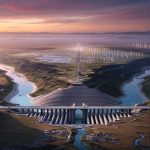
The Three Gorges Dam stands as one of humanity’s most impressive engineering achievements. Stretching across the Yangtze River with a length of over 2,300 meters, it creates a reservoir that spans across multiple provinces. Beyond its role in hydroelectric power generation, flood control, and navigation improvement, the dam presented scientists with an unexpected phenomenon.
The sheer mass of water held behind the dam—approximately 39 trillion tons—creates a measurable change in Earth’s moment of inertia. This gravitational redistribution is sufficient to alter the planet’s rotational speed, though the effect is measured in microseconds. For the scientific community, this represented a profound reminder that human infrastructure could now operate at a scale that affects planetary physics itself.
The environmental implications, however, told a different story. The dam displaced over one million people, submerged ancient archaeological sites, and fundamentally altered the ecosystem of the Yangtze River basin. Fish populations declined, microclimatic conditions shifted, and geological stability became a concern in surrounding regions.
Engineering at the Edge: What Comes After Three Gorges?
Despite the mixed legacy of the Three Gorges project, China’s government has maintained its commitment to large-scale infrastructure development as a cornerstone of national policy. This commitment has now crystallized into a new initiative that dwarfs even the Three Gorges achievement in scope and ambition.
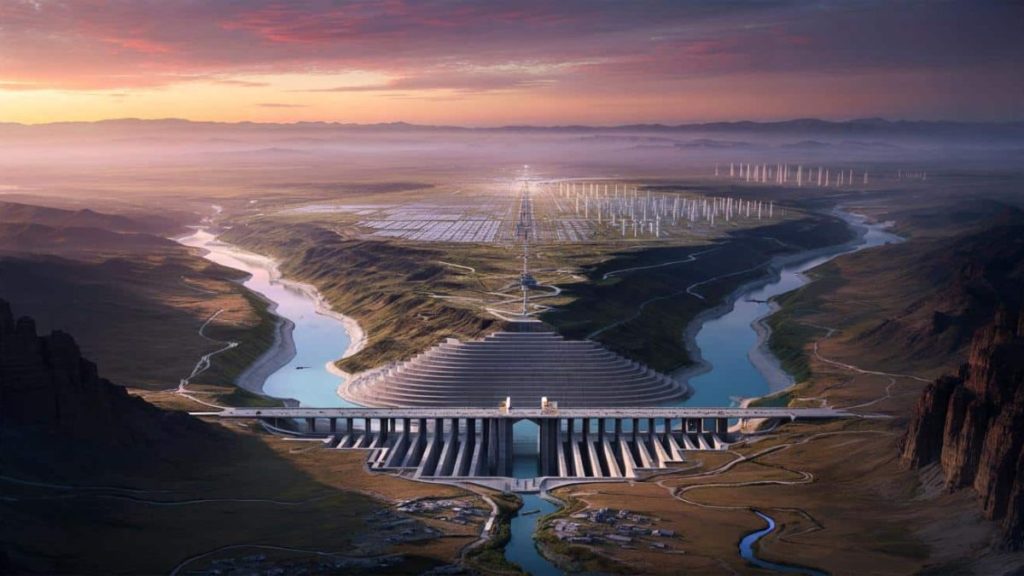
The unnamed mega-project reportedly involves a series of interconnected infrastructure systems designed to manage water resources across multiple regions, enhance energy production, and facilitate unprecedented levels of water transportation and redistribution. Early reports suggest the scale could be truly staggering—potentially affecting an area larger than several European nations combined.
Chinese engineers have framed the project as essential for climate resilience, regional development, and energy security. They point to increasing water stress in northern China, the need for renewable energy sources, and the economic benefits of improved inland transportation networks. From a purely technical standpoint, the engineering challenges are extraordinary, requiring innovations in materials science, construction methodology, and project management.
The Environmental and Ethical Dilemma
Yet even before specific details have been widely released, the proposed project has sparked heated debate among environmental scientists, ethicists, and indigenous communities who would be affected. The concerns are manifold and serious.
First, there’s the precedent of the Three Gorges Dam itself. Studies have documented how the dam has affected regional earthquake frequency, altered downstream sediment patterns, and disrupted fisheries that had sustained communities for centuries. A project of even greater magnitude could amplify these impacts exponentially.
Second, the project would involve altering natural water systems that are integral to regional ecosystems. Wetlands, river deltas, and floodplain habitats provide critical services for both wildlife and human communities. Large-scale water redistribution could trigger cascading ecological changes that scientists cannot fully predict or control.
Third, there remains the question of human displacement. If the Three Gorges project displaced millions, what scale of relocation might a larger undertaking require? And what does it mean for cultural preservation when ancient communities and heritage sites are submerged under new reservoirs?
Geopolitical Dimensions and Global Power Dynamics
Beyond environmental concerns, the project carries significant geopolitical weight. By controlling vast water resources, China would consolidate enormous power over a critical natural resource. This could affect neighboring nations that depend on shared water systems, creating potential diplomatic tensions.
The project also reflects a broader pattern of Chinese infrastructure expansion known as strategic development. By investing in megaprojects, China demonstrates technological prowess, creates employment, and establishes itself as a nation capable of executing unprecedented feats of engineering.
For other nations, the mega-project presents a dilemma. Do they view it as environmental recklessness that threatens regional stability? Or do they acknowledge China’s sovereign right to develop its own resources while attempting to set international standards for environmental impact assessment and mitigation?
The Question of Sustainability and Alternatives
Critics argue that the resources devoted to this mega-project could be redirected toward distributed renewable energy systems, water conservation technologies, and ecosystem restoration. Solar and wind farms, though requiring their own environmental considerations, might achieve similar energy goals without the same scale of ecosystem disruption.
Water management specialists suggest that integrated approaches combining traditional infrastructure with nature-based solutions—wetland restoration, watershed management, and agricultural efficiency improvements—could address water stress more sustainably than massive redistribution systems.
However, proponents counter that China’s population and economic demands require solutions at scale. They argue that rejecting ambitious infrastructure projects condemns developing regions to continued underdevelopment and energy insecurity.
Looking Forward: A Defining Moment
The new mega-project represents more than engineering spectacle; it embodies fundamental questions about humanity’s relationship with nature, the appropriate scale of human intervention in natural systems, and how societies should balance development with stewardship.
As details emerge, the international community will watch closely. Environmental organizations will scrutinize impact assessments, neighboring countries will monitor water security implications, and engineers will study the technological approaches. The project will likely become a focal point for debates about sustainable development, environmental ethics, and the proper limits of human engineering.
Whatever ultimately transpires, China’s mega-project ambitions serve as a reminder that in an era of climate change and resource scarcity, the infrastructure decisions made by major powers have consequences that ripple far beyond their borders. The challenge lies in finding pathways that harness human ingenuity while respecting the complex systems that sustain all life on Earth.








Leave a Comment