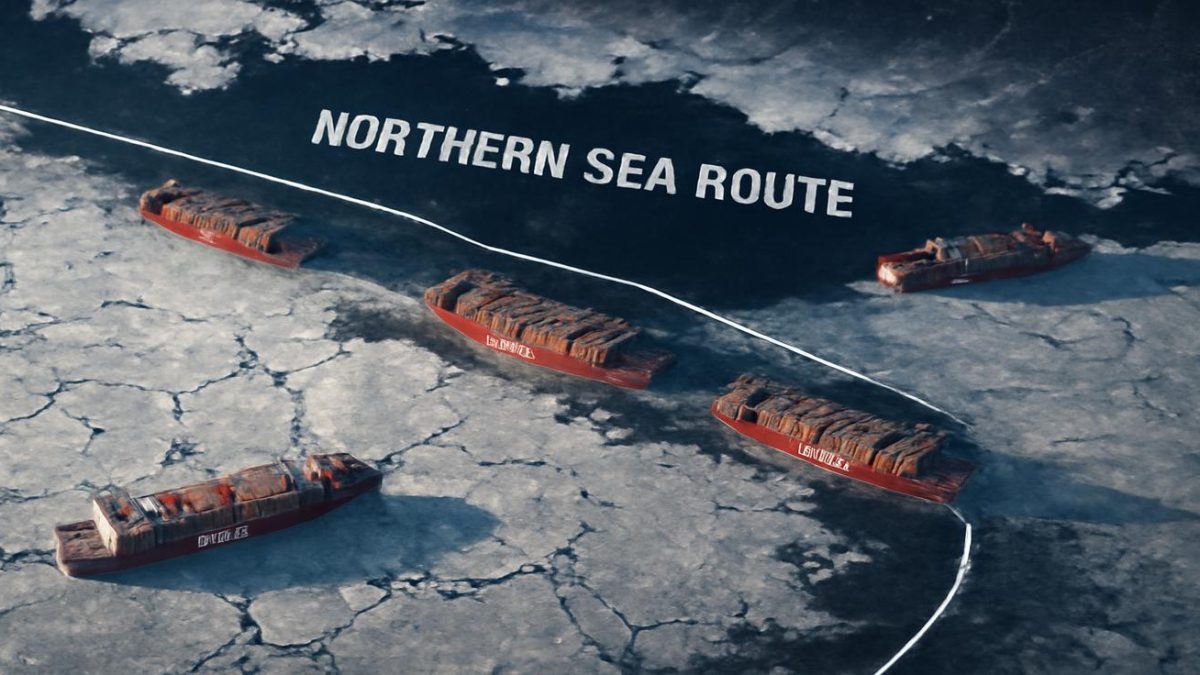
The global shipping landscape witnessed a remarkable reversal in 2025 when China achieved an unprecedented milestone: executing 14 container voyages across the Northern Sea Route—a route that Western maritime operators had largely abandoned. This achievement represents far more than a logistical accomplishment; it signals a fundamental realignment in international trade strategies, geopolitical influence, and the race for Arctic resources.
The Western Retreat: Risk Aversion Meets Missed Opportunity
For decades, major shipping corporations from Europe and North America approached Arctic waters with considerable caution. The Northern Sea Route, which connects Europe and Asia through Arctic waters north of Russia and Siberia, presented what Western companies viewed as insurmountable obstacles. Unpredictable ice conditions, limited infrastructure, regulatory uncertainties, and the absence of established emergency response systems deterred investment and operational planning.
The risks were real, and they were substantial. Ships traversing these waters faced potential entrapment in ice, damage from extreme weather, and limited rescue capabilities. Insurance premiums reflected this perceived danger, making Arctic operations economically unviable for many traditional carriers. By the early 2020s, most Western shipping giants had relegated the Northern Sea Route to the category of “future possibilities” rather than current operations.
This conservative approach was not unreasonable given historical data and established safety protocols. However, it reflected a mindset that treated the Arctic as an obstacle to overcome rather than an opportunity to embrace.
China’s Contrarian Strategy: Seeing Tomorrow Today
While Western competitors retreated, Beijing pursued a distinctly different calculus. Chinese leadership recognized that climate change, despite its destructive consequences globally, was fundamentally altering Arctic geography and accessibility. Rising temperatures were not making the Arctic route viable—they were making it inevitable. The question was not whether the route would become navigable, but who would dominate it.
This realization catalyzed a comprehensive strategy encompassing technological investment, infrastructure development, and operational experience. Chinese shipbuilders began constructing ice-class vessels specifically designed for Arctic conditions. State-backed enterprises invested in port facilities and logistics networks along potential Arctic corridors. Government agencies conducted extensive research into climate patterns, ice behavior, and optimal routing algorithms.
The 14 voyages completed in 2025 represent the culmination of years of preparation and strategic foresight.
Beyond Logistics: Understanding the Commercial Advantages
The Northern Sea Route offers compelling economic incentives that justify China’s aggressive pursuit. The passage reduces shipping distances between Asian and European ports by approximately 40 percent compared to traditional routes through the Suez Canal. For container vessels, this translates to meaningful fuel savings, reduced transit times, and lower operational costs—advantages that compound across thousands of annual voyages.
These efficiency gains create a competitive moat. Companies operating Northern Sea Route services can offer faster delivery windows and lower freight rates, attracting customers away from traditional logistics providers. As the route becomes more established, this advantage only strengthens. The first movers—in this case, Chinese operators—gain experience, relationships, and institutional knowledge that competitors will struggle to replicate.
Beyond pure logistics, the route carries geopolitical significance. Establishing reliable Arctic shipping services positions China as a critical node in global supply chains. Nations dependent on Arctic-routed shipping become stakeholders in China’s continued Arctic dominance. This creates subtle but profound leverage in international negotiations across numerous domains.
The Technological Enabler: Innovation Meeting Necessity
China’s record achievement became possible through sophisticated technological systems that Western companies had underestimated or dismissed. Advanced satellite monitoring provides real-time ice condition data. Machine learning algorithms optimize routing based on weather patterns and ice movements. Autonomous navigation systems reduce human error and fatigue in challenging conditions.
Chinese vessel designs incorporate lessons from Russian Arctic operations combined with cutting-edge maritime engineering. These ships are not merely reinforced conventional vessels; they represent purposeful design evolution for Arctic environments. Enhanced hull structures, optimized propulsion systems, and superior onboard monitoring equipment transform operations from risky ventures into calculated routines.
This technological sophistication, developed through substantial investment and government coordination, created capabilities that private Western companies found difficult to justify independently.
The Climate Change Wildcard: Crisis as Opportunity
Global warming presents an ethical paradox regarding Arctic shipping. The very climate crisis threatening planetary stability simultaneously enables previously impossible maritime routes. This uncomfortable reality shapes how different nations approach Arctic development.
Western nations wrestled with this contradiction, attempting to maintain environmental consciousness while exploring economic opportunities. This ambivalence created hesitation and delay. China adopted a more pragmatic stance: climate change is occurring; the question is how to respond effectively. Rather than paralysis, this perspective generated action.
The 14 voyages, while representing environmental complexity, also demonstrate China’s willingness to adapt to transformed global conditions—a capacity that may prove increasingly valuable as climate change accelerates.
Implications for Global Trade and Competition
China’s Northern Sea Route breakthrough carries implications extending far beyond maritime logistics. Shipping constitutes perhaps the most vital component of global commerce; whoever controls major shipping routes influences international economics and politics profoundly. Britain’s historical dominance partly reflected naval superiority and trade route control. The United States maintained global influence substantially through maritime supremacy.
China’s Arctic achievement represents the latest chapter in a longer story of Beijing systematically positioning itself at critical junctures of international commerce. The Belt and Road Initiative, port investments across Africa and Asia, and now Arctic route dominance collectively create redundancy and influence throughout global supply networks.
Western shipping companies and governments now confront delayed decisions. Building competitive Arctic capabilities requires years of investment and regulatory navigation. The window for cost-effective entry is narrowing. Each successive year that Chinese operators monopolize Arctic routes strengthens their advantage and increases others’ costs to compete.
Looking Forward: The New Arctic Order
The 14 Northern Sea Route voyages completed by Chinese operators in 2025 mark an inflection point. This achievement unlikely represents a peak; rather, it establishes a baseline for expansion. As route infrastructure improves, vessel technology advances, and operational experience accumulates, voyage numbers will increase substantially.
Western companies will eventually develop competitive Arctic capabilities. However, they will do so from a position of disadvantage relative to established Chinese operators. This position reflects not inevitable destiny but specific strategic choices made by different actors at a critical juncture.
The Northern Sea Route will eventually become a normalized component of global shipping infrastructure. When that normalization occurs, observers should remember that China’s foresight and decisive action during this transitional period established competitive advantages that will persist for decades.
The Arctic, long peripheral to global commerce, has entered the center stage of international trade competition. The question now is not whether Arctic shipping will expand, but whether Western maritime industries can catch up to competitors who moved decisively when others hesitated.








Leave a Comment