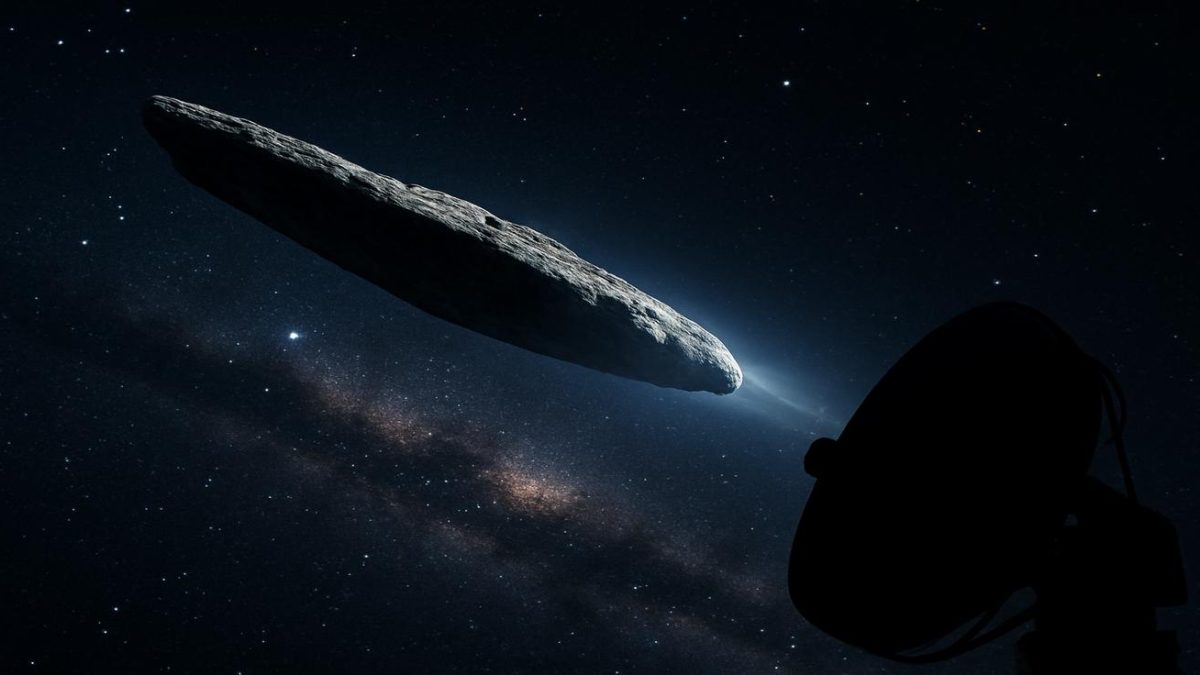
Imagine an object that has been traveling through the vast emptiness of space for billions of years, ejected from a star system light-years away, now rushing toward our cosmic neighborhood at speeds that defy conventional expectations. This is precisely the scenario that has captured the attention of astronomers worldwide following the detection of an extraordinary interstellar visitor approaching Earth faster than any previously recorded object of its kind.
The Discovery That Changed Everything
The initial detection came through advanced observation networks designed to track near-Earth objects and monitor the outer reaches of our solar system. What began as routine astronomical data analysis quickly evolved into an extraordinary finding when researchers realized they were observing something entirely unprecedented. The object’s trajectory, velocity measurements, and spectroscopic analysis all pointed to a startling conclusion: this was not a native resident of our solar system, but rather an interloper from the depths of interstellar space.
Preliminary calculations suggest this visitor originates from a stellar neighborhood situated billions of miles from our own sun. The implications of this discovery extend far beyond simple celestial mechanics. Scientists have begun compiling detailed information about the object’s composition, trajectory, and the potential gravitational influences that propelled it on this remarkable journey across the cosmic ocean.
Understanding Interstellar Visitors
The concept of objects traveling between star systems is not entirely new to astronomy. Theoretical physics has long predicted that gravitational interactions within dense stellar neighborhoods could eject objects into interstellar space. However, actually detecting and observing such visitors represents a milestone in astronomical science. Previous interstellar detections have occurred, but none have demonstrated the combination of speed, proximity to Earth, and clear extrastellar origin that this current discovery exhibits.
What makes this particular object so remarkable is its velocity profile. The object approaches our solar system at speeds significantly exceeding the escape velocity necessary to remain bound to any single star’s gravitational field. This classification as a hyperbolic trajectory visitor indicates it will not be captured by our sun’s gravity but rather will slingshot through our system and continue its eternal voyage through the galaxy.
The object’s composition reveals intriguing details about stellar processes in distant regions of the universe. Spectroscopic analysis shows elemental signatures that differ subtly from typical solar system bodies, suggesting formation in an environment with different chemical abundances. This cosmic variety provides invaluable data about stellar nucleosynthesis and planet formation processes across the galaxy.
The Velocity Mystery
One of the most perplexing aspects of this discovery involves the object’s exceptional speed. Astronomers have struggled to fully explain why this visitor moves so rapidly compared to theoretical predictions for typical interstellar wanderers. Several competing hypotheses have emerged from the scientific community.
One leading theory suggests the object experienced a close gravitational encounter with a massive stellar companion in its home system, accelerating it to extraordinary velocities. Another possibility involves interaction with a binary star system, where complex gravitational choreography could have imparted significant additional momentum. Some researchers have even speculated about more exotic mechanisms, though evidence remains speculative at this stage.
The velocity measurements themselves relied on sophisticated doppler spectroscopy combined with positional observations collected over several months. These measurements helped establish not just speed but direction and acceleration, creating a clearer picture of the object’s motion through three-dimensional space. The consistency of these measurements across multiple independent observatories strengthens confidence in the data.
What This Means for Space Science
The arrival of this interstellar visitor opens new chapters in our understanding of the cosmos. It provides direct evidence that objects regularly migrate between star systems, carrying materials and perhaps even microorganisms across the incomprehensible distances separating stars. This phenomenon, known as panspermia in biological contexts, takes on new significance with physical confirmation of efficient interstellar transport mechanisms.
For planetary scientists, this discovery reinforces theories about the dynamic nature of stellar neighborhoods during their formation. If objects can be ejected from one system and reach another billions of years later, this suggests a much more interconnected galaxy than previously imagined. The distribution of asteroids, comets, and other small bodies throughout our solar system may include unexpected contributions from distant stellar systems.
The detection capabilities demonstrated in discovering this object also represent significant technological advancement. The instruments and methodologies employed may become templates for future searches, potentially revealing additional interstellar visitors that have been quietly passing through our region of space undetected.
Trajectory and Timeline
Current orbital calculations indicate this object will make its closest approach to our solar system within a specified window, though distances will remain safely astronomical. The object will pass through the outer regions of our system, providing researchers with an extended observation window during its transit. This timeline allows astronomers to conduct detailed studies before and after the closest approach point.
Plans for observation campaigns are already underway at major observatories worldwide. Space agencies have begun preliminary assessments regarding potential space probe missions to intercept and study this visitor in greater detail. Such a mission would represent an extraordinary achievement, involving rendezvous with an object moving at tremendous velocity through the vacuum of space.
Broader Implications for Astronomy
This discovery catalyzes broader conversations within the astronomical community about the prevalence of interstellar objects in our galaxy. If one such visitor has been detected through our current observation networks, statistical analysis suggests many more may exist, simply awaiting discovery. Future surveys employing more sensitive instruments may reveal numerous additional candidates.
The finding also strengthens the case for continued investment in advanced detection systems and space-based observatories. The infrastructure required to identify and characterize such rare events requires sustained funding and international cooperation. As our tools improve, we may expect to compile an inventory of interstellar visitors, creating a new subdiscipline within astronomy dedicated to understanding these cosmic wanderers.
Conclusion
The detection of this record-breaking interstellar object represents far more than a curiosity for specialized astronomers. It represents tangible evidence that our solar system exists within a dynamic, interconnected galaxy where material and energy exchange between distant star systems with surprising regularity. As we continue studying this remarkable visitor from beyond, we gain deeper insights into the cosmic processes that have shaped our universe across billions of years. The approaching object serves as a humbling reminder of the vast scales and timescales governing celestial mechanics, and the endless mysteries awaiting discovery in the darkness between the stars.











Leave a Comment