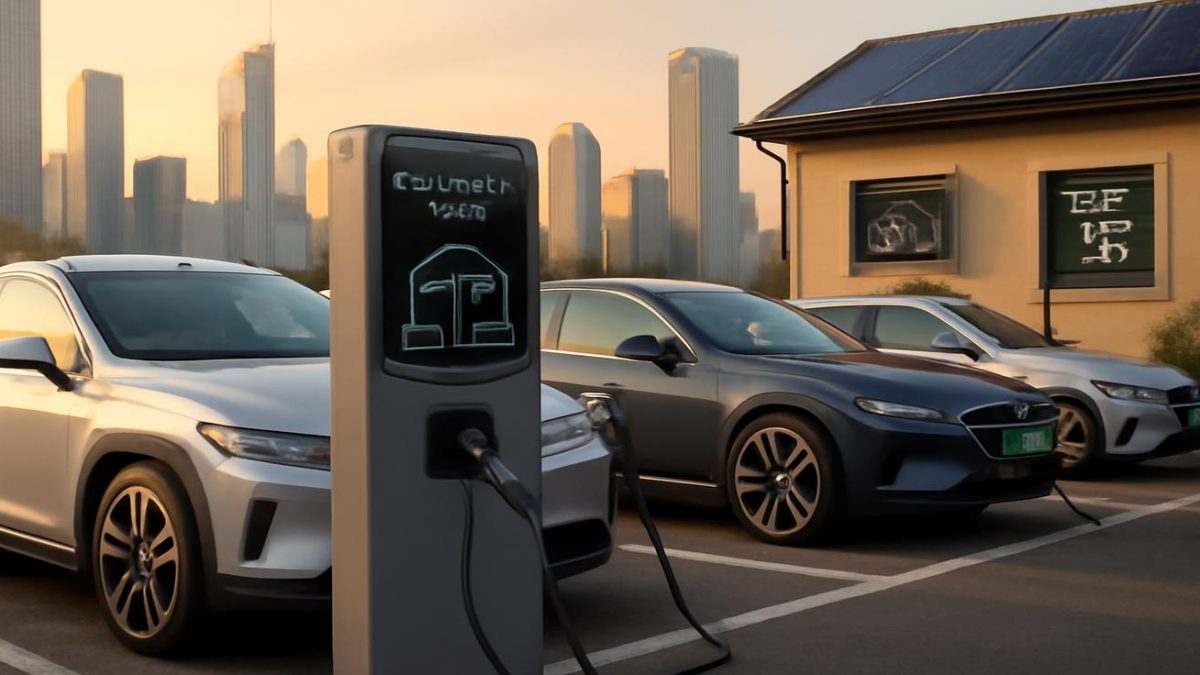
Imagine waking up each morning to discover that your vehicle has quietly powered your entire household overnight. Your refrigerator stayed cool, your air conditioning maintained comfort, and your lights operated normally—all thanks to the battery in your electric car parked in the garage. This isn’t science fiction anymore. In China, where electric vehicle adoption has reached unprecedented levels, this vision is rapidly becoming reality.
The Electric Vehicle Boom in China
China stands as the world’s largest electric vehicle market, with over 10 million EVs currently operating on its roads. This explosive growth stems from aggressive government incentives, substantial investments in charging infrastructure, and a cultural shift toward sustainable transportation. Major cities experience daily commutes involving countless electric vehicles, creating a perfect scenario for innovative energy solutions.
The sheer volume of these vehicles represents an enormous untapped resource. Each EV contains a sophisticated battery system capable of storing significant amounts of electrical energy. Rather than letting these batteries sit idle during non-driving hours, Chinese innovators are developing technologies to repurpose this energy for household consumption.
Understanding Vehicle-to-Grid Technology
Vehicle-to-grid (V2G) technology serves as the cornerstone of this revolution. This system enables bidirectional power flow between electric vehicles and the electrical grid, as well as individual homes. When your car is parked and plugged in, sophisticated management systems can draw power from the battery and direct it toward household appliances, effectively transforming your vehicle into a mobile power station.
The technology operates through intelligent charging equipment installed in residential garages. Smart chargers communicate with both the vehicle’s battery management system and the home’s electrical network. These systems determine optimal charging and discharging times based on energy prices, grid demand, weather forecasts, and household consumption patterns.
Battery capacity plays a crucial role in this equation. Most modern EVs feature batteries ranging from 40 to 100 kilowatt-hours. A typical household consumes between 20 and 30 kilowatt-hours daily, meaning a single vehicle battery could theoretically power an average home for 2-4 days.
China’s Infrastructure Development
China’s approach to V2G implementation demonstrates remarkable coordination between government bodies, utilities, and manufacturers. The State Grid Corporation has been actively testing V2G systems across multiple provinces, installing bidirectional charging stations in residential communities and commercial centers.
Several Chinese cities have launched pilot programs introducing V2G-enabled vehicles and charging infrastructure. These initiatives serve multiple purposes: they test technological reliability, gather data on user behavior, identify infrastructure improvements, and demonstrate energy savings to consumers. Early results have proven promising, with participants reporting reduced electricity bills and increased energy independence.
Manufacturers including BYD, NIO, and XPeng have incorporated V2G capabilities into their latest models. Some vehicles come pre-equipped with V2G technology, while others can be retrofitted with compatible systems. This widespread availability accelerates adoption rates across different consumer segments.
Benefits for Households and the Grid
From a household perspective, V2G technology offers substantial economic advantages. Homeowners can charge their vehicles during off-peak hours when electricity rates are lowest, then use that stored energy during peak-price periods. This arbitrage strategy reduces monthly utility bills significantly, with some early adopters reporting savings exceeding 30 percent.
Beyond individual savings, V2G systems provide critical support to the broader electrical grid. During peak demand periods, when utilities struggle to meet consumption needs, aggregated vehicle batteries can release power back to the grid. This distributed energy resource helps prevent blackouts, reduces the need for expensive new power plants, and improves overall grid stability.
The environmental implications prove equally compelling. More efficient energy usage means reduced reliance on fossil fuel-powered backup generators. Grid operators can defer expensive infrastructure upgrades by leveraging V2G capacity. Additionally, these systems encourage the adoption of renewable energy sources, since vehicles can store excess solar and wind power for later use.
Technical Challenges and Solutions
Implementing V2G technology at scale requires overcoming several technical hurdles. Battery degradation concerns arise naturally—repeatedly charging and discharging batteries could theoretically reduce their lifespan. However, sophisticated battery management systems optimize charge cycles to minimize wear, and warranties now explicitly cover V2G-related degradation in many cases.
Standardization issues persist across manufacturers and charging networks. China’s government has promoted unified standards, but ensuring compatibility between different vehicle brands and charging equipment remains ongoing work. Industry bodies continue developing comprehensive technical specifications that all participants must follow.
Grid integration presents another complexity. Utilities must develop advanced software systems that predict vehicle availability, manage real-time energy flows, and balance supply and demand across thousands of connected vehicles. Machine learning algorithms help optimize these operations, learning patterns and improving efficiency continuously.
The Path Forward
China’s electric vehicle infrastructure positions the nation as a global leader in V2G technology deployment. As the technology matures and costs decrease, other countries are taking notice. Several European nations and California have begun implementing similar programs, drawing lessons from China’s extensive experience.
The implications extend beyond simple home energy supply. Smart V2G systems could create virtual power plants, where aggregated vehicle batteries provide grid services typically supplied by traditional power generation facilities. This shift could fundamentally transform energy economics worldwide.
As more vehicles come equipped with V2G capabilities, residential charging infrastructure improves, and battery costs continue declining, this concept moves from experimental program to mainstream reality. Within the next decade, it’s entirely plausible that millions of homes worldwide will regularly draw power from parked vehicles.
Conclusion
China’s massive electric vehicle fleet represents far more than transportation—it’s becoming a distributed energy resource reshaping how societies generate, store, and consume electricity. By enabling vehicles to power homes, China demonstrates that sustainable transportation solutions can deliver multiple benefits simultaneously: economic savings, environmental protection, and enhanced energy security. As this technology spreads globally, the humble act of charging your car in the garage might soon become the moment you invest in your home’s energy independence.










Leave a Comment