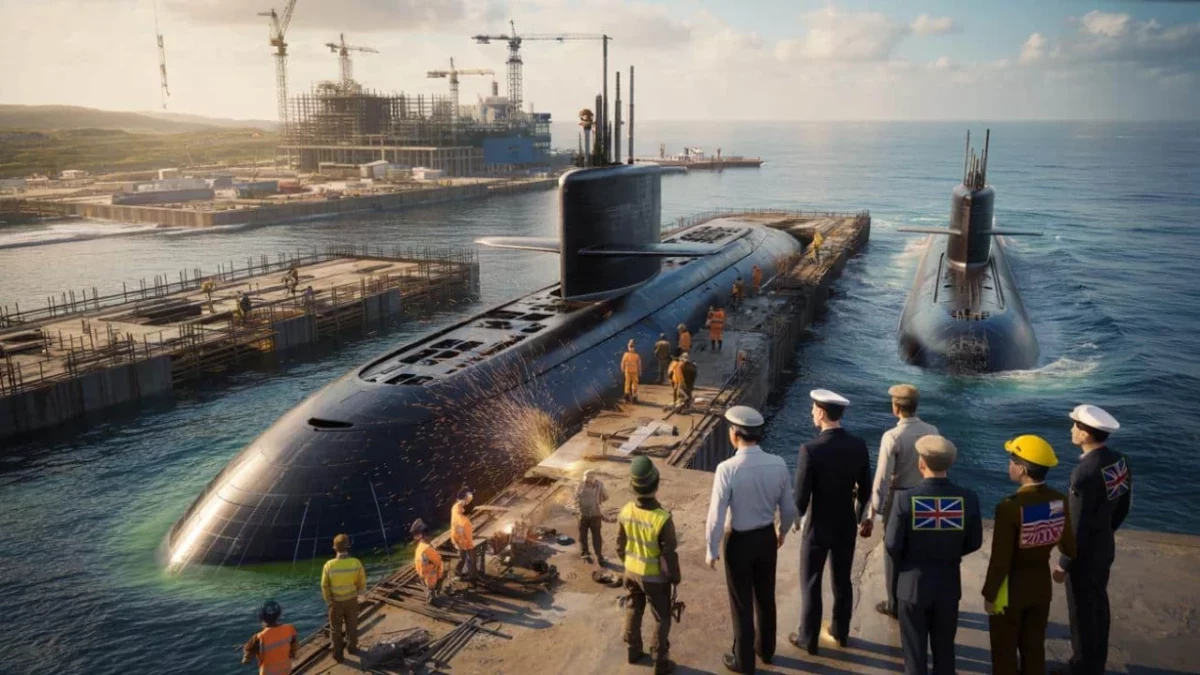
Australia’s bold strategic pivot in maritime defence has reached a tangible milestone. The nation has successfully obtained preliminary funding to construct a specialized shipyard dedicated to nuclear submarine manufacturing. This pivotal moment represents a dramatic transformation from the tumultuous French submarine agreement that ended in 2021, opening doors to a new era of advanced naval capability.
Understanding Australia’s Strategic Defence Shift
The cancellation of the Attack-class submarine program with France marked one of the most significant diplomatic incidents in Australian-French relations. The $90 billion contract, announced in 2016, was designed to provide Australia with conventionally-powered submarines built by French naval contractor Naval Group. However, geopolitical circumstances and shifting strategic priorities prompted Australia to reassess its defence architecture entirely.
The decision to terminate the French agreement wasn’t made lightly. Strategic planners in Canberra recognized that conventional submarines might not meet Australia’s long-term security requirements in an increasingly contested Indo-Pacific region. China’s expanding naval capabilities and Russia’s submarine activities created urgency around acquiring more advanced underwater platforms capable of extended range and superior operational flexibility.
This realization catalyzed a comprehensive review of Australia’s submarine strategy, ultimately leading to the formation of the AUKUS partnership—a trilateral security alliance with the United Kingdom and the United States designed to enhance collective defence capabilities through technology sharing and collaborative military development.
The AUKUS Framework and Its Implications
The AUKUS agreement fundamentally transformed Australia’s military procurement approach. Rather than purchasing submarines from France, Australia negotiated access to nuclear propulsion technology previously restricted to America and Britain. This arrangement granted Australia the ability to operate nuclear-powered attack submarines, dramatically enhancing undersea capabilities without requiring independent nuclear weapons development.
Nuclear-powered submarines offer significant advantages over their conventional counterparts. Extended underwater endurance eliminates the need for frequent surfacing or snorkeling to recharge batteries. This sustained underwater presence exponentially increases operational effectiveness across vast oceanic distances, particularly crucial for Australian operations spanning the Indian and Pacific Oceans. Greater speed, deeper diving capability, and enhanced stealth characteristics provide strategic advantages in modern naval warfare scenarios.
The technology transfer arrangement represents a watershed moment in Australian defence policy, reflecting Washington and London’s confidence in their antipodean ally’s capacity to responsibly manage advanced nuclear propulsion systems despite lacking nuclear weapons expertise.
Establishing Domestic Submarine Manufacturing Capacity
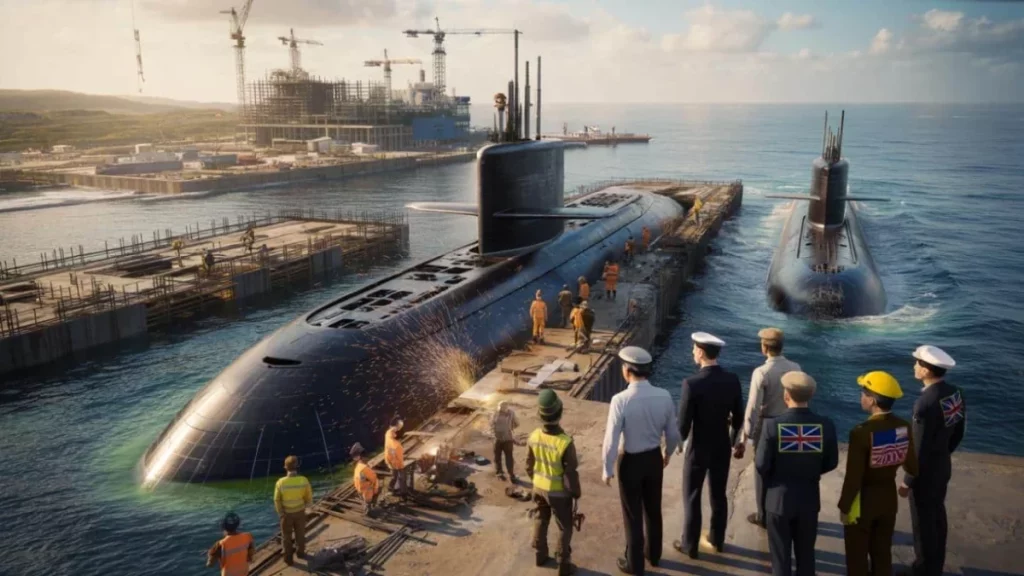
Securing shipyard funding represents the practical manifestation of AUKUS commitments becoming concrete reality. Rather than merely purchasing submarines, Australia aims to develop indigenous manufacturing capabilities. This domestically-oriented approach serves multiple strategic purposes beyond simple military acquisition.
Building dedicated submarine construction facilities within Australia creates substantial economic benefits. The shipyard will generate thousands of skilled manufacturing jobs, stimulating regional employment in areas designated for facility development. Advanced manufacturing expertise cultivated through submarine construction transfers across aerospace, defence electronics, and other high-technology sectors, strengthening Australia’s broader industrial capacity.
Developing indigenous production capabilities reduces long-term operational costs and maintenance dependencies on foreign providers. Australia gains sovereign control over submarine availability, spare parts production, and lifecycle management. This autonomy proves particularly valuable for nations operating in strategic regions where foreign suppliers might face political pressures or logistical constraints.
Financial Commitments and Timeline Considerations
The initial funding allocation represents the first phase of investment in what constitutes a multi-decade commitment. Australia’s government has indicated that total expenditure for the entire nuclear submarine program could exceed $200 billion when accounting for vessel acquisition, facility construction, crew training, and operational support infrastructure across the 2030s through 2050s.
Timeline projections suggest that Australia’s first domestically-constructed nuclear submarines could enter service during the late 2030s or early 2040s. This timeline reflects the enormous complexity involved in establishing submarine manufacturing facilities, training specialized workforces, and navigating regulatory requirements associated with nuclear propulsion technology.
The extended development period necessitates interim solutions. Australia has negotiated arrangements to operate nuclear submarines supplied by the United States and United Kingdom during the transitional period before domestic production capacity becomes operational. These interim platforms maintain strategic credibility while permanent manufacturing infrastructure development proceeds.
Regional Security Implications
Australia’s nuclear submarine program carries significant ramifications throughout the Indo-Pacific. The capability enhancement strengthens Australia’s ability to monitor maritime activities across vast areas, contribute meaningfully to regional stability operations, and deter potential threats to freedom of navigation.
Regional neighbours have expressed varying reactions. Some nations view Australia’s enhanced capabilities as contributing to a balance of power preventing any single actor from achieving hegemonic control. Others harbour concerns about arms race dynamics potentially destabilizing existing geopolitical equilibriums. Constructive diplomatic dialogue remains essential to mitigating regional anxieties while pursuing legitimate security objectives.
Technical and Personnel Challenges Ahead
Establishing nuclear submarine manufacturing represents one of the most technically demanding industrial undertakings any nation can pursue. Australia’s defence establishment must recruit, train, and retain specialists possessing expertise in nuclear engineering, advanced materials science, hydrodynamics, and specialized manufacturing processes. Educational institutions will require investment to develop curriculum and research programs supporting these specialized disciplines.
Technology transfer agreements with American and British partners will facilitate knowledge acquisition, yet Australia must ultimately develop homegrown expertise to sustain long-term submarine operations and manufacturing independently.
Looking Forward
Australia’s shipyard funding represents more than bureaucratic procedural advancement. It symbolizes national commitment to constructing military capabilities matching strategic ambitions in an increasingly contested region. The transition from French conventional submarines to nuclear-powered platforms constructed domestically reflects evolving security assessments and alliance recalibrations shaping twenty-first century geopolitics.
As construction commences and specialized workforces develop capabilities, Australia positions itself as a maritime power capable of independently projecting influence across vast oceanic expanses while contributing meaningfully to regional security architecture. The submarine shipyard becomes not merely a military facility but an emblem of technological sophistication and strategic independence.










Leave a Comment