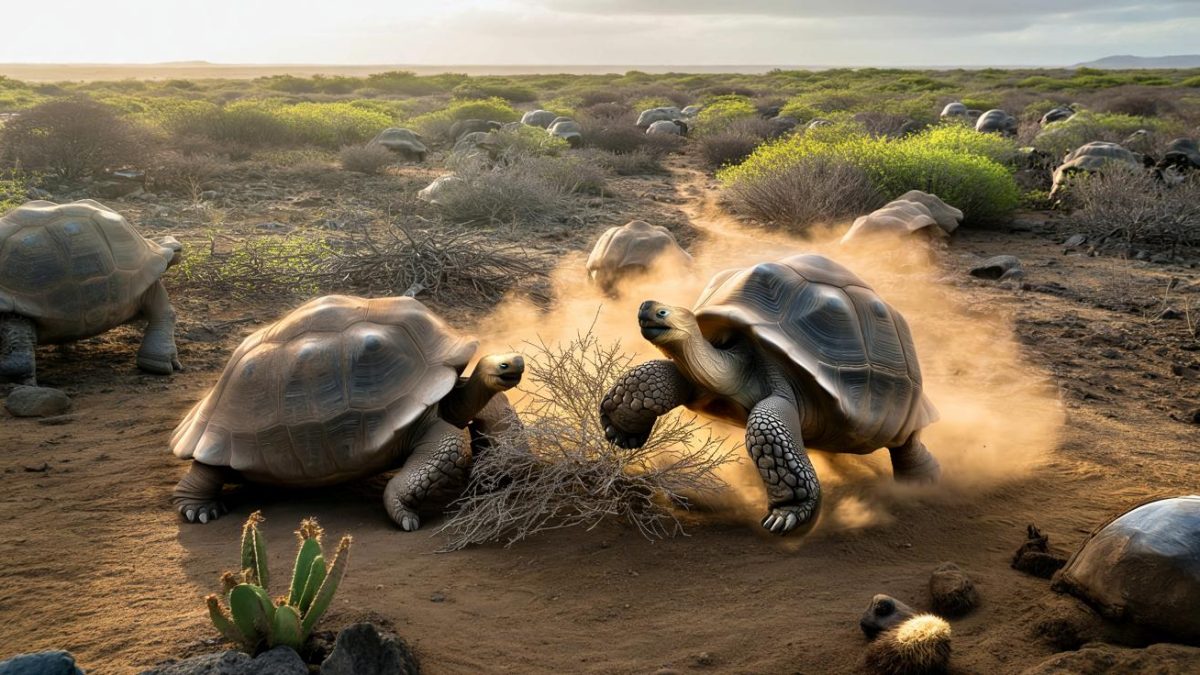
In a landmark conservation effort, more than 1,500 giant tortoises have been released across the Galápagos Islands, embarking on a mission that extends far beyond simple species reintroduction. These remarkable reptiles are actively transforming their island habitats, demolishing shrubland, dispersing seeds across varied terrain, and essentially pressing the reset button on ecological systems that have been broken for hundreds of years. This ambitious rewilding project represents one of the most significant conservation initiatives undertaken in recent memory, offering valuable insights into how wildlife restoration can reverse decades of environmental degradation.
Understanding the Galápagos’ Lost Giants
The Galápagos Islands, a UNESCO World Heritage Site located off the coast of Ecuador, were once home to thriving populations of giant tortoises that numbered in the hundreds of thousands. These prehistoric-looking creatures, some weighing over 400 kilograms, roamed freely across multiple islands, shaping the landscape through their feeding habits and movement patterns. However, the arrival of European explorers in the 16th century triggered a catastrophic decline. Sailors hunted these slow-moving animals for their meat and oil, while introduced species like rats, goats, and pigs competed for resources and destroyed nesting sites. By the 20th century, several tortoise populations had vanished entirely from their native islands, leaving behind ecological voids that transformed entire ecosystems.
The absence of these megafauna creatures created a cascade of environmental problems. Without tortoises actively feeding on vegetation and moving across terrain, shrubland became overgrown and densely packed. Native plant distributions shifted dramatically. Invasive plant species gained dominance without the natural herbivory pressure that tortoises had previously maintained. The islands became increasingly inhospitable to other native species that had evolved alongside these giants. Scientists recognized that restoring tortoise populations wasn’t merely about saving a species—it was about reconstructing the ecological blueprint that had sustained island biodiversity for millennia.
The Mechanics of Ecological Resurrection
When conservation teams decided to reintroduce giant tortoises to areas where they had been absent for centuries, they were initiating a complex ecological experiment with far-reaching implications. The process required careful coordination between multiple organizations, genetic analysis to determine appropriate subspecies for different islands, and long-term funding commitments that extended decades into the future. Each tortoise had to be transported carefully, monitored for health, and released in strategically selected locations where habitat conditions offered the best chance for survival.
The reintroduced populations began working immediately, demonstrating behaviors that had been dormant in these islands for generations. Adult tortoises weighing hundreds of kilograms proved remarkably effective at clearing dense vegetation. As they moved through shrublands, they knocked down woody plants, trampled undergrowth, and created pathways that allowed lighter and smaller species to navigate previously impenetrable terrain. Their feeding patterns essentially converted closed-canopy shrub communities into more open habitats that more closely resembled pre-human conditions.
Seed Dispersal: Nature’s Gardeners at Work
Perhaps the most significant ecological function giant tortoises provide is seed dispersal. These herbivorous reptiles consume massive quantities of vegetation daily, ingesting seeds from dozens of plant species during their feeding activities. The seeds pass through their digestive systems relatively intact, protected by their hardy shells, and are deposited across the landscape in their droppings. This process, known as endozoochory, fundamentally alters plant distribution patterns and allows vegetation to colonize areas that had previously lacked adequate seed sources.
Researchers monitoring the released tortoise populations have observed remarkable increases in native plant diversity across multiple islands. Seeds that had remained dormant in soil for decades began germinating in areas where tortoises concentrated their activities. Patches of native vegetation that scientists had given up as lost began recovering naturally. Some plant species that had been restricted to tiny refugial populations suddenly had opportunities to expand their ranges. This botanical resurgence occurs because tortoises, through their natural movements and feeding patterns, are essentially replanting the islands with their native flora.
The seed dispersal function extends beyond simple plant relocation. The timing, distance, and spatial distribution of seeds deposited by tortoises creates patterns that differ fundamentally from what would occur through wind or water dispersal alone. This variation in seed placement increases genetic diversity within plant populations and enhances the resilience of plant communities to environmental stresses. Islands where tortoise populations remained abundant demonstrated significantly higher plant diversity than islands that had lost their giant herbivores.
Cascading Benefits Throughout the Food Web
As vegetation patterns shift due to tortoise activity, secondary and tertiary effects ripple throughout island ecosystems. Herbivorous insects that feed on specific native plants find improved habitat conditions and expanded food resources. Bird populations that depend on particular vegetation structures or seed sources begin recovering. The physical structure of habitat—the height and density of vegetation—changes in ways that create ecological niches for species that had vanished or become rare. Ground-nesting birds find suitable areas for reproduction. Invertebrate communities that form the foundation of island food webs become more robust and diverse.
The presence of tortoises also modifies microclimatic conditions across the islands. By creating gaps in dense shrubland, tortoises increase light penetration to lower vegetation layers and alter soil moisture conditions. These subtle environmental changes benefit numerous species that require specific light or moisture regimes. Young tortoises themselves, often more vulnerable to predation and environmental stress than adults, find improved survival conditions as the habitat structure becomes more diverse and complex.
Measuring Success and Learning for the Future
Conservation scientists involved in the tortoise reintroduction project are carefully documenting every aspect of the process, from tortoise survival rates and movement patterns to vegetation changes and wildlife responses. Long-term monitoring protocols ensure that data collection will continue for decades, providing unprecedented insight into how ecosystem restoration unfolds over extended timeframes. This information proves invaluable not only for the Galápagos but for rewilding projects worldwide that seek to restore lost species and rebuild broken ecological systems.
The Galápagos tortoise restoration demonstrates that ecological resilience is possible when human effort aligns with natural processes. These ancient creatures, having survived for millions of years, are proving themselves equally adept at surviving in modern ecosystems—and transforming them in the process. As more tortoises are released and populations establish themselves across multiple islands, the Galápagos will increasingly resemble the biodiverse archipelago that inspired Darwin and continues to captivate conservation biologists today.









Leave a Comment