
For generations, military aviation has operated under a fundamental assumption: only human pilots in advanced fighter jets could effectively intercept supersonic targets traveling at speeds exceeding Mach 1. This doctrine shaped defense strategies across continents and influenced procurement decisions worth billions of dollars. Yet in a moment that will likely reshape military thinking for years to come, Turkey has shattered this long-held belief with a demonstration that promises to revolutionize aerial combat capabilities.
A Historic Moment in Unmanned Systems
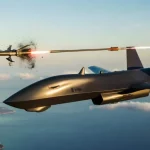
The successful interception marked a watershed moment in military technology development. Turkish defense engineers orchestrated a controlled test environment where a domestically-developed unmanned aerial vehicle (UAV) tracked, locked onto, and engaged a supersonic target moving at extreme velocity. The achievement represents not merely a technical accomplishment but a paradigm shift in how nations conceptualize modern air defense and tactical air operations.
What makes this achievement particularly significant is the complexity involved in targeting supersonic objects. These vehicles move so rapidly that traditional tracking systems struggle to maintain lock. The guidance systems must process incoming data at extraordinary speeds, calculate intercept trajectories in real-time, and execute maneuvers with precision measured in milliseconds. For an unmanned system, designed without human intuition in the cockpit, this represents an extraordinary leap forward.
Understanding the Technical Challenge
To appreciate the magnitude of Turkey’s accomplishment, one must understand the inherent difficulties in supersonic interception. Supersonic objects create unique detection challenges due to their speed-generated signatures and the compressed timeframes available for response. Traditional air defense systems often relied on multiple assets coordinating through command centers, introducing delays that could prove fatal in actual combat scenarios.
The Turkish drone system appears to have overcome these obstacles through advanced sensor integration and autonomous decision-making capabilities. The vehicle would need to simultaneously manage tracking computations, guidance algorithms, and propulsion optimization while maintaining stable flight at comparable speeds. The software architecture supporting such operations must function flawlessly, as even microsecond-level errors could result in mission failure.
Implications for Global Defense Strategy
This Turkish breakthrough carries profound implications for military strategy worldwide. Nations have invested trillions in fighter jet programs premised on the assumption that human pilots remain indispensable for aerial combat. Now that assumption faces serious challenge. Military planners across NATO, Asia-Pacific, and Middle Eastern regions will undoubtedly reassess their procurement strategies and operational doctrines.
The economic ramifications are equally significant. Unmanned systems, while requiring substantial initial development investment, offer dramatic cost advantages compared to maintaining fleets of advanced fighter jets. Each piloted aircraft demands training infrastructure, pilot retention programs, and sustained maintenance operations. Drones eliminate these human-related expenses while potentially offering superior endurance and operational flexibility.
The Turkish Defense Innovation Ecosystem
Turkey’s success reflects years of deliberate investment in indigenous defense technology capabilities. Rather than relying exclusively on foreign military suppliers, Turkish engineers have pursued autonomous development paths across multiple platforms. This strategy has produced increasingly sophisticated unmanned systems, precision-guided weapons, and advanced sensor technologies.
The country’s defense industry has grown remarkably, attracting talented engineers and attracting investment from both government and private sectors. Universities throughout Turkey have established specialized programs focusing on unmanned systems, artificial intelligence applications in defense, and advanced materials science. This comprehensive ecosystem approach creates the foundation for breakthrough innovations like the supersonic interception achievement.
Challenges Ahead for Unmanned Aerial Combat
Despite this remarkable success, significant challenges remain before unmanned systems completely replace human-piloted aircraft in all tactical roles. Autonomous systems face persistent questions regarding decision-making in ambiguous scenarios, potential for unintended consequences, and the ethical dimensions of fully autonomous weapons systems.
International humanitarian law considerations also come into play. The international community continues debating appropriate regulations for autonomous military systems. Some nations advocate strict limitations, while others champion rapid development. Turkey’s advancement will inevitably accelerate these important conversations.
Technical challenges persist as well. Supersonic flight introduces extreme environmental stresses on airframes and systems. Maintaining reliable operation under such conditions demands continuous refinement of materials, engineering approaches, and component design. The Turkish test represented a controlled environment; operational reality in contested airspace presents far greater complexity.
What This Means for Future Air Combat
Looking forward, this Turkish achievement suggests future air combat will likely feature mixed formations combining unmanned and manned systems. Unmanned platforms might handle initial engagements and provide sensor coverage, while human pilots manage complex decision-making and supervise operations. This hybrid approach could optimize the strengths of both systems while mitigating individual weaknesses.
The advancement also signals that nations without massive defense budgets might now compete more effectively in certain military domains. Drone technology, while demanding significant expertise, requires less infrastructure investment than sustained fighter jet operations. This potential democratization of advanced military capabilities carries both opportunities and risks for global security.
Looking Toward a New Era
Turkey’s successful interception of a supersonic target using an unmanned drone represents far more than a single technical accomplishment. It symbolizes the beginning of a new era in military aviation where decades-old assumptions require fundamental reassessment. Military strategists, defense ministers, and technology developers worldwide will spend the coming years analyzing implications and adjusting strategies accordingly.
The achievement demonstrates that with sufficient investment, technological ambition, and engineering excellence, nations can pioneer capabilities once thought exclusive to established military superpowers. As other nations develop comparable systems, the competitive landscape of military technology will shift dramatically, potentially reshaping global defense alignments and strategic relationships for decades to come.










Leave a Comment