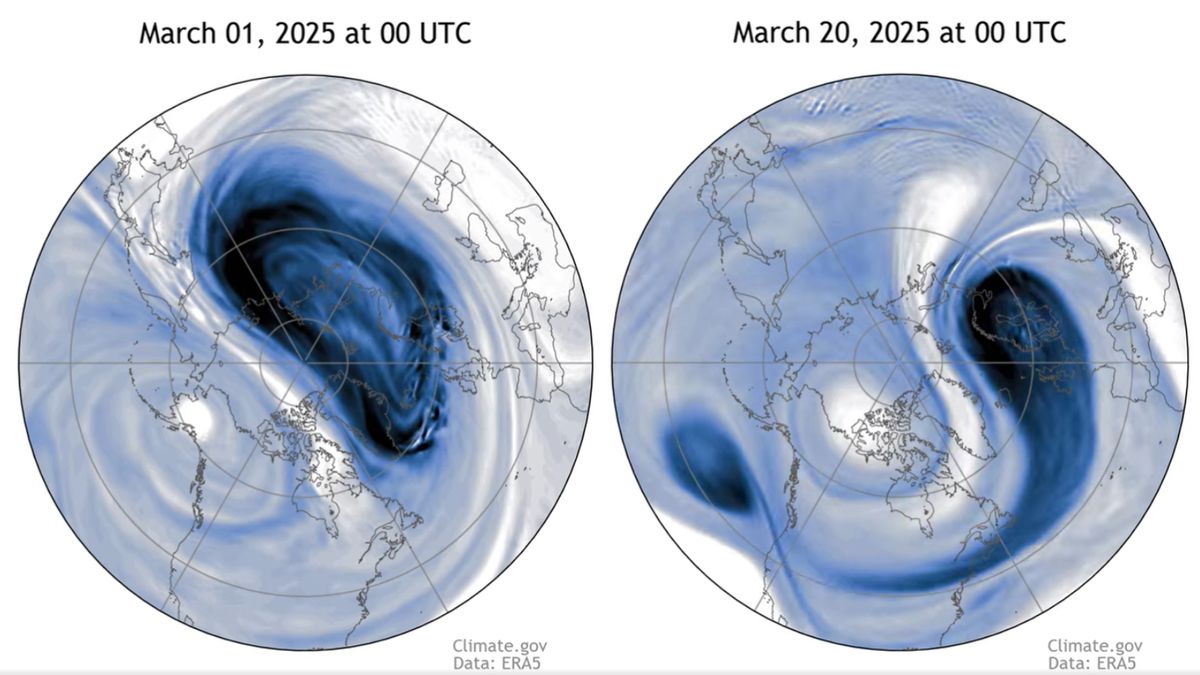
Meteorologists are closely monitoring signs of renewed polar vortex instability, a large-scale atmospheric shift that could significantly influence winter weather patterns across North America and parts of Europe in the coming weeks. Recent model guidance and stratospheric observations indicate that the normally stable circulation of cold Arctic air may weaken or become displaced, increasing the likelihood of intense cold snaps, snowstorms, and widespread disruptions.
While polar vortex events are not unusual during winter, experts say the current signals suggest a higher-than-average risk of Arctic air pushing southward into densely populated regions. This development has major implications for public safety, energy demand, transportation, agriculture, and local economies.
What the Polar Vortex Is and Why It Matters
The polar vortex is a vast region of low pressure and cold air that circulates high in the atmosphere over the Earth’s poles. During a typical winter, this circulation remains relatively compact, helping to confine the coldest air to the Arctic. When the system is strong, mid-latitude regions often experience milder and more stable winter conditions.
Problems arise when the polar vortex weakens, stretches, or splits. These disruptions allow cold Arctic air to escape southward, interacting with the jet stream and triggering extreme winter weather events. Such events can lead to prolonged periods of below-average temperatures, heavy snowfall, ice storms, and dangerous wind chills.
Current atmospheric data suggests that the polar vortex is showing early signs of stress, particularly in the stratosphere, where temperature anomalies can signal a breakdown in the circulation.
Latest Forecast Signals Point to Heightened Risk
Weather models are increasingly aligned on one key message: the polar vortex may become significantly disturbed as winter progresses. Several indicators support this outlook:
-
Stratospheric warming trends have been detected, a phenomenon often associated with polar vortex weakening.
-
Jet stream waviness is increasing, which can act as a pathway for Arctic air to move south.
-
Persistent cold anomalies are developing across northern Canada, setting the stage for potential southward surges.
If these patterns persist, large portions of the United States and southern Canada could experience episodes of extreme cold, particularly in the Midwest, Great Plains, and Northeast. Parts of northern and western Europe may also see colder-than-normal conditions if the circulation shifts eastward.
Potential Impacts on the United States and Canada
A disrupted polar vortex can have wide-ranging consequences across North America. In previous winters, similar patterns have led to record-breaking cold, infrastructure failures, and economic losses.
Extreme Cold and Health Risks
Sudden temperature drops can pose serious health risks, especially for older adults, children, and people experiencing housing insecurity. Prolonged exposure to extreme cold increases the risk of hypothermia and frostbite, while icy conditions raise the likelihood of accidents.
Energy Demand and Utility Strain
Cold outbreaks typically drive sharp increases in heating demand. Utilities may face strain on natural gas and electricity supplies, particularly during multi-day cold spells. Past polar vortex events have resulted in rolling outages and price spikes in energy markets.
Transportation and Supply Chains
Snow and ice associated with Arctic air intrusions can disrupt air travel, rail operations, and road transportation. These disruptions often ripple through supply chains, affecting food distribution, manufacturing, and retail sectors.
Agriculture and Infrastructure
Unseasonably cold temperatures can damage winter crops, burst pipes, and stress aging infrastructure. Municipalities may face higher costs related to snow removal, road maintenance, and emergency services.
Europe Also Monitoring Developing Patterns
Although the most immediate concern centers on North America, meteorologists note that polar vortex disruptions are hemispheric events. If the circulation shifts toward Eurasia, parts of Europe could experience colder and more volatile winter conditions later in the season.
Northern and central Europe are particularly sensitive to changes in Arctic air flow, especially when combined with North Atlantic weather patterns. Even brief cold outbreaks can have outsized effects on energy markets and transportation networks across the region.
Climate Context and Ongoing Debate
The relationship between polar vortex behavior and long-term climate trends remains an active area of research. Scientists emphasize that individual cold events do not contradict global warming, but rather occur within a warming climate system.
Some researchers suggest that reduced Arctic sea ice and warming polar temperatures may contribute to a weaker, more erratic polar vortex. Others caution that the science is still evolving and that natural variability continues to play a significant role.
What is clear is that polar vortex disruptions are becoming a major focus for seasonal forecasting, emergency preparedness, and climate resilience planning.
Why This Matters to Communities
For local communities, the implications of a polar vortex disruption go beyond weather headlines. Extreme winter conditions disproportionately affect vulnerable populations and can widen existing economic and social gaps.
Local governments, schools, healthcare systems, and employers must often make rapid decisions in response to severe cold, from closing facilities to coordinating emergency shelter and warming centers. Advance awareness of polar vortex risks allows communities to prepare more effectively.
Residents are encouraged to stay informed through local weather updates and to take practical steps such as insulating homes, checking heating systems, and preparing emergency supplies.
What Happens Next
Meteorologists caution that while the signals are concerning, the exact timing, intensity, and location of potential cold outbreaks cannot be determined with certainty weeks in advance. Forecast confidence typically improves as events draw closer.
Still, the growing consensus among weather models suggests that winter is far from over and that periods of severe cold remain a real possibility across much of the Northern Hemisphere.
As forecasters continue to analyze new data, updates are expected to refine the outlook and provide clearer guidance for communities and decision-makers.








Leave a Comment