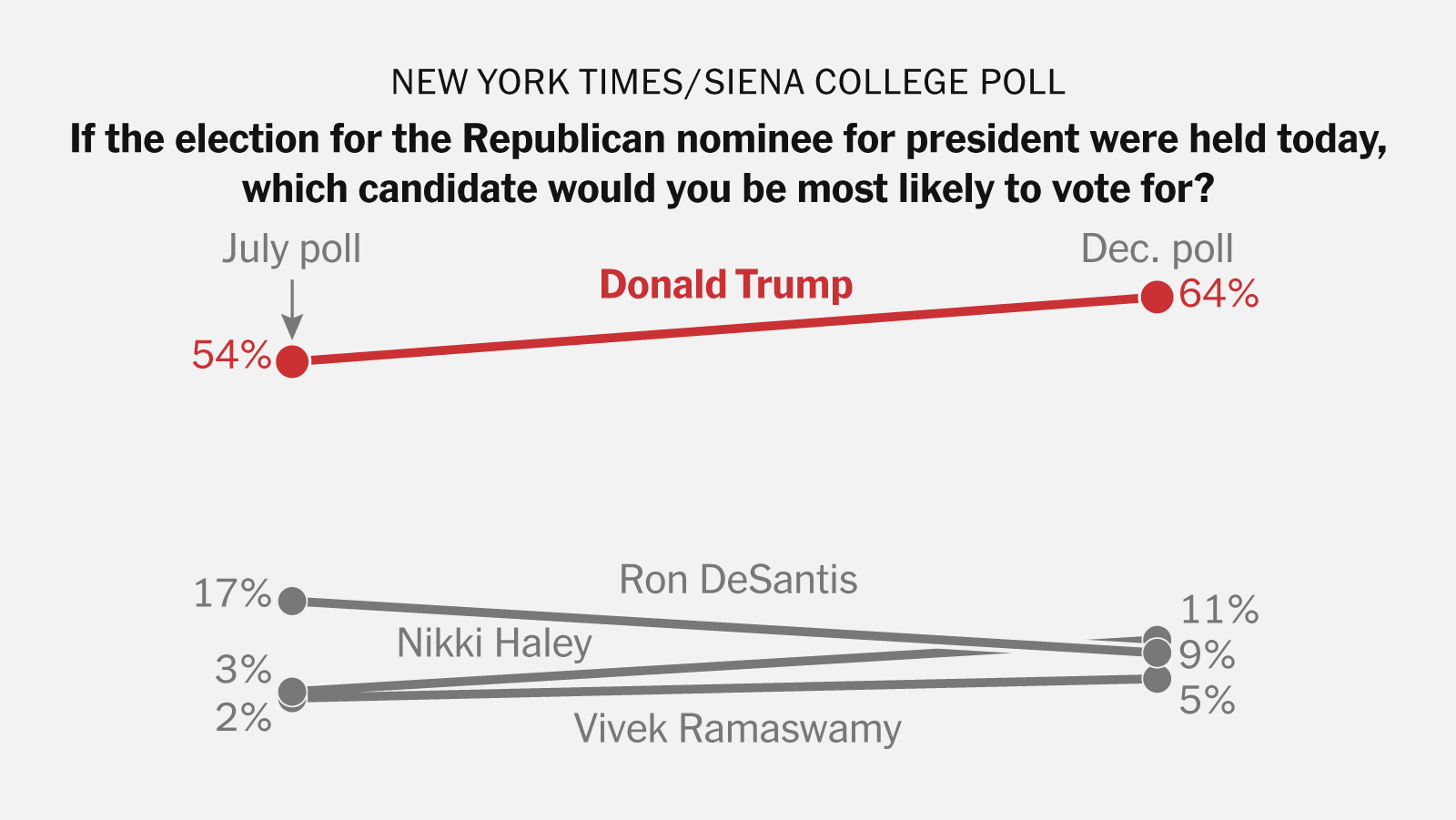
Former U.S. President Donald Trump has launched a fresh attack on mainstream media polling, branding the widely cited New York Times–Siena College survey as “fake,” “corrupt,” and deliberately biased against him as the 2024 presidential election race intensifies.
In a series of fiery statements posted to social media and echoed by allies, Trump accused the Siena College–conducted poll of manipulating samples and narratives to damage his campaign—going as far as vowing potential legal action against what he called “election interference through fake polling.”
🔥 Trump: “These Polls Are Designed to Suppress Voters”
The controversy centers on a recent Times–Siena poll that showed Trump trailing President Joe Biden among key voter blocs, including independents and suburban voters. Trump rejected the findings outright, claiming the poll intentionally oversampled Democratic voters and underrepresented his base.
“The New York Times and Siena are pushing a FAKE POLL to influence the election,” Trump wrote. “They did the same thing in 2016 and 2020. This is fraud in the form of polling.”
Trump’s campaign team echoed the sentiment, arguing that such surveys are less about measuring public opinion and more about shaping it—a claim that resonates strongly with his supporters, who have long distrusted legacy media outlets.
📊 Why the Times–Siena Poll Matters
The Times–Siena poll is considered one of the most influential political surveys in the United States, frequently cited by cable news networks, political strategists, and digital publishers. Its results often shape headlines, donor confidence, and campaign momentum.
That influence is precisely why Trump says the poll is dangerous.
According to campaign insiders, Trump’s legal team is reviewing whether the publication of allegedly “knowingly misleading” polling data could qualify as defamation or coordinated political interference, though legal experts note such cases are notoriously difficult to win.
⚖️ Legal Action: Real Threat or Political Signal?
Trump has repeatedly used the threat of lawsuits as both a legal and political weapon, particularly against media organizations. While no formal complaint has yet been filed, the former president’s allies suggest the move is meant to put pressure on news outlets ahead of peak election season.
Media law analysts say that unless provable malice or fabrication is demonstrated, polling organizations are generally protected under free speech principles. Still, the public threat alone keeps the controversy alive—and dominating headlines.
🗳️ A Familiar Strategy in the Trump Playbook
This is not the first time Trump has dismissed unfavorable polls as “rigged.” In both 2016 and 2020, he frequently attacked surveys that showed him trailing—only to later cite selective polls that favored him.
Supporters argue that many polls underestimate Trump’s base, especially among working-class voters who are less likely to respond to surveys. Critics counter that discrediting polling altogether is a tactic to preemptively undermine election results if they don’t go his way.
📈 Impact on the 2024 Election Narrative
The polling fight comes at a critical moment. With swing states expected to decide the election, even small shifts in perception can influence:
-
Donor behavior
-
Media coverage tone
-
Voter enthusiasm and turnout
By attacking the poll so aggressively, Trump shifts the conversation away from the numbers themselves and toward media trust, an issue that remains central to his political brand.
🧠 What Voters Should Know
Polling experts caution voters not to rely on any single survey. Instead, they recommend looking at poll averages, trends over time, and methodology transparency.
Still, in an era of deep political polarization, polls have become more than data—they are weapons in the information war surrounding the 2024 election.
🔎 The Bottom Line
Trump’s explosive reaction to the New York Times–Siena poll underscores how high the stakes have become in the 2024 race. Whether or not legal action materializes, the message is clear: every poll, headline, and narrative will be fiercely contested in the months ahead.
As Election Day approaches, the battle over who controls the story may prove just as consequential as the vote itself.





Leave a Comment