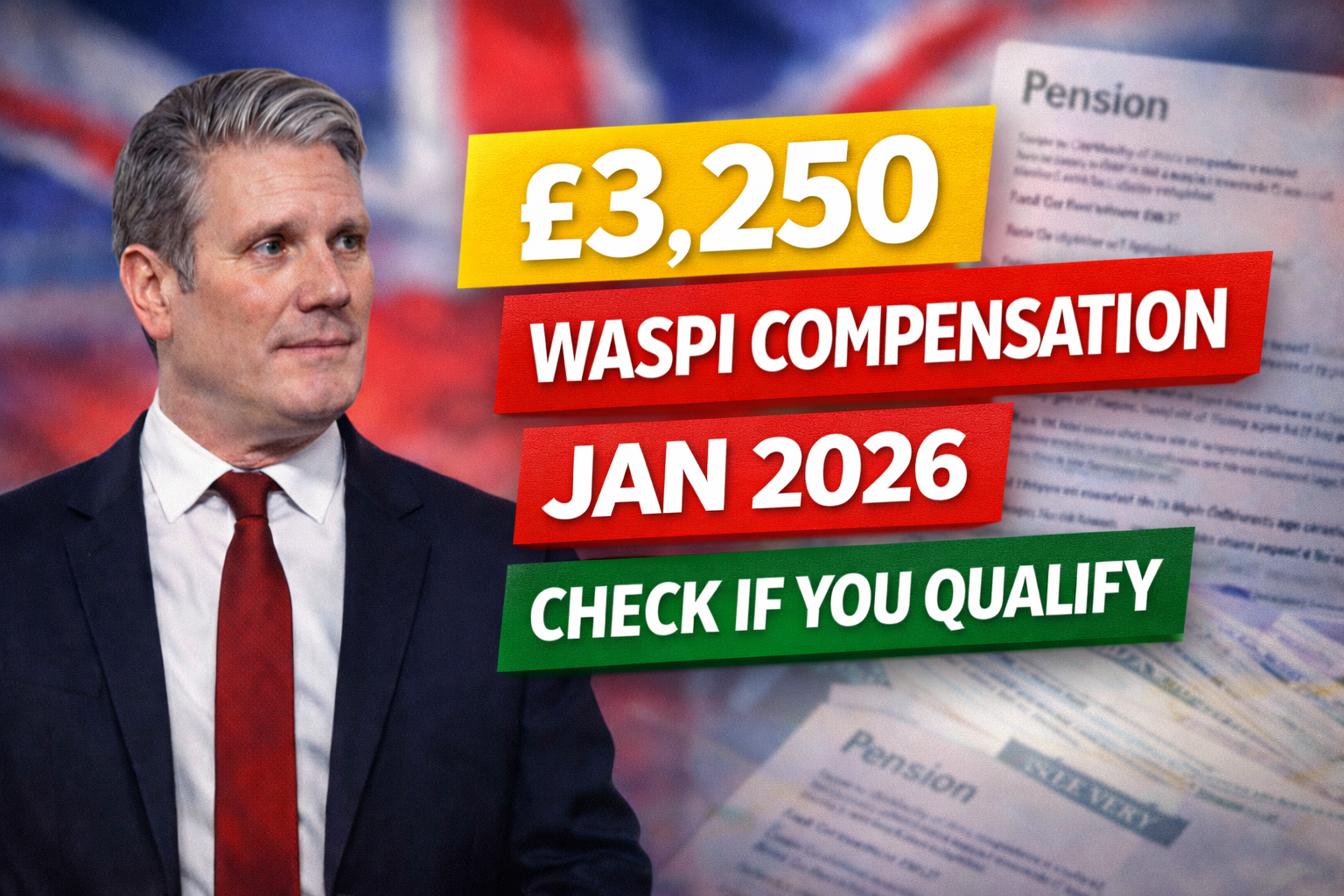
In a major development for millions of British women born in the 1950s, the Department for Work and Pensions (DWP) has officially announced a compensation scheme offering up to £3,250 for those affected by changes to the State Pension age — widely known as the WASPI (Women Against State Pension Inequality) compensation. The new scheme is expected to begin in January 2026, and could bring long-awaited financial redress to those who lost out due to pension age reforms that left many women waiting years longer to receive their retirement income. presstekltd.co.uk+1
Here’s the full breakdown of who qualifies, how much you can receive, and what you need to do next — explained in clear, practical detail.
What Is the WASPI Compensation About?
The WASPI campaign was founded to fight for women born in the 1950s who were impacted by changes to the State Pension age. Historically, women could claim State Pension at age 60; however, reforms in the Pensions Act 1995 and later modifications raised the age to match that of men — eventually bringing it to age 66 and beyond in stages. Many of these women say they were not properly informed about the changes, leaving them unprepared for the delay in accessing their pensions. Wikipedia+1
After years of campaigning and legal action, including findings by the Parliamentary and Health Service Ombudsman that poor communication constituted maladministration, the UK government has now agreed to a compensation framework that will see eligible women receive £3,250 each starting January 2026. presstekltd.co.uk
Who Qualifies for the £3,250 Payment?
The compensation is aimed at women born in the 1950s whose State Pension age was increased as part of policy changes and who can demonstrate they were inadequately informed of those changes in time to make suitable retirement plans.
General eligibility criteria include:
-
You were born between 6 April 1950 and 5 April 1960 (the most commonly affected cohort). Women Against State Pension Inequality
-
Your State Pension age was raised from what you originally expected — typically from age 60 to 65 and beyond. Wikipedia
-
You can show evidence (or are part of the affected cohort) that you suffered loss or disadvantage due to late notification of pension age increases.
Not all women in this cohort will automatically qualify — eligibility will depend on individual circumstances and the timing of official notifications.
How Much Compensation Can You Get?
The announced payment is £3,250 per eligible woman. This figure represents a standardised compensation amount, designed to cover the financial impact suffered by many women who lost years of income because their pension age was raised without sufficient notice. presstekltd.co.uk
This sum does not reflect every woman’s exact financial loss — some may have lost more in actual pension money — but it is intended as a meaningful and fair payment to recognise the injustice and financial strain caused by the pension age changes.
When Will Payments Start?
Compensation under the new scheme is expected to begin in January 2026. The government’s announcement sets a start date for eligibility reviews and payout processing, ensuring that claims can be submitted and payments issued in the early part of the year. presstekltd.co.uk
Affected women should be prepared to submit their claims as soon as the official process opens.
Why This Matters — The Impact of Pension Age Changes
The root of the WASPI issue lies in historic pension reforms. In the 1990s, the government decided to equalise the State Pension age for men and women — a policy widely supported in principle. But the rapid implementation and insufficient personal communication about when these changes would affect individual women led to confusion, delayed planning, and financial hardship for many. Wikipedia+1
The Parliamentary and Health Service Ombudsman investigated these complaints and found faults in how the Department for Work and Pensions handled communications, ultimately recommending that compensation be considered to address the injustice. Although the government initially rejected a sweeping compensation scheme, it has now agreed to a targeted approach. House of Commons Library
What You Should Do Next
If you believe you qualify for the compensation:
-
Check Your Birth Date and Pension History: Confirm that you were born in the eligible years and that your State Pension age was increased.
-
Gather Documentation: Collect any letters, notifications, or correspondence from the DWP regarding your State Pension age and payments.
-
Prepare to Apply: Once official application forms are released ahead of January 2026, complete and submit them promptly.
-
Seek Advice if Needed: Support charities and pension advice services can help you understand the paperwork and eligibility criteria.
Even if you’re unsure about eligibility, it’s worth checking — many affected women assume they don’t qualify and miss out on compensation.
Navigating Claims Safely — Beware of Scams
As this compensation news circulates, fraudsters may claim to offer help filling in forms or securing payments for a fee. Be cautious: official compensation will be administered directly through government channels. Avoid third-party websites asking for personal details or advance payments to process claims.
Always use official government resources or trusted pension advisory services when seeking help.










Leave a Comment