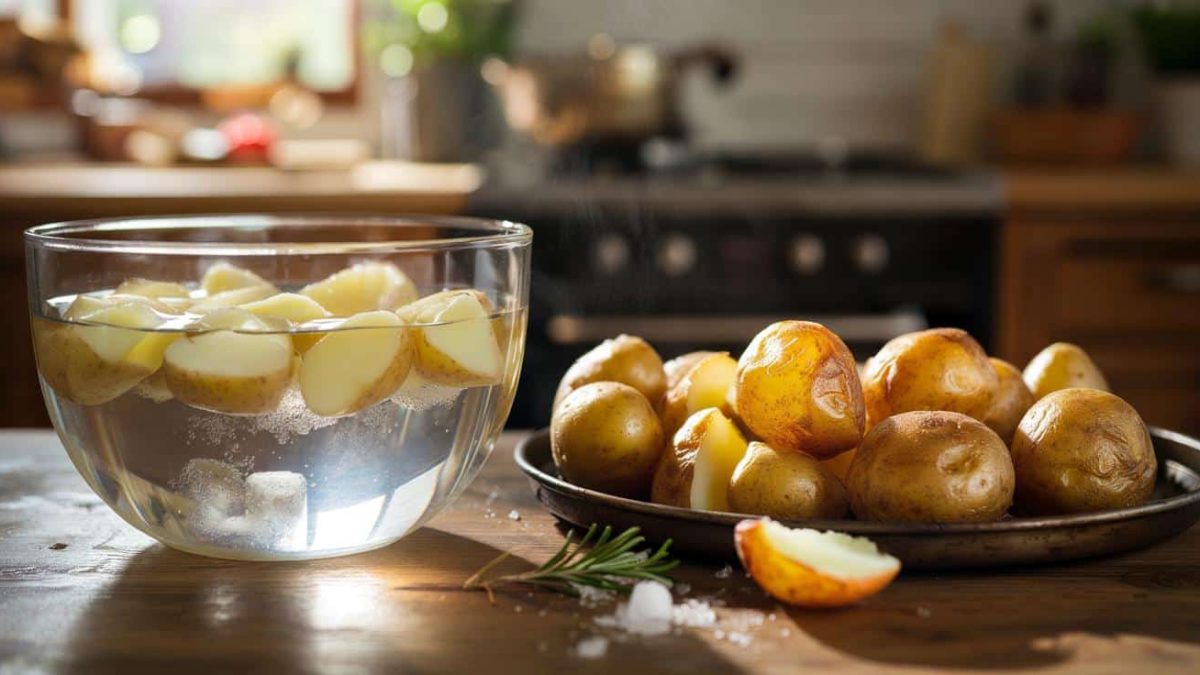
Have you ever pulled a tray of roasted potatoes from the oven only to find they’re either burnt on the outside and hard inside, or pale and soggy throughout? You’re not alone. The secret to achieving that coveted restaurant-quality texture—crispy golden exterior with a creamy, fluffy center—lies in a deceptively simple step that many home cooks overlook: soaking potatoes in cold water before roasting.
Understanding The Science Behind Starch And Texture
Before we dive into the soaking method itself, it’s important to understand what’s actually happening inside a potato. Potatoes are roughly 80 percent water and contain significant amounts of starch. This starch is what makes potatoes such a versatile ingredient, but it also presents a challenge during roasting.
When you cut a potato, the starch molecules at the surface become exposed to air. During cooking, these starches undergo a process called gelatinization, where they absorb water and swell. If too much starch remains on the surface of your potatoes, it creates a gluey, sticky layer that prevents browning and makes the exterior tough and unappetizing. Conversely, if all the starch is removed, you might end up with dry, mealy potatoes that lack character.
The goal is to strike the perfect balance—remove enough surface starch to allow proper browning and crisping, while retaining enough of the potato’s interior structure to keep it creamy and tender.
How The Cold Water Soak Works
The cold water soak is elegantly simple in its mechanics. When you submerge cut potatoes in cold water immediately after cutting them, several beneficial reactions occur simultaneously.
First, the cold water begins to dissolve and flush away excess starch from the surface of the potato pieces. The starch, being water-soluble, gradually leeches into the surrounding water. This process doesn’t happen instantly—it requires time, which is why soaking for at least 30 minutes (and ideally 1-2 hours) is essential. The cold temperature is crucial because warm or hot water would begin cooking the potatoes prematurely, partially gelatinizing the starches and potentially making them grainy.
Second, the cold water helps prevent enzymatic browning and oxidation. Potatoes contain polyphenol oxidase, an enzyme that causes discoloration when exposed to air. The protective barrier of cold water slows this process, keeping your potatoes looking fresher during preparation.
Third, and perhaps most importantly, the water leaching process helps preserve the potato’s cellular structure. By removing excess starch rather than letting it remain on the surface, you’re ensuring that when heat is applied during roasting, the moisture inside the potato will transform into steam more effectively, creating a fluffier interior.
The Step-By-Step Soaking Process
Implementing this technique requires minimal effort. Start by cutting your potatoes into your desired size—typically 1 to 1.5 inches for roasting. Immediately place the cut potatoes into a large bowl filled with cold water. Make sure the water completely covers the potatoes by at least an inch.
Now comes the patience part. Let them soak for a minimum of 30 minutes. If you have time, aim for 45 minutes to 2 hours. You’ll notice the water gradually becomes cloudy and slightly opaque as starch dissolves into it. This cloudiness is exactly what you want to see—it means the process is working.
After soaking, drain the potatoes thoroughly using a colander. This step is critical: any excess water clinging to the surface will interfere with browning and crisping. Pat the potatoes dry with a clean kitchen towel or paper towels. Take your time with this drying step—removing surface moisture is just as important as removing surface starch.
Maximizing Results With Complementary Techniques
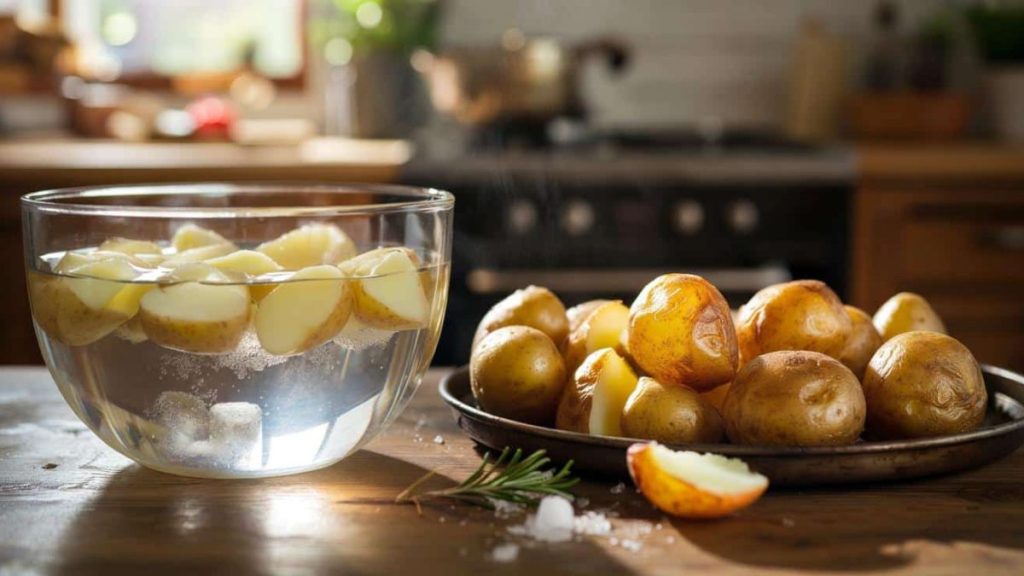
While the cold water soak is transformative on its own, combining it with other proven roasting methods amplifies the results dramatically. Pat-drying your potatoes is essential, but taking it one step further by letting them air-dry on a clean towel for 10-15 minutes before roasting ensures minimal moisture remains.
When you’re ready to roast, toss your dried potatoes with generous amounts of fat—olive oil, duck fat, or even beef tallow all work beautifully. The fat serves multiple purposes: it conducts heat more efficiently than water, promotes browning through the Maillard reaction, and helps crisp the exterior while keeping the interior tender.
Temperature matters significantly too. Roast at 425-450°F (220-230°C), which is hot enough to create a golden crust without burning the exterior before the interior cooks through. Arrange potatoes in a single layer with some space between each piece, allowing steam to escape and heat to circulate properly.
Why This Technique Makes Such A Dramatic Difference
The transformation you’ll notice after implementing the cold water soak extends beyond mere texture improvements. Potatoes prepared this way brown more evenly because there’s no starch barrier preventing direct contact between the potato surface and hot oil. The color becomes that coveted deep golden-brown rather than pale or spotty.
The flavor profile also improves. Proper browning triggers the Maillard reaction, which creates complex, savory, nutty flavors that can’t develop when starches form a protective coating. Inside, the potato flesh becomes airier and fluffier because the starch-water balance is optimized.
Home cooks are often surprised by how dramatically this single technique changes their roasting results. It’s the difference between a side dish and a showstopper—between something passable and something you’ll want to make repeatedly.
Common Mistakes To Avoid
While the technique itself is straightforward, several pitfalls can undermine your success. Using warm or hot water instead of cold water will partially cook the potatoes and create a mealy texture. Skipping the thorough drying step means excess moisture will steam the potatoes instead of crisping them. Overcrowding the baking pan prevents proper air circulation and browning.
Additionally, avoid soaking for excessively long periods—beyond 2-3 hours, your potatoes may become waterlogged or begin to lose desirable nutrients. Overnight soaking in the refrigerator is acceptable if kept cold, but isn’t necessary for optimal results.
Bringing Restaurant Quality Home
The cold water soak is precisely the kind of technique that separates casual home cooks from those who consistently produce impressive results. It requires no special equipment, no expensive ingredients, and minimal additional time investment. Yet the impact on your roasted potatoes is nothing short of remarkable.
The next time you’re planning a roasted potato dish, give yourself permission to slow down slightly during preparation. That extra 30 minutes of soaking time is a worthwhile investment that elevates your entire meal. Your family and guests will notice the difference immediately—and honestly, so will you.










Leave a Comment