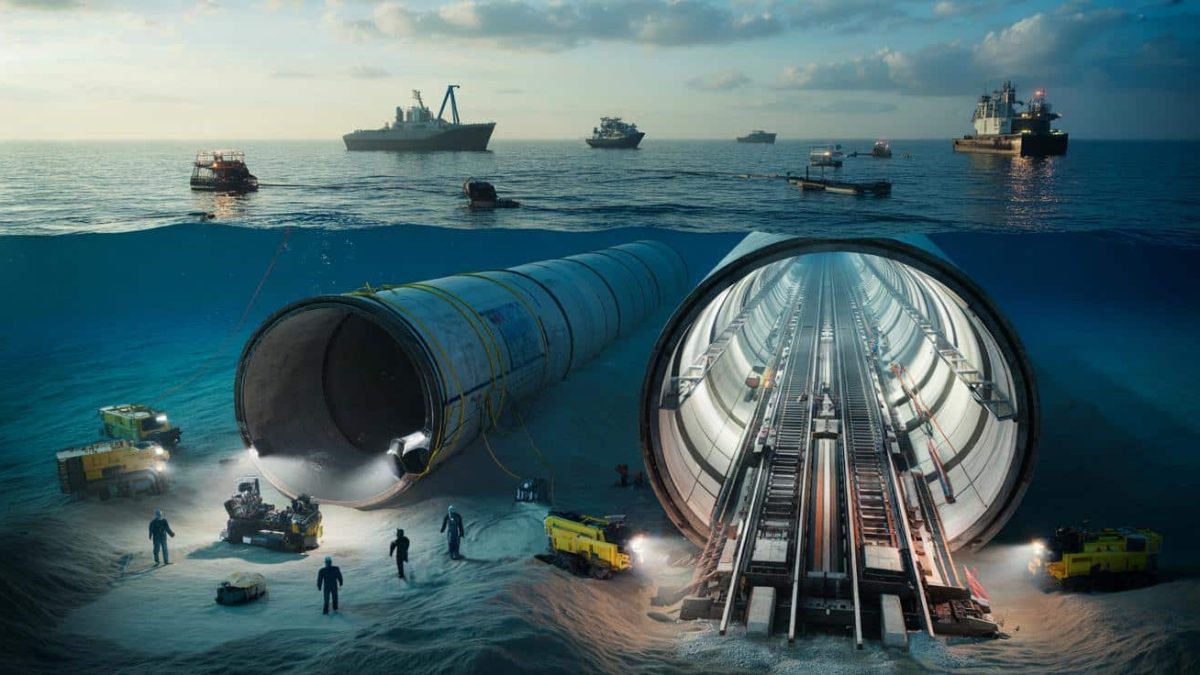
Imagine stepping aboard a train in the heart of London, settling into your seat with a cup of tea, and waking up in New York—without ever boarding a plane or setting foot on a ship. What once seemed purely fantastical has now entered the realm of engineering reality. A massive infrastructure project has officially begun construction on an underwater rail line designed to revolutionize intercontinental travel by creating tunnel networks beneath the world’s oceans. This ambitious undertaking represents one of the most transformative transportation initiatives of our generation.
The Genesis of an Underwater Dream
The concept of connecting continents via underground rail has captivated engineers and visionaries for decades. However, only recently has the convergence of advanced technology, substantial investment, and political will made such a project feasible. The decision to move forward with construction marks a watershed moment in global infrastructure development, signaling renewed commitment to reimagining how humanity connects across vast geographical distances.
The project’s genesis traces back to collaborative discussions between multiple nations seeking innovative solutions to transportation inefficiencies. Traditional methods of intercontinental travel—whether aviation or maritime—come with significant environmental costs, security complexities, and time requirements. The underwater rail alternative addresses these concerns while offering unprecedented convenience for travelers and freight transport.
Engineering Marvel: How It Works
The engineering challenges associated with constructing a deep-sea tunnel are extraordinary, yet the proposed solutions showcase cutting-edge innovation. The tunnel system utilizes specialized boring machines designed to operate at extreme depths, withstanding immense pressure and handling diverse geological formations. These machines are equipped with advanced sensors and AI-assisted navigation systems that allow for precision drilling through rock, sediment, and earth layers beneath the ocean floor.
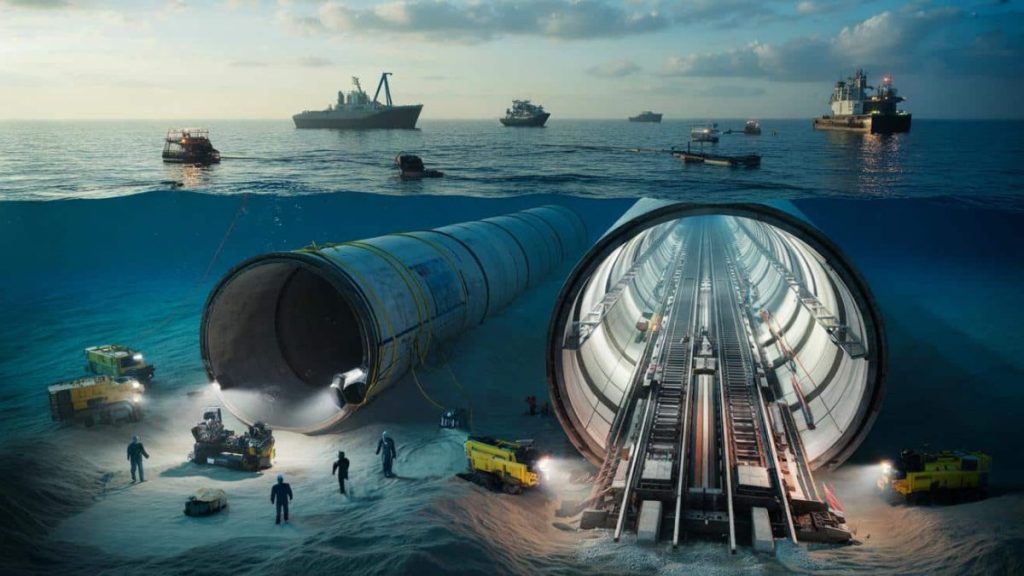
The infrastructure incorporates multiple safety features including reinforced concrete walls, advanced ventilation systems, and pressure regulation mechanisms. The rail system itself is engineered to accommodate magnetic levitation technology, allowing trains to travel at speeds exceeding 600 kilometers per hour while maintaining safety and passenger comfort. Emergency escape routes, evacuation chambers, and rescue stations are strategically positioned throughout the tunnel network.
Structural integrity is maintained through continuous monitoring systems using thousands of sensors that track stress points, water infiltration, and material degradation. These real-time data streams feed into sophisticated algorithms that predict maintenance needs before problems arise, ensuring the tunnel remains operational and safe for decades.
Environmental Considerations and Sustainability
A project of this magnitude requires comprehensive environmental stewardship. The construction methodology emphasizes minimizing disruption to marine ecosystems. Noise pollution controls prevent disturbance to whale migration patterns and other marine life. Excavation techniques have been refined to reduce sediment displacement that could affect ocean floor habitats.
From an operational perspective, the underwater rail system offers remarkable environmental benefits. Electric-powered trains eliminate direct carbon emissions, while the efficiency of rail transport significantly reduces energy consumption compared to aviation. By replacing thousands of daily transatlantic flights with train journeys, the project could substantially decrease global carbon emissions—a critical advantage in combating climate change.
Water usage, energy requirements, and waste management throughout construction adhere to stringent international environmental standards. The project has undergone extensive environmental impact assessments, with ongoing monitoring protocols ensuring compliance throughout the building phase and beyond.
Economic Implications and Global Trade
The economic ramifications of this underwater rail connection extend far beyond passenger travel. Freight transportation stands to benefit enormously from the reliable, efficient corridor this tunnel provides. Goods can traverse the Atlantic far more quickly than current maritime shipping, with reduced shipping costs and lower environmental footprints. Supply chain optimization could revolutionize international commerce, particularly for time-sensitive products and perishable goods.
Regional economies along the tunnel’s endpoints and intermediate stations will likely experience substantial growth. Cities in both Europe and North America are preparing for increased connectivity, with urban development projects already underway. Real estate values near terminus points have already begun reflecting anticipated future demand.
Job creation during the construction phase is expected to reach hundreds of thousands, while permanent operational roles will support tens of thousands of workers. This employment opportunity extends across skilled trades, engineering, maintenance, and hospitality sectors.
Technological Innovation Driving the Project
This megaproject serves as a catalyst for technological advancement across multiple industries. Advances in tunnel boring machine design, deep-water construction techniques, and materials science developed specifically for this project will have applications far beyond this single tunnel system. Nanotechnology-enhanced materials provide unprecedented strength-to-weight ratios, while breakthrough developments in waterproofing and pressure management systems exceed previous engineering capabilities.
The project’s computational requirements have spurred developments in artificial intelligence, real-time monitoring systems, and autonomous machinery. These technological spinoffs will benefit other infrastructure projects, manufacturing sectors, and scientific research globally.
Challenges and Timeline
Despite the excitement surrounding this project, significant challenges remain. Geological surveys must account for varying seabed compositions, tectonic activity patterns, and unpredictable conditions at extreme depths. Weather monitoring systems ensure that surface activities only proceed during appropriate marine conditions.
The estimated completion timeline spans approximately 12-15 years, with multiple construction phases allowing for concurrent development of different tunnel sections. Rigorous testing protocols will be implemented before any passenger or freight service begins operations. Regulatory approval processes across international jurisdictions add complexity to the project schedule, though preliminary government support from participating nations appears robust.
The Future of Global Connectivity
This underwater rail project represents more than mere infrastructure development—it symbolizes human determination to overcome geographical limitations. Upon completion, it will fundamentally reshape international travel and commerce patterns. Future expansion discussions already encompass additional transcontinental routes, potentially connecting Asia to Europe, the Americas to Asia, and other major population centers.
The project demonstrates that seemingly impossible engineering challenges can be overcome through innovation, cooperation, and sustained commitment. As construction progresses, the world watches this ambitious endeavor transform the landscape of global transportation, proving that the future of intercontinental travel may indeed run beneath the waves.










Leave a Comment