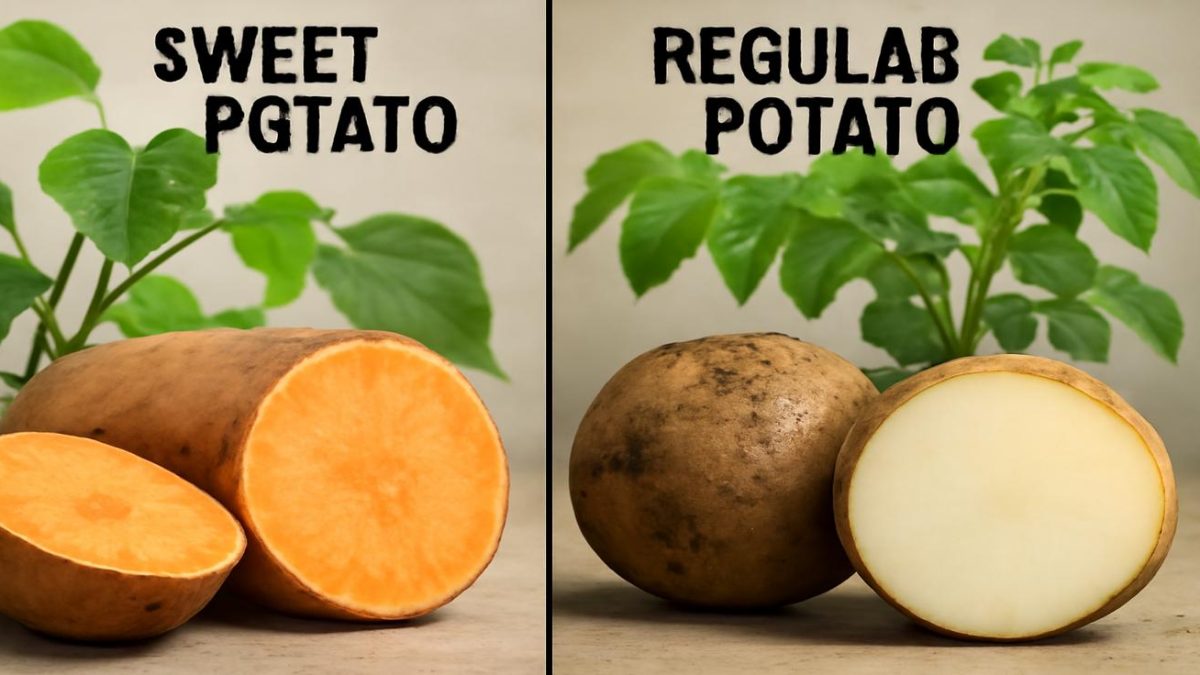
Stand in any grocery store’s produce section, and you’ll notice sweet potatoes nestled near regular potatoes as if they’re cousins sharing shelf space. This proximity has created a widespread misconception that these two vegetables are simply varieties of the same plant. However, this assumption couldn’t be further from the truth. Sweet potatoes and regular potatoes are botanical strangers, belonging to entirely different plant families with separate evolutionary histories spanning thousands of years.
The Root of the Confusion
The naming convention itself has contributed significantly to this confusion. Both vegetables share the word “potato” in their common names, which naturally leads consumers to believe they’re related. Yet this linguistic similarity masks a profound biological divide. To understand just how different these vegetables truly are, we need to explore their origins, botanical families, and the science that separates them.
When most people hear “potato,” they’re thinking of the common white, russet, or red potatoes that have anchored diets across Europe and North America for centuries. These are the potatoes that become french fries, mashed potatoes, and baked potatoes. Sweet potatoes, meanwhile, represent an entirely different culinary and botanical category—one that many cultures have cherished for millennia, yet Western consumers often misunderstand.
Tracing the Family Trees
Regular potatoes belong to the Solanaceae family, commonly known as the nightshade family. This botanical family includes tomatoes, peppers, eggplants, and even tobacco. The genus Solanum contains the common potato species Solanum tuberosum, which originated in the Andean highlands of South America, specifically in present-day Peru and Bolivia. Archaeological evidence suggests that ancient civilizations domesticated wild potato species approximately 7,000 to 10,000 years ago.
Sweet potatoes, conversely, belong to the Convolvulaceae family, also known as the morning glory family. Their genus is Ipomoea, with the cultivated sweet potato species identified as Ipomoea batatas. These plants originated in Central and South America, with evidence suggesting domestication occurred in Mexico and Central America roughly 5,000 years ago. Remarkably, while both plants are New World crops, they developed independently through separate domestication processes in different geographic regions.
This fundamental difference in plant families means that sweet potatoes and regular potatoes share a distant common ancestor at best—roughly similar to the relationship between humans and chimpanzees in terms of evolutionary distance. They diverged millions of years ago along completely separate evolutionary pathways.
Structural and Nutritional Divergence
Beyond their family trees, these vegetables manifest their differences through structure and composition. Regular potatoes store energy as starch in their tubers, which are actually swollen underground stems. Sweet potatoes, meanwhile, are true storage roots that accumulate different carbohydrate profiles. This explains why sweet potatoes have a characteristically sweeter taste—they contain significantly more natural sugars and a different type of starch compared to regular potatoes.
The nutritional composition reflects their botanical distinctness. Sweet potatoes are exceptionally rich in beta-carotene, a precursor to vitamin A, which gives them their characteristic orange hue. Regular potatoes contain virtually no beta-carotene. Conversely, regular potatoes typically contain higher levels of certain minerals and have a different amino acid profile. These nutritional differences aren’t mere variations—they’re fundamental distinctions rooted in how each plant species evolved to accumulate and store nutrients.
Growing Requirements and Agricultural Differences
If you’ve ever attempted to grow either vegetable, you’d quickly recognize their distinct needs. Regular potatoes thrive in cooler climates and prefer well-drained soil with moderate moisture. They’re relatively frost-sensitive and require cool nights for optimal tuber development. Sweet potatoes, by contrast, are heat-loving plants that prefer warm growing seasons and actually produce better yields in warmer climates. They’re far more tolerant of heat and humid conditions, reflecting their tropical and subtropical origins.
The growing timeline also differs significantly. Regular potatoes typically mature in 70 to 120 days depending on the variety, while sweet potatoes require 90 to 150 days and genuinely prefer longer growing seasons. These agricultural differences further underscore their separate botanical identities and distinct evolutionary adaptations.
Genetic Distance and Modern Science
Modern genetic analysis has definitively confirmed what botanists long suspected. DNA sequencing has shown that sweet potatoes and regular potatoes share very little genetic material beyond what all plants share. Their genomes evolved independently, encoding different proteins, enzymes, and metabolic pathways. Scientists can now point to specific genetic differences that explain their distinct flavors, textures, cooking properties, and nutritional profiles.
Interestingly, sweet potatoes have undergone their own recent genetic event—polyploidy—where their chromosome number increased dramatically, creating a genetic complexity even within their own species. This genetic reorganization occurred relatively recently in evolutionary terms, contributing to sweet potato’s unique characteristics and explaining some of its distinctive agricultural behavior.
Cultural and Historical Implications
Understanding that these vegetables are unrelated also illuminates different cultural histories. Regular potatoes became the foundation of European agriculture and later supported population growth across the continent and eventually the world. Sweet potatoes, meanwhile, became integral to diets in Asia, Africa, and other regions through different trade routes and cultural adoptions. Their separate histories meant they evolved different culinary traditions and agricultural practices in different cultures.
Practical Takeaways for Consumers
Recognizing that sweet potatoes and regular potatoes are entirely different plants should influence how we approach them in the kitchen and the garden. They shouldn’t be substituted for one another in recipes without understanding how their different starch content, moisture levels, and sugar content might affect final results. Their different nutritional profiles mean they offer distinct health benefits—choosing between them should be a deliberate nutritional choice, not an assumption that they’re interchangeable.
The grocery store’s produce section has inadvertently misled generations of consumers. What appears to be a simple case of botanical cousins separated by a few grocery store shelves is actually a fascinating example of convergent evolution, where two completely unrelated plants developed similar storage organs for entirely different reasons. Next time you reach for either vegetable, you’ll now understand that you’re selecting from two entirely separate branches of the plant kingdom.











Leave a Comment