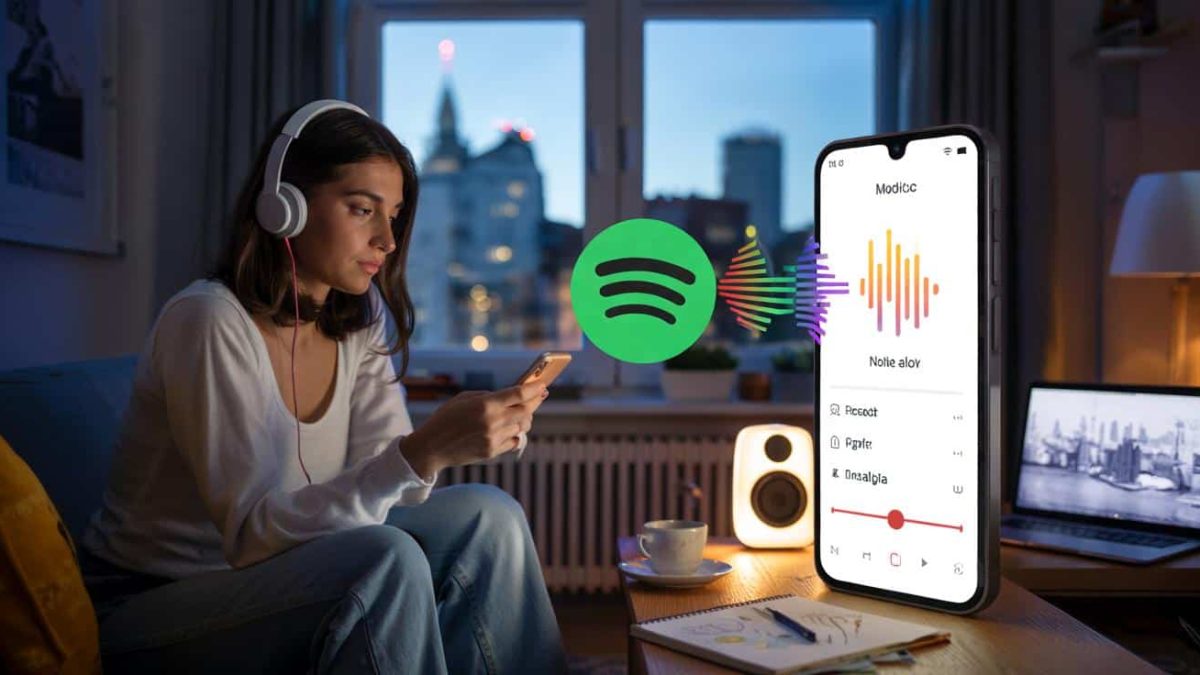
The comfortable dominance of legacy music streaming services is cracking. What was once an unshakeable empire is now facing serious competition from emerging platforms that promise something different – whether that’s superior sound quality, artist-friendly payment structures, or simply a refreshing user experience that doesn’t feel designed by committee.
The Perfect Storm of Discontent
For years, Spotify seemed untouchable. With over 500 million users and a stranglehold on the streaming market, the Swedish giant appeared immune to competition. Yet beneath the surface, frustration was building. Artists complained about unsustainable royalty rates. Audiophiles bristled at compressed audio quality. Casual listeners grew tired of algorithmic recommendations that felt increasingly disconnected from their actual tastes.
The breaking point arrived not as a single catastrophic event, but as a slow accumulation of minor grievances. Premium subscription prices climbed steadily. Ad-supported tiers became increasingly intrusive. The interface, once praised for its simplicity, began to feel cluttered with features nobody asked for.
Meanwhile, a new generation of music platforms emerged with fresh perspectives and specific value propositions that resonated with particular audience segments. These weren’t attempts to be everything to everyone – they were purpose-built solutions targeting real pain points.
What These New Platforms Offer
The insurgent apps share common characteristics that distinguish them from established services. First and foremost is audio fidelity. Several newcomers have committed to lossless audio streaming, meaning listeners hear recordings closer to the original studio mastering. For music enthusiasts who invested in quality headphones or speakers, this represents a seismic shift from the compressed audio they’d accepted as standard.
Equally important is the relationship with artists. New platforms are experimenting with payment models that distribute revenue more equitably. Some operate on membership systems where subscription fees are divided among artists based on listening patterns, rather than the opaque algorithmic distribution that characterizes traditional services. This transparency appeals to both artists and ethically-minded listeners.
Discovery mechanisms work differently too. Rather than relying exclusively on machine learning algorithms, some platforms emphasize curator-driven playlists, community recommendations, and context-based listening. The result feels more organic, less like being sold to by a recommendation engine.
Social features represent another differentiator. Several platforms have rebuilt music discovery around genuine social connection – showing what friends are listening to, enabling collaborative playlist creation, and fostering actual musical communities rather than simulated ones.
The Demographics of Migration
It would be incorrect to characterize this shift as universal. Different user segments are attracted to different alternatives based on their priorities and listening habits.
Audiophiles and technical enthusiasts gravitate toward platforms emphasizing sound quality. These users have been waiting years for a mainstream service to take audio seriously, and they’re willing to switch for lossless streaming and detailed technical specifications.
Musicians and music professionals are leaving in notable numbers, frustrated by inadequate compensation and lack of control. Independent artists appreciate platforms that provide clearer payment transparency and better tools for connecting directly with fans.
Younger users, paradoxically, are sometimes drawn to platforms with more human curation. After growing up with algorithm-driven recommendations, some are experiencing fatigue and seeking music discovery that feels more intentional and community-driven.
Finally, there’s a growing cohort of conscious consumers prioritizing ethical business practices. They’ve researched how revenue is distributed and made deliberate choices to support platforms they perceive as treating artists fairly.
The Network Effect Breaking Down
For years, Spotify’s dominance was partially self-reinforcing. Artists released on Spotify because that’s where listeners were. Listeners stayed on Spotify because that’s where all the music was. This network effect made switching costs feel too high.
What’s changed is the realization that this logic is less binding than it appears. Most major artists now release simultaneously across all platforms, eliminating the exclusive catalog argument. Playlist features allow users to maintain and backup their music selections. Switching between services, while inconvenient, is no longer impossible.
Additionally, people often maintain subscriptions to multiple services. A music enthusiast might use one platform for high-fidelity listening, another for discovery, and a third for social features. The assumption that users must choose one service has proven false.
Legacy Services Responding Slowly
The established platforms haven’t remained static. Spotify launched a high-fidelity tier (though with significant delays and regional limitations). They’ve invested in podcasting, creating a more comprehensive media ecosystem. They’ve experimented with payment models aimed at improving artist compensation.
Yet these responses often feel reactive rather than visionary. The damage to trust and perception isn’t easily repaired through incremental improvements. When users perceive a company as primarily profit-driven, adding features doesn’t necessarily rebuild confidence.
What This Means for the Industry
The music streaming market may be fragmenting permanently. Rather than consolidating into a single dominant player, we may be entering an era of specialized platforms, each dominating particular niches and use cases.
For listeners, this presents both opportunity and complication. There are now genuinely superior options for specific preferences – whether that’s sound quality, discovery experience, or artist compensation philosophy. However, maintaining presence across multiple services requires management and additional expense.
For the industry overall, increased competition may paradoxically benefit artists by forcing platforms to compete on compensation terms. The days of taking artist payments for granted may be ending.
Making Your Own Decision
If you’re considering switching, evaluate your actual priorities. Do you prioritize audio quality? Community features? Artist support? Ease of discovery? Different platforms excel in different areas. Rather than assuming one service must handle everything, consider which platforms best match your primary use cases.
The great migration isn’t about one platform being objectively superior – it’s about recognition that no single service perfectly matches every user’s needs. For millions of people, that realization has been liberating enough to drive the switch.










Leave a Comment