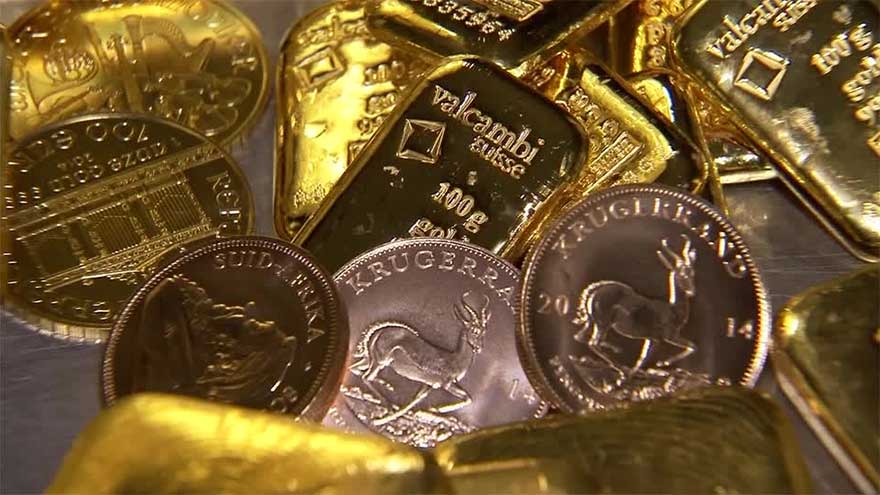
Silver crossed a line many traders never expected to see.
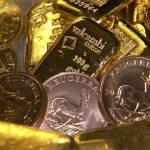
Prices pushed past $100 an ounce on Friday morning for the first time on record, capping a sharp rally that has been building for months across global commodity markets.
Gold wasn’t far behind. The metal climbed toward $5,000 an ounce, drawing fresh attention as investors shifted money into assets long viewed as shelters during periods of uncertainty.
Analysts point to a familiar mix of drivers: economic anxiety, political risk and growing unease about financial markets that has pushed demand for traditional safe havens higher.
Silver breaks $100 as precious metals move into new territory
Friday’s move placed the precious metals market firmly in uncharted territory.
Spot silver briefly traded above $100 an ounce during early U.S. hours before easing slightly. Futures prices followed the same path, signaling strong buying interest rather than a brief technical spike.
Gold continued its steady climb, hovering just below $5,000 an ounce. Market watchers say the price reflects a combination of inflation hedging and geopolitical concern, rather than enthusiasm about economic growth.
Together, the moves mark one of the strongest coordinated advances in precious metals in recent memory.
Why silver’s surge matters no w
w
Silver has often trailed gold during periods of stress. This rally has broken that pattern.
The metal occupies a unique position in the market. It is treated as a store of value, but it is also deeply tied to industry, with heavy use in electronics, renewable energy, medical equipment and auto manufacturing.
That dual role has magnified demand.
“With silver, you’re seeing both investment demand and supply constraints collide,” said Ole Hansen, head of commodity strategy at Saxo Bank. “That’s what makes this move so powerful.”
Analysts note that years of limited investment in new mining projects have left supplies tight just as demand has picked up pace.
Gold closes in on $5,000 as investors look for shelter
Gold’s rise has been more gradual, but no less striking.
The metal has gained steadily over the past year as inflation pressures linger, equity markets swing sharply and geopolitical tensions remain unresolved.
Political uncertainty has added to the momentum.
“There is a clear safe-haven bid right now,” said Peter Schiff, chief economist at Euro Pacific Capital. “Investors are reacting to what they see as absolute unpredictability in U.S. leadership and global policy direction.”
Historically, gold has benefited during periods of economic and political strain. Recent price action fits that pattern closely.
How the rally unfolded
Late 2025
Gold accelerates past $4,000 as central banks step up bullion purchases.
Early January 2026
Silver breaks through $80 amid supply concerns and rising speculative interest.
Mid-January 2026
Gold posts a series of record highs, approaching $4,800.
Friday morning, Jan. 26, 2026
Silver crosses $100 for the first time. Gold trades just below $5,000.
Central banks and institutions drive demand
Behind the surge is steady buying from central banks and large institutional investors.
Several central banks have added to gold reserves as part of longer-term efforts to diversify away from the U.S. dollar. That trend has been visible in public reserve data for months.
Silver has also drawn increased attention from hedge funds and commodity-focused investment vehicles.
“Precious metals are being treated as insurance,” said Juan Carlos Artigas, global head of research at the World Gold Council. “That mindset is driving allocation decisions across regions.”
Market reaction shows caution alongside excitement
The $100 silver mark sparked intense debate among traders, economists and retail investors.
Online forums filled with questions about whether the rally can last or whether prices have moved too far, too fast. Some analysts warned that sharp pullbacks are common after rapid gains.
Equity markets responded unevenly. Mining stocks outperformed broader indexes, while industrial shares showed mixed results as higher input costs weighed on outlooks.
“When metals move like this, it’s usually not about growth,” said Liz Ann Sonders, chief investment strategist at Charles Schwab. “It’s about protection.”
What higher metal prices say about inflation and currencies
Precious metals often rise when confidence in paper currencies weakens.
The U.S. dollar has softened modestly in recent weeks, making gold and silver more attractive to overseas buyers. At the same time, stubborn inflation concerns continue to push investors toward tangible assets.
Economists caution that extreme price moves can be a warning sign as much as a hedge, reflecting deeper unease about financial stability.
What comes next for silver and gold
Opinions remain split.
Some analysts expect prices to pause or pull back after such a rapid run-up. Others believe the rally could extend if uncertainty continues to dominate headlines.
Key variables include:
-
Central bank policy signals
-
U.S. political developments
-
Global economic data
-
Potential disruptions to mining supply
For now, precious metals remain a closely watched gauge of investor confidence.
Key facts at a glance
| Event | Location | Date | Who is affected | Current status | What readers should know |
|---|---|---|---|---|---|
| Silver breaks $100 | Global markets | Jan. 26, 2026 | Investors, industry | Record set | First time ever |
| Gold nears $5,000 | Global markets | Jan. 26, 2026 | Investors, central banks | Near record | Safe-haven demand |
| Precious metals rally | Worldwide | Ongoing | Financial markets | Active | Volatility rising |
| Investor reaction | Global | Ongoing | Retail and institutional | Mixed | Focus on protection |
Frequently asked questions
Why did silver reach $100 for the first time?
Strong investment demand, limited supply growth and heavy industrial use pushed prices higher.
Why is gold rising so quickly?
Investors are moving into safe-haven assets amid economic and political uncertainty.
Is inflation driving the rally?
Inflation concerns are a key factor, alongside currency and market volatility.
Are central banks buying gold?
Yes. Many have increased gold reserves in recent years.
Could prices fall sharply?
Analysts say volatility may increase after rapid gains.
What should investors watch next?
Economic data, central bank policy and political developments.
Closing
Silver’s move above $100 and gold’s push toward $5,000 mark a rare moment for global markets.
The rally reflects investor unease about economic stability, politics and currency strength more than speculative excess.
As markets adjust to these new price levels, attention will remain on whether demand holds—or whether volatility reshapes the outlook in the weeks ahead.








Leave a Comment