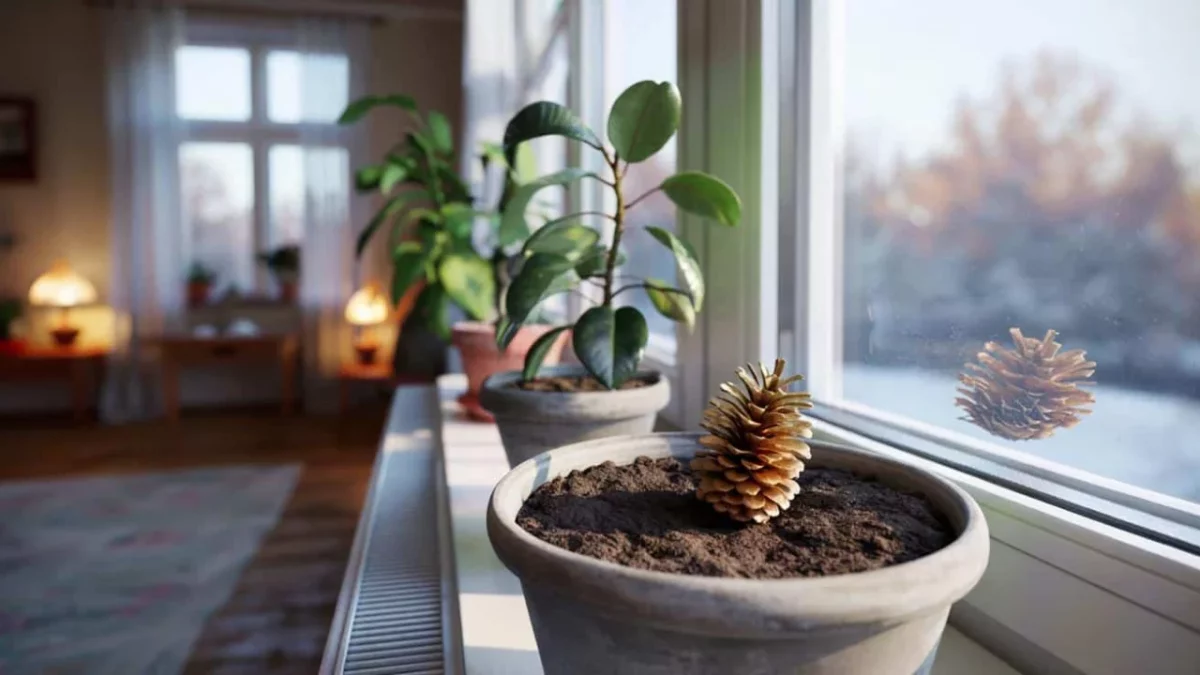
There’s something almost magical about inherited gardening wisdom. Your grandmother probably did it without much explanation, your mother continues the practice out of habit, and you might have wondered whether you should too. That small, humble pine cone resting atop your houseplant’s soil during the colder months isn’t decoration or mere nostalgia—it’s actually a clever solution to one of winter’s greatest plant-care challenges.
Understanding the Winter Plant Crisis
Winter presents a unique problem for indoor plant enthusiasts that many modern gardeners overlook. As temperatures drop and heating systems kick into overdrive, our homes become increasingly dry environments. The heated air circulating through our rooms extracts moisture not just from our skin and lips, but from every surface it touches—including the soil in our potted plants.
This creates a frustrating paradox: while outdoor plants benefit from winter precipitation and slower evaporation rates, indoor houseplants face accelerated moisture loss. Their roots sit in containers with limited access to new water sources, and the dry indoor air wicks away moisture faster than it would during other seasons. Overwatering becomes tempting—and dangerous, as it can lead to root rot and fungal problems.
The Pine Cone Solution Explained
This is where the pine cone comes in, and the reasoning behind it is surprisingly sophisticated. Pine cones are nature’s own moisture regulators. Their unique structure—composed of overlapping scales with natural gaps and channels—creates an ideal interface between the soil and the surrounding air.
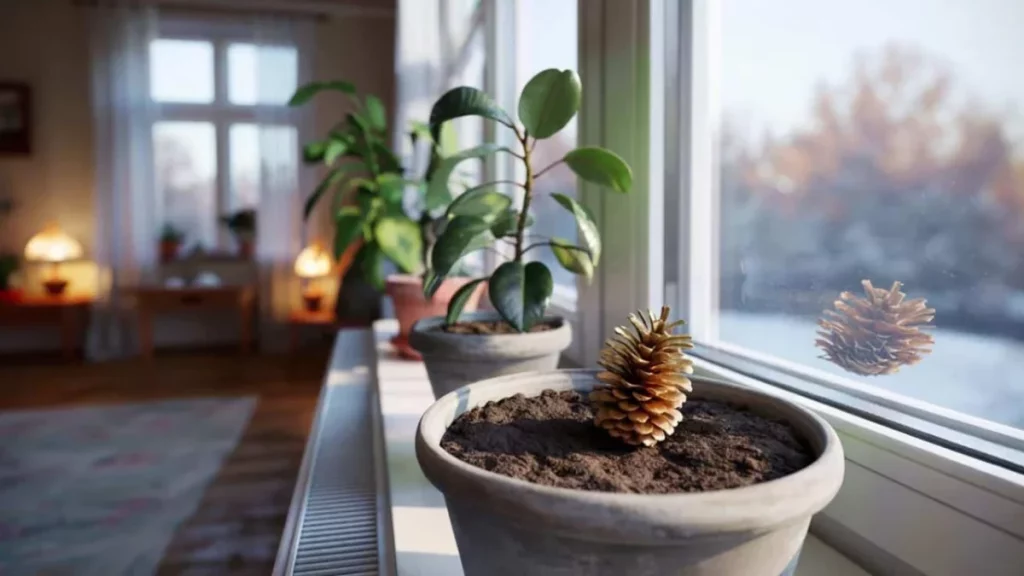
When a pine cone sits on potted soil, it serves multiple functions simultaneously. First, it acts as a physical barrier that slows down moisture evaporation from the soil surface. The scales of the pine cone break up direct air circulation, creating a microclimate of slightly higher humidity directly above the soil.
But there’s more to the story than simple moisture retention. The pine cone’s natural hygroscopic properties mean it actively absorbs and releases moisture based on ambient humidity levels. During particularly dry spells, the cone can release some of its stored moisture back to the soil. When humidity increases, it absorbs excess moisture, preventing waterlogging. This creates a naturally buffered environment that helps maintain more consistent soil moisture levels.
Why Older Generations Knew This Instinctively
Before modern houseplant care guides and YouTube tutorials, gardeners had to rely on observation and experimentation. For generations living in homes without climate control, the seasonal shift was dramatic. Fireplaces and wood stoves created intensely dry environments, and keeping plants alive through winter required practical solutions born from necessity.
Your grandmother probably didn’t know the precise mechanisms of hygroscopic materials or evaporation rates. She knew something simpler but no less valuable: pine cones worked. Plants with cones on their soil seemed to thrive better through the winter months, requiring less frequent watering while showing fewer signs of stress. This observation passed from one generation to the next because it was repeatedly validated by results.
The Science Behind an Old Tradition
Modern plant science has actually confirmed what these gardeners discovered through trial and error. Humidity levels in heated homes during winter often drop to 30% or below—well below the 50% that most tropical houseplants prefer. Pine cones help buffer this dramatic environmental shift.
The wood’s cellular structure contains natural compounds that respond to moisture changes. As the cone absorbs water through its scales, it swells slightly; as it dries, it contracts. This dynamic response to the environment’s moisture content creates a self-regulating system that plant roots benefit from tremendously.
Additionally, the organic material of the pine cone itself can contribute to soil health over time. As it slowly breaks down, it adds organic matter that improves the soil’s water-retention capacity without making it waterlogged. This is a slow process, but it compounds the benefits over multiple seasons.
How to Implement This Winter Strategy
If you’re intrigued by this traditional approach, using pine cones effectively requires a few basic guidelines. Select cones that are fully closed and intact—open or deteriorating cones won’t provide optimal benefits. Harvest them from beneath pine trees, ensuring they’re clean and free of pests or disease.
Place the cone directly on top of the soil, nestling it so it makes contact with the surface. You can use one larger cone or multiple smaller ones, depending on your pot size. The goal is to cover approximately 25-50% of the soil surface while still allowing light to reach the soil around the cone’s edges.
This technique works best for plants that prefer moderate to slightly drier conditions during winter dormancy. Succulents, snake plants, pothos, and other drought-tolerant species see particular benefits. Moisture-loving tropical plants may not need this intervention, though they can still benefit from it if your home is extremely dry.
Combining Old Wisdom With Modern Care
The pine cone method shouldn’t replace good watering practices, but rather complement them. Check soil moisture regularly—the cone won’t eliminate the need for your judgment. Reduce watering frequency in winter, allowing soil to dry out slightly between waterings, but use the pine cone to ensure it doesn’t dry out excessively.
You might also consider other complementary humidity-boosting techniques. Grouping plants together creates a more humid microclimate. Placing saucers of water near (not under) your plants adds moisture to the air. Misting foliage provides temporary humidity benefits. The pine cone works best as part of a comprehensive winter care strategy.
Why This Tradition Endures
What makes this gardening tradition particularly remarkable is that it never disappeared despite the modern plant-care industry’s emergence. Home centers don’t sell pine cones in their plant sections, yet gardeners continue using them because they deliver reliable results. In an age of commercial products and scientific formulations, there’s something validating about a solution that costs nothing and comes directly from nature.
Your grandmother wasn’t preserving an outdated superstition—she was maintaining a piece of practical horticultural knowledge that bridges generations and connects us to more sustainable gardening practices. The next time you see a pine cone on a potted plant, you’re witnessing not just tradition, but timeless plant wisdom standing the test of both time and scientific scrutiny.










Leave a Comment